
Pursuing Sugar Self-Sufficiency, Agriculture Minister Accelerates Sugarcane Replanting and Expansion in Tulang Bawang
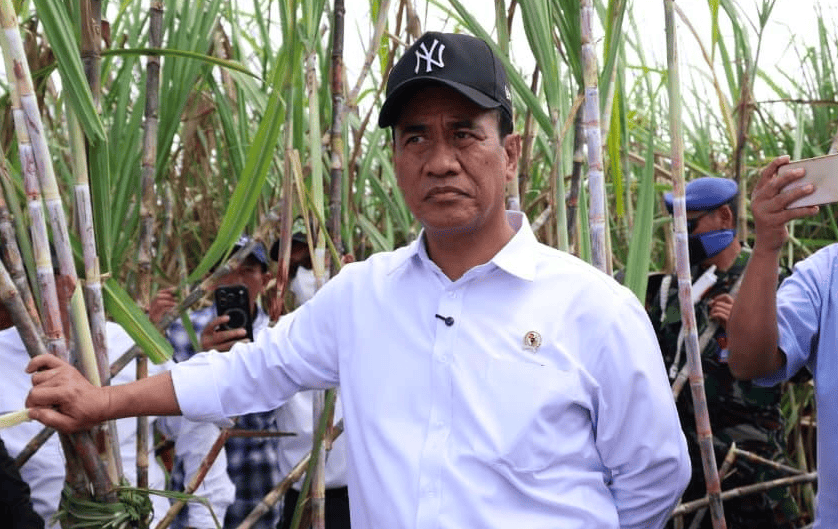
Agriculture Minister Andi Amran Sulaiman is pushing for the acceleration of national sugarcane development through the opening of new cane areas and the replanting of unproductive crops. He made the remarks during a working visit to Gedung Meneng District, Tulang Bawang Regency, Lampung, on Wednesday (26/8).
President Prabowo Subianto had previously given Minister Amran a target to achieve sugar self-sufficiency within four years, announced during the Sugarcane Grand Harvest in Malang on 17 July. The target was to be met through a sugarcane replanting programme covering 100,000 hectares per year. However, Minister Amran stated that the target could be accelerated to two years.
To achieve this, Amran said new sugarcane development in Lampung has reached around 30,000 hectares. The expansion of new areas is part of the government’s strategy to strengthen raw material availability for the sugar industry while increasing national sugar production. “Hopefully we can achieve 100 tonnes per hectare,” Amran said, as quoted from a press release received on Wednesday (26/8).
Amran said increasing national sugar production cannot rely solely on area expansion. The government must also improve crop productivity through the replanting of smallholder sugarcane that is no longer fit for production.
Amran noted that around 86% of smallholder or plasma sugarcane currently requires replanting. For this reason, the government has prepared budget support of around Rp1.7 trillion to clear old crops and replace them with new sugarcane plants.
“Eighty-six per cent of that is plasma, smallholder sugarcane that is unfit, to be cleared. So the President has ordered us, and we have been given a budget of Rp1.7 trillion to clear these plasma fields and turn them into new sugarcane,” Amran said.
The replanting programme is targeted for completion within three years. Minister Amran is optimistic that the move will increase productivity while improving sugarcane yield, thereby strengthening national sugar production.
The effort aligns with developments in national sugar production. Based on the 2026 Mid-Milling Estimate, national White Crystal Sugar production is projected to reach 3.02 million tonnes, an increase of around 13.1% compared with 2025.
The production increase is supported by the expansion of sugarcane area, higher cane production, and improved yield. In 2026, the sugarcane area is estimated to reach 585,390 hectares with cane production of around 40.20 million tonnes and a yield of 7.51%.
Amran stressed that the government will continue to strengthen the entire sugar ecosystem, including providing support to sugar factories so they can increase capacity and productivity. “We support all sugar factory business units across Indonesia. We support them so they can produce at high levels,” he said.
He said productivity improvement is key to accelerating sugar self-sufficiency. Therefore, in addition to expanding planting areas, the government is encouraging crop replanting, the use of superior seeds, improved cultivation, higher yields, and stronger partnerships between growers and sugar factories. “The most important thing is the sugarcane yield. I can tell the yield just by biting into it,” Amran explained.
The Tulang Bawang area itself is one of the main sugarcane centres in Lampung. Local government data shows that Tulang Bawang is among the regions with extensive sugarcane areas and is one of the suppliers of raw materials for the sugar industry in Lampung Province.
Source: jawawa.id (https://jawawa.id/newsitem/pursuing-sugar-self-sufficiency-agriculture-minister-accelerates-sugarcane-replanting-and-expansion-in-tulang-1787741444)
Originally published by Media Indonesia (https://mediaindonesia.com/ekonomi/926133/kejar-swasembada-gula-mentan-percepat-peremajaan-dan-perluasan-tebu-di-tulang-bawang), translated from Indonesian