
Purbaya Speaks Out on Deciles in Planned Pertalite Restrictions
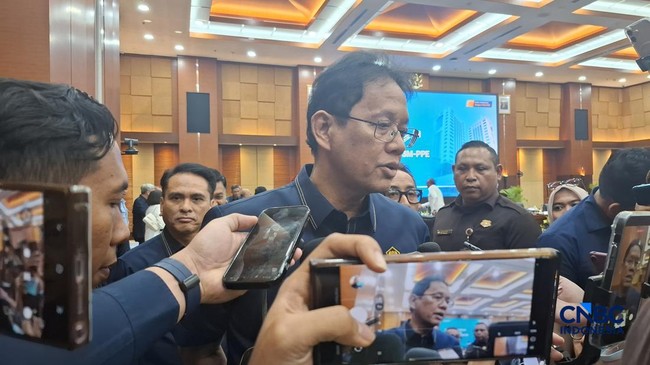
Finance Minister Purbaya Yudhi Sadewa has revealed that improvements to the National Single Socio-Economic Database (DTSEN) are currently being carried out by Statistics Indonesia (BPS), which will also help ensure that fuel subsidies can be better targeted.
Purbaya also responded to the controversy surrounding the use of deciles, which are considered not yet to reflect the actual conditions of the community.
“Regarding deciles, that is why the DTSEN is currently being improved by BPS, because at the beginning of this year they asked us for additional budget, so we fulfilled their request, but it is ensured that next year’s DTSEN can be better than the current one,” Purbaya said when met by journalists after the Debottlenecking Session on Wednesday (26/8/2026).
Purbaya expressed hope that the database in DTSEN could be more organised next year, so that the application of deciles could match the conditions of the community.
“If one or two are wrong, that usually always happens in surveys, but I hope next year it can be more organised,” Purbaya explained.
Regarding the plan to restrict Pertalite fuel based on deciles, his office is still waiting for future economic dynamics while awaiting a newer DTSEN.
“We will see the economic dynamics and the community later, but we are all preparing the system. Once it is ready, we will implement it,” Purbaya said.
“But of course not everyone will be affected, only a few people. If there are problems, as long as the new DTSEN has not been released, we will handle it case by case,” Purbaya added.
Previously, BPS Head Amalia Adininggar Widyasanti explained that deciles are a ranking of families based on various socio-economic characteristics.
“Deciles show the relative position of a family compared to other families based on various socio-economic characteristics,” Amalia explained in a written statement in Jakarta, quoted on Sunday (23/8/2026).
According to her, deciles cannot be understood as a single measure of a family’s economic condition.
“The decile figure needs to be understood as a picture of the relative position in the welfare ranking, not as a single measure of a family’s economic condition,” she said.
In simple terms, families are divided into 10 groups, each covering approximately 10% of families. Decile 1 indicates the group with the lowest relative level of welfare, while decile 10 is the group with the highest relative level of welfare.
Thus, a family in decile 3 means it is in the third group out of 10 groups in the relative welfare ranking. However, families in the same decile do not necessarily have identical income, expenditure, assets, or socio-economic conditions.
The determination of deciles is also not solely based on income, occupation, electricity capacity, or ownership of certain goods. BPS considers various characteristics simultaneously, such as housing conditions, drinking water sources, cooking energy, asset ownership, electricity consumption, family composition, education, occupation, health, and disability.
Source: jawawa.id (https://jawawa.id/newsitem/purbaya-speaks-out-on-deciles-in-planned-pertalite-restrictions-1787737894)
Originally published by CNBC Indonesia (https://www.cnbcindonesia.com/market/20260826142546-17-762391/purbaya-angkat-bicara-soal-desil-di-rencana-pembatasan-pertalite), translated from Indonesian