
Purbaya Shares How Indonesia Ignored IMF Advice During Economic Pressures
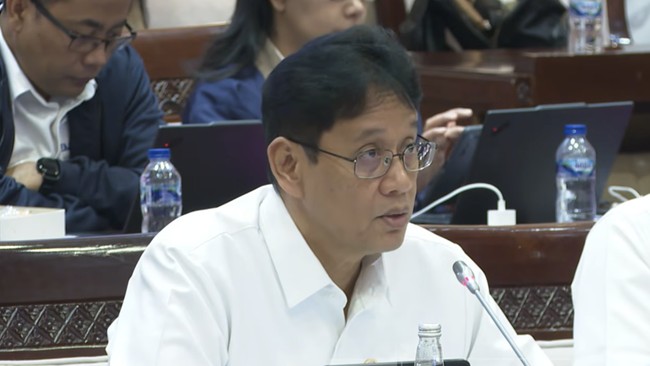
Jakarta, CNBC Indonesia - Finance Minister Purbaya Yudhi Sadewa has revealed that Indonesia has a long history of navigating crises. During this journey, the government once rejected advice from the International Monetary Fund (IMF) to tighten budgets when the economy was under pressure.
This decision to ignore the IMF’s advice did not worsen the economy. Instead, Indonesia’s economy rebounded and grew. This occurred across several periods, from 2008 and 2015 to the Covid pandemic in 2020. In 2025, Purbaya stated that the government adopted the same approach.
“Last year in 2025, we shifted towards a positive direction. This is not my invention, but based on Indonesia’s experience over the past 25 years, plus the 1998 crisis,” Purbaya said during a meeting with Commission XI of the House of Representatives (DPR RI) at the Parliamentary Complex in Senayan, Jakarta, quoted on Tuesday (7/4/2026).
The government did not follow the IMF’s suggestion to achieve efficiency through spending cuts. Instead, Indonesia did the opposite. The government did not cut spending; it instead channelled incentives in 2025.
“So in such conditions, when the economy is disrupted, we do not apply the IMF approach, which is to tighten the belt, cut all spending, and so on,” Purbaya explained.
According to Ministry of Finance records, the largest tax incentives were allocated to micro, small, and medium enterprises (MSMEs) at Rp96.4 trillion in 2025.
In addition, the government exempted VAT on food items with an incentive value of Rp77.3 trillion. This facility covers VAT borne by the government for essential goods such as rice, corn, soybeans, sugar, as well as fishery and marine products.
Furthermore, the government exempted VAT on public transportation services and provided special VAT rates for freight forwarding services. The value of this incentive reaches Rp39.7 trillion.
The government provided incentives for the education sector amounting to Rp25.3 trillion. This facility includes VAT exemptions on education services and textbooks, as well as other incentives related to educational activities.
In the health sector, the government also provided incentives of Rp15.1 trillion. These facilities include no VAT on medical health services and various other supporting incentives.
There are also tax holidays and tax allowances to encourage investment, with a total value of Rp7.1 trillion. “So this clearly shows that the government always supports economic growth as optimally as possible,” Purbaya emphasised.
With this approach, he stated that public purchasing power was maintained and consumption continued to grow.