
Purbaya Says Fuel Price Hike Could Burden the Public and Slow the Economy
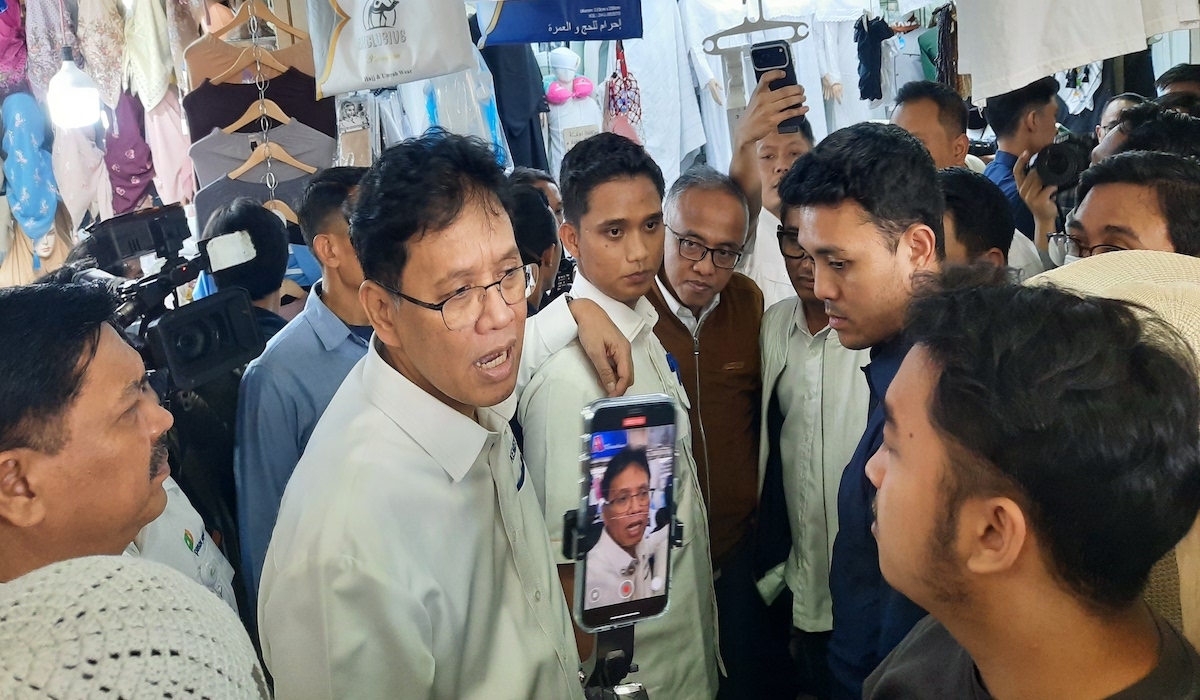
Finance Minister Purbaya Yudhi Sadewa has outlined the primary reasons behind the government’s decision to hold subsidised fuel prices steady, even as global oil prices surge amid escalating conflicts in the Middle East.
According to Purbaya, the option of raising fuel prices often arises in debates among economists. However, the government deems this not the most appropriate choice, particularly given its direct impact on the purchasing power of lower-income groups.
“Outside, there are surely those asking why the government or the President doesn’t just raise fuel prices to increase revenues. That debate has long existed among economists,” Purbaya said after lunch at the Ministry of Finance office in Jakarta on Tuesday (7/4).
Purbaya emphasised that a fuel price increase is not merely about expanding the state’s fiscal space. It carries significant consequences for household consumption, which has long been the engine of national economic growth.
He explained that when fuel prices rise, money previously spent by the public shifts to the government. The issue is that government spending may not be as efficient as public expenditure in sustaining economic activity.
“If I raise fuel prices, the money comes to me, but the public has to pay more. That could slow the economy. The money can indeed be spent again by the government, but the question is, who is more efficient in allocating funds, the public or the government?” he said.
In Purbaya’s view, in the short term, the public is more effective at spending money according to real needs. Therefore, drawing too much from public spending risks reducing the efficiency of economic circulation.
He illustrated the situation with a simple analogy: when public income is cut more by the state, household spending room shrinks. Meanwhile, government spending, though large, is not always as targeted as direct public consumption.
“People spend money according to their needs, so it’s more appropriate. In government, the distribution can be blanket to ministries or agencies, reducing efficiency. That’s the simple picture,” Purbaya stated.
This statement underscores that the decision to hold subsidised fuel prices is not merely a political move but is also based on economic calculations: keeping money circulating in the hands of the public to prevent consumption from being hit.
Previously, the government decided that subsidised fuel prices, namely Pertalite and diesel, will not rise until the end of 2026. This decision was made amid global pressures pushing oil prices to high levels.
Nevertheless, Purbaya assured that the government’s fiscal capacity remains sufficiently strong. He stated that the Ministry of Finance has tested the state budget’s resilience assuming an average global crude oil price of US$100 per barrel until year-end.
From those simulations, the government is confident that the budget deficit can still be kept around 2.9%, particularly through spending savings and efficiency measures.
“Our budget is sufficient. If truly pressed, as long as supplies are available, the government still has a buffer of around Rp420 trillion in the form of excess budget balances or SAL. That can still be used,” Purbaya said.
He also assessed that the likelihood of oil prices staying above US$100 per barrel for long is relatively small. Global political factors, especially dynamics in the United States, are said to influence those prospects.
Therefore, Purbaya urged the public not to rush into speculating that the government will run out of fiscal ammunition to hold energy prices.
“Our funds are sufficient. Every policy naturally has cost consequences, and we’ve all calculated them. So the public doesn’t need to worry,” he said.
Source: jawawa.id (https://jawawa.id/newsitem/purbaya-says-fuel-price-hike-could-burden-the-public-and-slow-the-economy-1775606613)
Originally published by Media Indonesia (https://mediaindonesia.com/ekonomi/876960/purbaya-sebut-kenaikan-bbm-bisa-bebani-rakyat--perlambat-ekonomi), translated from Indonesian