
Purbaya Reveals Shrinking State Budget Deficit, Explains the Causes
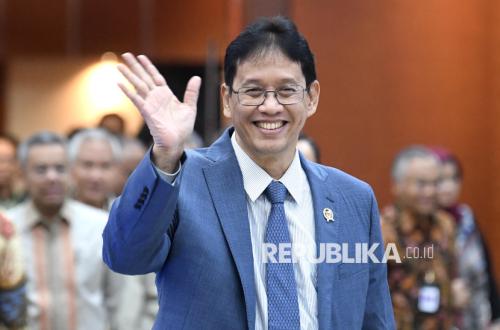
The State Budget (APBN) deficit up to April 2026 has begun to shrink. The Ministry of Finance recorded the deficit at Rp 164.4 trillion, or 0.64 per cent of Gross Domestic Product (GDP). This figure represents an improvement from the March 2026 position, which stood at Rp 240.1 trillion or 0.93 per cent of GDP. However, it remains lower than April last year, when the budget recorded a surplus of Rp 4.3 trillion or 0.02 per cent of GDP. Finance Minister Purbaya Yudhi Sadewa stated that improvements are becoming visible alongside the rise in state revenue over recent months.
“The realisation up to April 2026 shows a deficit of Rp 164.4 trillion or 0.64 per cent of GDP. In March, the position was still 0.93 per cent of GDP,” Purbaya said during the APBN KiTa Media Briefing in Jakarta on Tuesday (19/5/2026).
State revenue up to April was recorded at Rp 918.4 trillion, representing a year-on-year growth of 13.3 per cent. Meanwhile, state expenditure reached Rp 1,082.8 trillion, an increase of 3t4.3 per cent compared to the same period last year. According to Purbaya, this condition indicates that the state budget remains expansive to maintain economic growth, while the deficit remains controlled.
“The situation is improving. The primary balance has achieved a surplus of Rp 28 trillion and will continue to improve moving forward as state revenue grows,” he said.
State revenue is primarily supported by the taxation sector. Up to April 2026, tax revenue reached Rp 746.9 trillion, growing by 13.7 per cent. Of that amount, tax receipts reached Rp 646.3 trillion, an increase of 16.1 per cent. This performance marks a reversal from April last year, when tax growth was still contracting by 10.8 per cent. The government remains optimistic that the revenue trend will continue to strengthen until the end of the year.
In addition to taxes, non-tax state revenue (PNBP) also grew by 11.6 per cent to Rp 171.3 trillion, supported by natural resource revenues and services provided by ministries and agencies. “This means the prospects are much better than last year when conditions were difficult. Last year, tax growth was still declining,” said Purbaya.
Purbaya added that the government is also ensuring the acceleration of spending. Central government expenditure was recorded at Rp 826 trillion, growing by 51.1 per cent, while transfers to regions reached Rp 256.8 trillion.
Purbaya emphasised that a primary surplus does not mean the government is restricting state expenditure. According to him, spending continues to be accelerated to ensure that public economic activity does not slow down.
“A primary surplus does not mean spending is being braked. Spending was accelerated, growing by 34.3 per cent up to April. Therefore, this does not mean the government is dominating economic growth,” he said. He added that the role of the state budget in total national economic activity remains below 10 per cent, with more than 90 per cent of economic movement still originating from the private sector and public consumption.