
Purbaya Reveals Purpose of PFII Formation, Not Just Chasing Investment
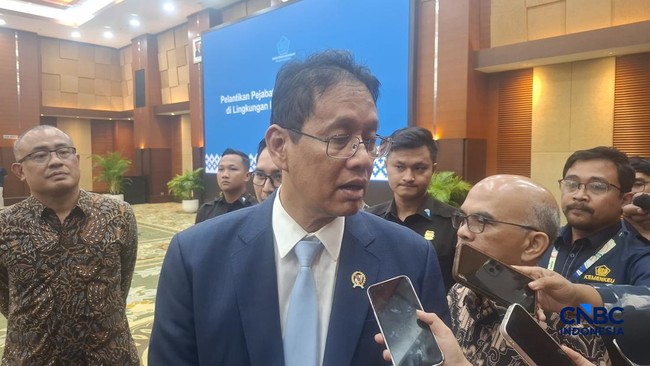
The government, together with Commission XI of the Indonesian House of Representatives (DPR RI), has officially agreed to proceed with the Bill on the Indonesian International Financial Centre (RUU PFII) to the Level II Deliberation or decision-making stage at the DPR RI Plenary Session. The agreement marks an important step in efforts to strengthen the national financial sector while enhancing Indonesia’s competitiveness as an international financial hub in the region. Finance Minister Purbaya Yudhi Sadewa expressed appreciation to the leadership and all members of Commission XI for the constructive discussions that led to the agreement at the Working Committee level. “The government extends its highest appreciation to the leadership and members of Commission XI DPR RI and the PFII Bill Working Committee for the cooperation, commitment, and constructive, productive, and effective discussions during the drafting of the PFII Bill,” Purbaya stated during a working meeting with Commission XI DPR RI on Monday (20/7/2026). According to Purbaya, the government and the DPR share a common view on the importance of establishing the PFII as a strategic instrument to deepen domestic financial markets, expand financing sources, increase investment, and strengthen Indonesia’s position in the global financial ecosystem. The PFII Bill itself is a mandate of Article 248A of Law Number 4 of 2026 concerning Amendments to Law Number 4 of 2023 on the Development and Strengthening of the Financial Sector (P2SK). This regulation mandates the establishment of an Indonesian International Financial Centre through a separate law. In the draft legislation, the government and the DPR agreed on the formation of a PFII area with specific particularities, supported by an independent institution of international standard to support financial sector activities and various globally oriented business activities. The PFII Bill also regulates a number of strategic aspects, ranging from institutional governance, types of business activities, and dispute resolution mechanisms, to various tax facilities and special incentives to enhance investment attractiveness. The government assesses that the presence of the PFII will act as a new catalyst for national financial sector development. This financial centre is expected to strengthen financing for priority sectors, support national strategic projects, accelerate the development of the green and blue economies, expand Islamic finance, and encourage financial technology (fintech) innovation. Furthermore, the PFII is expected to accelerate national industrial transformation through increased access to more competitive global funding sources. At the conclusion of the discussions, the government formally accepted the results of the PFII Bill deliberations at the Working Committee level and declared its agreement to bring the draft law to the next stage. “On behalf of the Government, we accept the results of the bill discussions at the Working Committee level, which form the basis for today’s Level I decision-making. Furthermore, we agree to proceed to the Level II Deliberation or decision-making on the Indonesian International Financial Centre Bill at the DPR Plenary Session,” Purbaya affirmed. He stressed that synergy between the government and the DPR is a crucial factor in realising a financial sector that is resilient, inclusive, deep, stable, and globally competitive. Through the formation of the PFII, the government hopes to strengthen national economic sovereignty, attract larger amounts of productive investment, create new jobs, and support sustainable economic growth amidst increasingly intense global competition.