
Purbaya Responds to Tax on BPJS Ketenagakerjaan Old-Age Benefit Disbursements
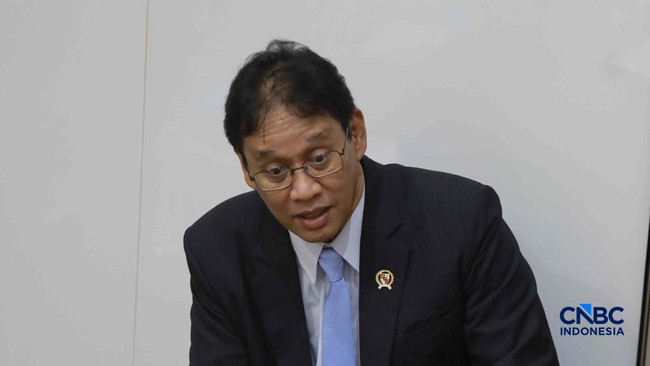
Finance Minister Purbaya Yudhi Sadewa has addressed the issue currently under scrutiny by labour groups, namely the 5% tax imposed on the disbursement of Old-Age Benefit (JHT) funds from BPJS Ketenagakerjaan. Purbaya stated that he would first re-examine the provisions with the Director General of Taxes before commenting further. “I will check again with the Director General of Taxes. I will look into it again,” Purbaya said at his office in Jakarta on Friday (26/6/2026). The issue was previously raised by Mirah Sumirat, President of the All-Indonesia Workers Union Association (ASPIRASI). She explained that the government applies a final income tax of 5% on JHT balances exceeding Rp50 million, along with certain progressive rates for subsequent disbursements in accordance with applicable tax regulations. Consequently, Mirah emphasised that labour unions across Indonesia firmly reject the tax deduction policy on BPJS Ketenagakerjaan JHT disbursements. Workers, she asserted, consider the policy to be against their interests, particularly for those who have been laid off or are experiencing economic hardship. “JHT is a worker’s right. It is money earned from the sweat of labourers, saved throughout their working lives to support them when they are no longer employed. It is extremely unfair that when workers are facing economic difficulties, have been laid off, or wish to use JHT as business capital, they are still subject to tax deductions,” Mirah said in a press release on 25 June 2026. Meanwhile, according to a post on the official Instagram account @ditjenpajakri, the income tax on JHT benefits is based on Government Regulation No. 68/2009 and Minister of Finance Regulation No. 16/2010. “This regulation has been in place for a long time, stipulated in Government Regulation No. 68/2009 and Minister of Finance Regulation No. 16/2010. The income is subject to Article 21 Income Tax,” the post stated. The post stressed that the JHT tax is not paid monthly at the time of salary or allowance payment by the company, but only upon disbursement. “It should be emphasised that this old-age benefit is not included as a component of taxable income deducted monthly, so the old-age benefit has not been taxed yet,” it said. The income tax rates for JHT disbursement fall into two categories: 1. For disbursements within a maximum period of two years, a final Article 21 Income Tax rate is applied: a. 0% for disbursement amounts up to Rp50 million b. 5% for disbursement amounts exceeding Rp50 million 2. If the period exceeds two years, the Article 21 Income Tax applied is not final, but uses the progressive rates under Article 17 of the Income Tax Law. Based on Income Tax Law No. 36/2008 Article 17 paragraph (1), the tax rates applied to taxable income for individual domestic taxpayers are as follows: a. 5% for taxable income brackets up to Rp50 million b. 15% for taxable income brackets above Rp50 million to Rp250 million c. 25% for taxable income brackets above Rp250 million to Rp500 million d. 30% for taxable income brackets above Rp500 million