
Purbaya Regulates Import Duties on Indonesian-Japanese Goods Under IJEPA
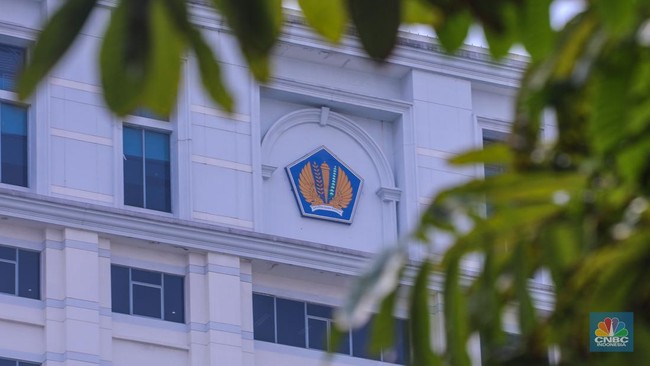
Jakarta, CNBC Indonesia - The government has issued Finance Minister Regulation (PMK) No. 61 of 2026 concerning procedures for utilising import duties under the User Specific Duty Free Scheme (USDFS) within the framework of the agreement between Indonesia and Japan on an economic partnership (IJEPA).
This regulation was issued to provide legal certainty and services to business actors in implementing the Protocol Amending the Agreement, which has been ratified through Presidential Regulation Number 32 of 2026.
The considerations state that it is necessary to regulate the procedures for implementing the USDFS in accordance with the specificities of Section 3 Notes for Schedule of Indonesia Note 2 in Section 1 of Part 3 of Annex 1, as well as the implementation of Article 13 paragraph (2) of Law Number 17 of 2006 concerning Customs. This regulation replaces Finance Minister Regulation Number 51/PMK.010/2022 because it did not yet regulate the procedures for utilising the scheme.
PMK No. 61 of 2026 contains provisions on USDFS IJEPA import duties and user categories, stipulating that the utilisation of USDFS IJEPA import duties can only be carried out after the User obtains a USDFS IJEPA industrial verification certificate in accordance with the provisions of laws and regulations in the industrial sector, and the determination of USDFS IJEPA import duties through a Ministerial Decree. Registrants consist of driving industries, steel service centres, and supporting industries.
Furthermore, it affirms that the Ministerial Decree regarding the use of tariffs within the framework of USDFS IJEPA contains technical data and quotas as requirements for the implementation of the scheme’s utilisation.
Regarding the submission of applications and delegation of authority, the Minister is authorised to determine USDFS IJEPA import duties and may delegate this authority to the Director.
Applications for determination are submitted by the User electronically through SINSW, attaching the USDFS IJEPA industrial verification certificate and its attachments, technical data (Mill/Inspection Certificate or Letter of Statement or drawing sheet), and industrial sector business permits. If the documents are already available in SINSW, the applicant does not need to attach them again.
If SINSW cannot be used or experiences operational disruptions, the application may be submitted in writing or hardcopy using the format in Appendix A. The review of the application by the Director on behalf of the Minister must be completed no later than 3 working days for electronic applications and 5 working days for written applications from the date the application is complete.
If the application is accepted, the Director on behalf of the Minister issues a Ministerial Decree containing the tariff heading/HS code, the sequence number of the tariff heading in accordance with the relevant Ministerial Regulation, goods specifications, quantity and unit of goods, and import plan. If rejected, a rejection notification letter is issued with reasons.
The Ministerial Decree may be amended upon the User’s application, submitted no later than 90 days before the import period ends, electronically through SINSW, attaching the amended USDFS IJEPA industrial verification certificate, technical data, and permits, with the same review and decision time of 3/5 working days.
Importation of raw materials is carried out in accordance with customs procedures in the import sector, and the settlement of customs declarations is carried out at the Customs Office of the designated port of entry, as stated in the Ministerial Decree.
On the import customs declaration document, the User is required to attach the original Certificate of Origin (Form IJEPA) from the authorised agency in Japan and a printed copy of the Ministerial Decree, as well as include facility code 60, the number and date of the Ministerial Decree, the reference number and date of Form IJEPA, and the classification and imposition of import duty tariffs under the USDFS IJEPA scheme.
Examination of import documents is carried out by customs and excise officials at the Customs Office of entry. Customs and Excise officials examine the import customs declaration documents to determine the imposition of USDFS IJEPA import duties, after fulfilling the rules of origin in accordance with regulations concerning the Indonesia-Japan Agreement. If the rules of origin are not fulfilled, the use of USDFS is rejected and the general tariff (Most Favoured Nation) is applied.
If the rules of origin are fulfilled, the examination covers the declaration document and its attachments, the conformity of quantity/type/specification with physical inspection if conducted, a copy of the Ministerial Decree, the realisation of imports against the quota stated, the completion of the import facility column with the Ministerial Decree number and facility code 60, and the completion of tariffs and facilities in accordance with USDFS IJEPA import duties.
Compliant results will be granted USDFS IJEPA import duties, while non-compliance results in rejection and the imposition of tariffs in accordance with the provisions of related regulations. The imposition of USDFS IJEPA import duties may be subject to re-examination or customs audit.
SINSW or the Directorate General of Customs and Excise Portal deducts the import quota for raw materials receiving the USDFS scheme electronically by calculating the amount in the Appendix of the Ministerial Decree minus the amount that has obtained a registration number on the import customs declaration.
Users importing under the USDFS IJEPA scheme are required to maintain books/records and separate inventory of goods imported using the USDFS scheme in accordance with import documents for customs audit purposes, and to store documents, records, and books related to the use of the scheme for 10 (ten) years at their place of business.
Raw materials imported under the USDFS IJEPA scheme must be used entirely for production activities by the User. If some or all are not used or will be transferred, they must be settled as Residual Raw Materials and/or Residual Goods, and import duties must be paid based on the generally applicable tariff (Most Favoured Nation) as well as import taxes in accordance with the provisions.
Residual Goods produced by supporting industries are subject to tariffs and restrictions in accordance with the relevant laws and regulations concerning tariff determination within the framework of the Indonesia-Japan Agreement. Verification of Residual Raw Materials/Residual Goods is carried out according to the provisions of laws and regulations in the industrial sector, and the criteria for residuals and scrap are also regulated by these provisions.
Settlement of customs procedures for unused Raw Materials and/or Residual Goods may be carried out through payment of import duty tariffs and import taxes by the User to the Customs Office through a voluntary payment mechanism after obtaining a verification certificate for Residual Raw Materials/Residual Goods from the designated industrial official, and/or based on the results of re-examination or customs audit.
Proof of payment or settlement of import duties and taxes on Residual Raw Materials/Goods for the two previous years of utilisation is a requirement for submitting an application in the following period for the use of USDFS IJEPA import duties.
Violations of provisions related to bookkeeping, use, settlement of Raw Materials, or provisions in the customs sector are subject to sanctions in accordance with the provisions of laws and regulations in the customs sector.