
Purbaya Readies Regional Incentive Funds for 2027, Local Governments Must Meet These Conditions
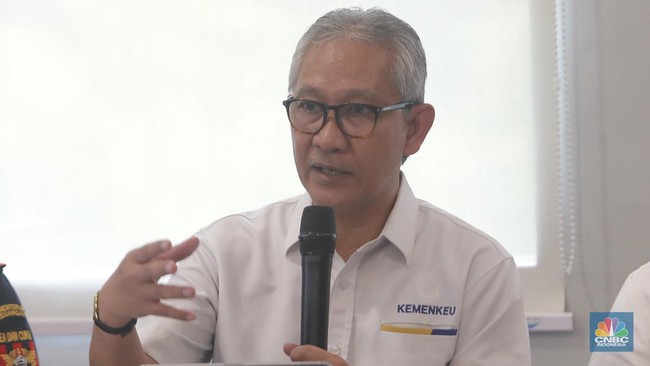
Jakarta, CNBC Indonesia - Finance Minister Purbaya Yudhi Sadewa is again preparing fiscal incentive funds (DIF) for the 2027 fiscal year for regional governments. Director General of Fiscal Balance Askolani stated that the budget amount is still being prepared, taking into account the ceiling for the Transfer to Regions (TKD) budget designed in the 2027 State Budget Draft (RAPBN). The draft TKD budget for 2027 ranges between 2.55% of gross domestic product (GDP) to 2.79% of GDP, while the 2026 TKD budget is equivalent to 2.69% of GDP. As for the fiscal incentive fund, the 2026 State Budget Law sets it at Rp 1.8 trillion, a decrease of around 70% compared to the Rp 6 trillion allocation in the 2025 State Budget Law. “The fiscal incentive fund policy will of course be adjusted to the existing ceiling in 2026-2027,” Askolani said during a working meeting on TKD policy in the 2027 State Budget Draft with the Budget Committee of the House of Representatives in Jakarta on Tuesday (23/6/2026). Askolani explained that the 2027 fiscal incentive fund policy remains similar to previous years, aimed at creating competition among regions to improve performance in supporting national priorities. It also seeks to sharpen performance indicators for regional governments regarding financial management, basic public services, and efforts to improve community welfare. Finally, it aims to enhance regional governments’ understanding of fiscal incentive fund management through dissemination, education, and technical guidance. “For regional government performance that we appreciate, we will continue to support by providing incentives so that regional governments compete to carry out development and better APBD management,” Askolani said. “From there, we will direct additional incentives in the implementation of the 2027 APBD and APBN, the same as we will do in 2026,” he explained. The conditions for obtaining regional incentive funds in 2027 remain similar to previous years, namely that regional governments must be able to reduce poverty through their APBD policies, reduce stunting prevalence, increase investment, control inflation, and meet other targets according to national priority work programmes.