
Purbaya Ratifies Duty-Free Import Scheme from Japan, Here Are the Details
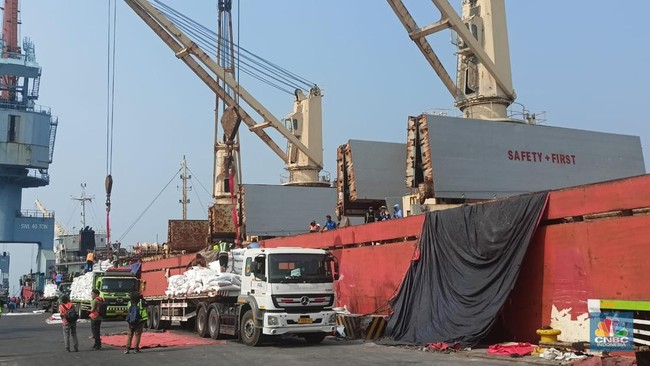
Jakarta, CNBC Indonesia – The government has formally overhauled import duty tariff provisions on goods from Japan, pursuant to the agreement between the Republic of Indonesia and Japan concerning an economic partnership.
The regulation was signed by Finance Minister Purbaya Yudhi Sadewa, who signed Minister of Finance Regulation (PMK) Number 60 of 2026 on 31 July 2026, effective from 1 August 2026. This PMK simultaneously revokes the old rule, namely PMK Number 50/PMK.010/2022, which governed the same matter.
The issuance of PMK 60/2026 follows the enactment of Presidential Regulation Number 32 of 2026 concerning the Protocol Amending the Indonesia-Japan Agreement on an Economic Partnership (Protocol Amending the IJEPA).
The government considered the old regulation no longer relevant because it had yet to accommodate additional Indonesian market access commitments resulting from the renegotiation, including the tariff rate quota scheme and adjustments to the special duty-free scheme for specific users, known as the User Specific Duty Free Scheme (USDFS).
“Imposing import duties on goods from Japan pursuant to the Agreement between the Republic of Indonesia and Japan concerning an Economic Partnership,” as quoted from Article 1 of PMK 60/2026, Wednesday (5/8/2026).
Under this regulation, the government has set a new import duty tariff structure covering thousands of tariff lines (HS Codes) for goods imported from Japan, as listed in Annex A of the PMK.
The tariffs apply in six phases:
The 2026 tariff, effective from when the PMK takes effect until 31 December 2026
The 2027 tariff, effective 1 January to 31 December 2027
The 2028 tariff, effective 1 January to 31 December 2028
The 2029 tariff, effective 1 January to 31 December 2029
The 2030 tariff, effective 1 January to 31 December 2030
The 2031 tariff onwards, permanently effective from 1 January 2031
This phased tariff reduction scheme is a common pattern in free trade agreements, whereby import duties are progressively lowered each year until reaching the final level agreed by both countries.
One of the crucial points in this regulation is the introduction of a tariff rate quota (TRQ) scheme, which previously was not specifically regulated. This scheme divides tariffs into two types.
The first is the in-quota preferential tariff, applied to imports still within the annual quota limit, at Rp450 per kilogram. The second is the out-quota preferential tariff, applied when import volumes exceed the annual quota, at the generally applicable import duty rate (not the preferential tariff).
The annual quota under this scheme is set at 8,500 tonnes per year. Quota deductions will be made automatically through the Indonesia National Single Window (INSW) system, so businesses must monitor remaining quotas regularly to avoid miscalculating tariffs during the import process.
The PMK also sets a 0% import duty for raw materials from Japan covered under the User Specific Duty Free Scheme (USDFS), as listed in Annexes B and C. This scheme is typically granted specifically to certain companies or industries (known as Users) that have met the requirements of the customs authorities.
However, there is an exception for production waste, namely raw materials that have gone through the production process but were unused by industry because they did not meet specifications. For certain tariff lines – the majority of which are iron and steel products with HS codes 7208 and 7209 – such waste is subject to a 5.25% import duty, capped at 65% of the volume of waste produced in the previous year. Beyond that provision, the waste will be subject to the general (non-preferential) import duty.
The regulation also affirms the protection principle for importers: if the general import duty (MFN) turns out to be lower than the preferential tariff under the IJEPA scheme, the lower general tariff applies. This means businesses automatically receive the cheapest of the two tariffs.
For imported goods whose customs documents were already registered with a number and date at the customs office before this PMK took effect, the process continues to follow the old rules in accordance with the Customs Law in force at the time of registration.
For businesses that routinely import goods from Japan – from agricultural commodities and livestock products to industrial raw materials such as iron and steel – this regulation provides long-term tariff certainty through 2031, as well as low-tariff incentives for industries utilising the USDFS duty-free scheme.
However, businesses also need to carefully monitor the annual quota under the tariff rate quota scheme to avoid being hit by out-quota tariffs, which are far higher than in-quota tariffs.
Overall, the classification of goods declared for import must still comply with the Minister of Finance Regulation on the goods classification system and the imposition of import duties on imported goods in force, as further regulated under a separate PMK.
Source: jawawa.id (https://jawawa.id/newsitem/purbaya-ratifies-duty-free-import-scheme-from-japan-here-are-the-details-1785905485)
Originally published by CNBC Indonesia (https://www.cnbcindonesia.com/news/20260805103631-4-756676/purbaya-sahkan-skema-bebas-bea-masuk-impor-dari-jepang-ini-rinciannya), translated from Indonesian