
Purbaya: PFII Managed Funds Could Finance Danantara Projects
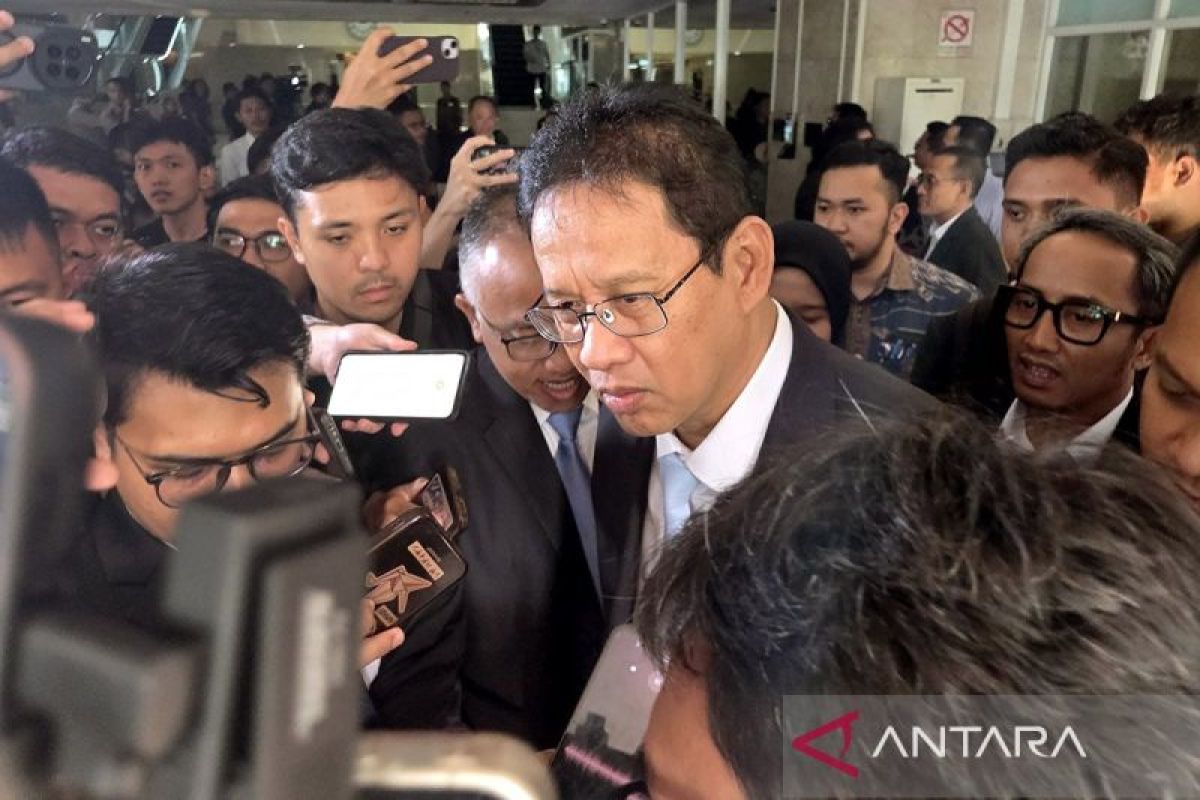
Jakarta (ANTARA) - Finance Minister Purbaya Yudhi Sadewa stated that investment funds managed through the Indonesia International Financial Centre (PFII) could become a source of financing for numerous domestic projects, including Danantara projects.
Funds entering the PFII will be managed by market players and invested in various projects deemed to be business-profitable, rather than being subject to government assignments.
“These funds enter the financial centre (PFII). They must be circulated. The financial centre will determine where to invest. We hope they can enter attractive domestic projects,” said Purbaya when met at the Parliament Complex, Jakarta, on Thursday.
The Minister emphasised that PFII investments will be entirely market-based.
“This is a market-based project; it is up to them, not forced. Therefore, attractive projects will be offered to them (PFII investors). For instance, if some Danantara projects are attractive, but other non-Danantara projects are also attractive,” he explained.
In addition to financing investment projects, Purbaya said that funds managed through the PFII could also serve as a source of budget financing through the purchase of Government Securities (SBN).
“It can also be used to pay government debt. If we issue bonds (SBN), they can purchase them. Thus, my funding sources will become more complete. This will include the US, Japan, Australia, and China. This way, we will be stronger in terms of financing,” the Minister added.
Nevertheless, regulations regarding the PFII are still in the early stages of discussion. As is known, the Government, together with the House of Representatives (DPR RI), is currently discussing the Bill on the PFII.
This regulation will serve as the legal foundation for establishing an international-standard financial centre, which is expected to attract investment, strengthen the national financial sector, and enhance Indonesia’s global competitiveness.
In a Working Meeting with Commission XI of the DPR RI, Purbaya stated that the drafting of the PFII Bill is part of the government’s efforts to realise a national economy that is stronger, more inclusive, sustainable, and globally competitive.
“This Bill is being drafted as part of the government’s efforts to realise a national economy that is stronger, more inclusive, sustainable, and globally competitive, as reflected in the Astaciti programme,” he said.
According to him, Indonesia possesses significant capital to become a major player in the global financial ecosystem, ranging from the size of the national economy and the vast domestic market to its strategic geographical position, natural resource wealth, and long-term economic growth prospects.
However, to date, Indonesia does not yet possess an international financial zone specifically designed with governance standards, legal certainty, institutional frameworks, and competitiveness equal to various global financial centres.
Therefore, the government proposes the establishment of the PFII as a specialised zone to accommodate the needs of the global financial services industry while acting as a catalyst for the deepening of the national financial sector.
“The establishment of the PFII is intended to increase Indonesia’s competitiveness as an international financial centre, act as a catalyst for deepening the national financial sector, develop financial sector innovation, increase investment, facilitate real sector financing, national strategic projects, sustainable financing, and strengthen the financial sector’s contribution to Indonesia’s overall economic growth,” said Purbaya.
He added that the drafting of the PFII Bill is also a mandate of Article 248A of Law Number 4 of 2026 regarding the Amendment to Law Number 4 of 2023 on the Development and Strengthening of the Financial Sector (PPSK); thus, the establishment of the PFII has a strong legal foundation as part of the national financial sector transformation agenda.