
Purbaya: I Have Never Been Reckless with State Finances
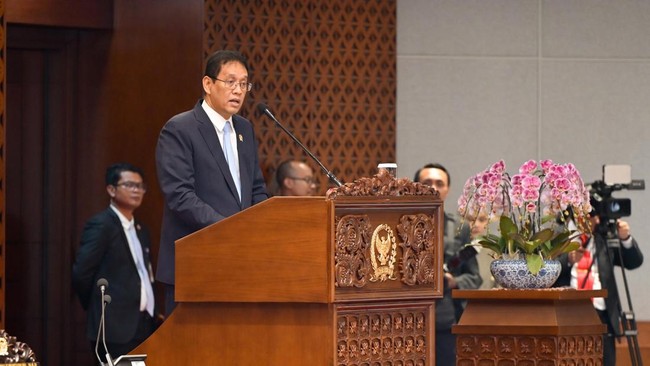
Jakarta, CNBC Indonesia - Finance Minister Purbaya Yudhi Sadewa has affirmed that he has never been careless in managing state finances, in order to keep Indonesia’s economy strong.
Purbaya explained that Indonesia’s economy grew 5.61% in the first quarter of 2026, and in the second quarter of 2026 was slightly disrupted due to the placement of the Budget Surplus (SAL) into Himbara banks. However, he denied that this was done of his own accord.
“In Q2-2026 things were slightly disrupted because you (the head of DPR Commission XI) said I suddenly took money. I did not just take money like that; I wanted to add as much as possible, but I am not the central bank. When BI gave me a signal not to interfere in monetary policy, I complied. So I have never been careless in this matter, especially when it concerns the fate of the nation,” Purbaya said during a working meeting with Commission XI of the DPR, Wednesday (15/7/2026).
Purbaya asserted that if he had acted carelessly regarding the SAL placement, it would have had repercussions on the economy, which could potentially suffer shocks.
“I understood full well that if I took it, the economy would collapse. But we did not want to interfere with another institution’s authority. At the time they said they would replace it, so I withdrew. It turned out it was not that simple, so I injected it again,” he explained.
Purbaya’s reason for doing so was to synchronise policy with other institutions, including the DPR.
“So it is not that I was playing around or advancing and retreating without calculation. It was to synchronise policy with other institutions, including the DPR. Going forward, we will be more careful in managing the SAL,” he said.
Purbaya explained that the placement of state funds was carried out with varying maturities: Rp 200 trillion until the end of 2026, Rp 100 trillion for the next three months, and Rp 100 trillion in funds that can move in and out to ensure there is sufficient liquidity in the system.