
Purbaya: 'I am not lying', economic data shows significant improvement
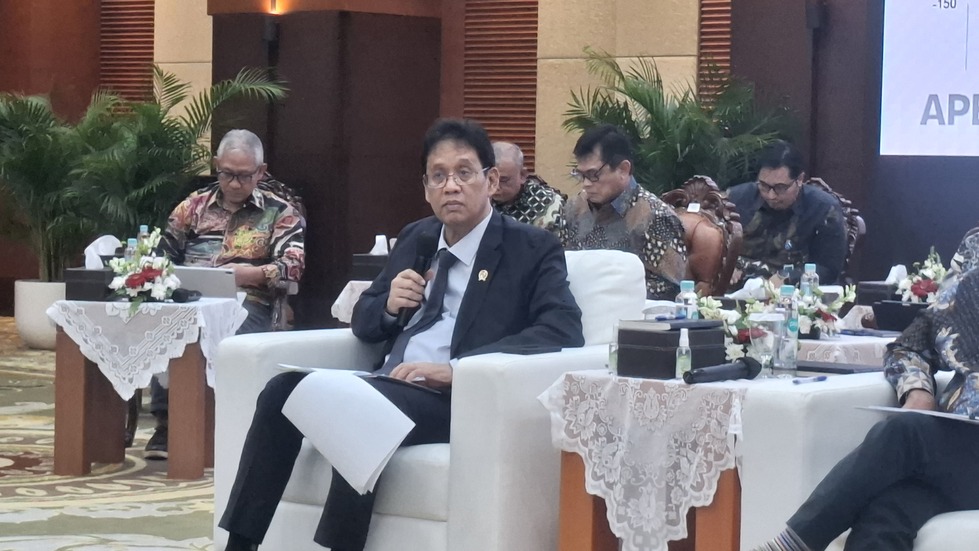
Minister of Finance Purbaya Yudhi Sadewa has stressed that Indonesia’s economic and fiscal conditions up to the end of May 2026 are robust. He dismissed the notion that the government is presenting an economic picture that does not match actual conditions.
According to Purbaya, various macroeconomic indicators as well as the performance of the State Budget (APBN) show a positive trend. As of 31 May 2026, state revenue reached Rp1,185 trillion, or 37.6% of the APBN target of Rp3,153.6 trillion. This realisation grew by 19.1% compared to the same period the previous year.
Meanwhile, state expenditure was realised at Rp1,365.4 trillion, an increase of 34.4% year-on-year. Amidst this accelerated spending, the APBN deficit was maintained at a level of Rp180.4 trillion, equivalent to 0.70% of gross domestic product (GDP). The primary balance also recorded a surplus of Rp58.6 trillion.
“So, actually from the data it can be seen that the economy has improved significantly. It is not a game, I am not lying. The GDP figure is good,” Purbaya said at the APBN KiTa press conference for the May 2026 edition in Jakarta on Friday (5/6).
He explained that the government’s macroeconomic assumptions have so far remained in line with realisations on the ground. Economic growth was recorded at 5.61%, higher than the initial assumption of 5.4%. Meanwhile, inflation up to May stood at 3.08% and the rupiah exchange rate year-to-date was around Rp17,057 per US dollar.
Purbaya stressed that he always prioritises the use of accurate data in formulating economic policy. According to him, accurate data interpretation is important so that the government can take swift stimulus measures if necessary.
“So my interest is in seeing accurate data. Not fake data,” he stated.
From the inflation side, Purbaya assessed that the increase in inflation to 3.08% was still within a healthy and controllable range. The increase was mainly triggered by the volatile food group, particularly the prices of red chillies and shallots affected by extreme weather.
Nevertheless, he judged the pressure to be temporary and likely to ease once supply conditions return to normal.
“So although it has risen, it is still within reasonable limits,” Purbaya said.
According to him, the ideal inflation is neither too high nor too low. The government targets inflation in the range of 1.5% to 3.5% so that it continues to support economic activity and people’s purchasing power. To maintain price stability, the government will continue to control food supply through strengthening the national food reserve, provide flight ticket discounts during the school holiday period, and ensure subsidised fuel prices remain affordable.
In the area of state revenue, Purbaya highlighted a significant improvement in tax revenue. Up to May 2026, tax revenue grew by 22.1% year-on-year. Customs and excise revenue also grew positively by 0.7%, while non-tax state revenue (PNBP) increased by 19.9%.
He compared this achievement with conditions in the same period last year, when tax revenue was still contracting by 11.3% and PNBP fell by 33.2%.
“So, there has been a significant improvement in tax, especially compared to the condition last year. Last year, full-year tax growth was negative, now it is positive. Perhaps going forward it will grow 20.5%,” he stated.
Purbaya also assessed that the acceleration of state expenditure was proceeding according to the government’s plan to support economic growth. Ministry/institutional spending increased by 58.9%, non-ministry/institutional spending rose by 47%, while transfers to regions experienced a slight decline of 4.9%.
According to him, the combination of increased revenue and well-maintained expenditure management has made Indonesia’s fiscal condition increasingly sustainable. This was reflected in the primary balance surplus, which returned to positive at Rp58.6 trillion.
He also dismissed various notions suggesting that government budget management was being conducted aggressively and posed a risk to economic stability or the rupiah exchange rate.
“Our budget is now more sustainable compared to previous months. Do not say it is reckless or creating a chaotic budget that disrupts the stability of the rupiah,” he said.
Purbaya emphasised that various fiscal indicators pointed to a healthy condition, from increased state revenue and measured expenditure growth to a deficit that remained under control.
“I am somewhat confused where that comes from. From here, everything is good, revenue is up, the value is up, the deficit is maintained. So the fiscal condition is very good,” said the state treasurer.