
Purbaya Explains to DPR the Purpose of Placing State Funds in State-Owned Banks
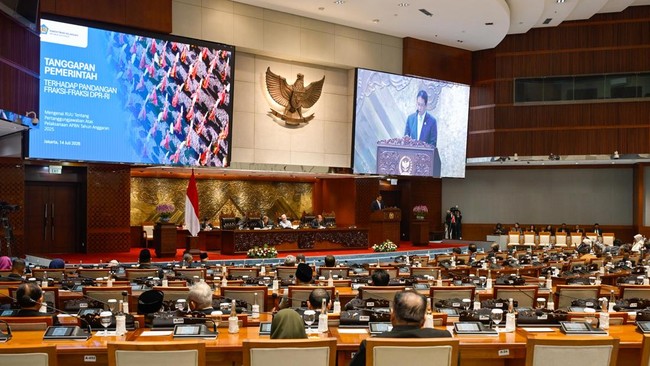
Finance Minister Purbaya Yudhi Sadewa has explained the rationale behind the policy of placing state funds, specifically the Budget Financing Surplus (SAL) previously held solely at Bank Indonesia, into the Association of State-Owned Banks (Himbara).
Purbaya stated that the transfer of state funds to Himbara is intended to encourage credit growth in order to boost the real sector. “We can convey here that the transfer of SAL funds to commercial banks aims to encourage real sector growth through good cash management,” he said during a presentation at the DPR Plenary Session in Jakarta on Tuesday (14/7/2026).
According to Purbaya, the presence of SAL funds in banks can reduce the cost of business operations for the banks. “This is done by placing idle government cash in partner commercial banks at low interest rates, thereby reducing the cost of funds for the banking sector,” he added. The cost of fund refers to the expenses banks must pay for using funds from other sources, such as customers or institutions, which is determined by the interest rate paid to depositors.
Previously, the Ministry of Finance had also explained the policy of replacing SAL funds in Himbara after a withdrawal earlier in the year. The placement value has now returned to around Rp 200 trillion, the same level as when the SAL placement in Himbara began in September 2025. In total, the value is Rp 281 trillion, with Rp 100 trillion kept on standby at Bank Indonesia to be sent directly to banks if needed by the Finance Minister.
“From the initial Rp 281 trillion, Rp 110 trillion was withdrawn. This has now been returned, so it remains at Rp 281 trillion,” said Vice Minister of Finance Juda Agung during a press conference at the DPR/MPR Building in Jakarta on Monday (29/6/2026). The policy change came after banks reported a liquidity squeeze in recent times, while demand for credit has increased, necessitating full support from the government and Bank Indonesia. “Indeed, banks need liquidity to channel credit,” Juda Agung stressed.