
Purbaya Denies Plans to Implement Toll Road Tax Targeting the Wealthy
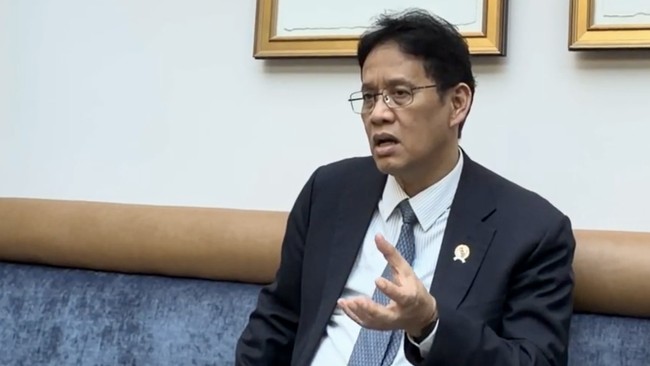
The spread of rumours regarding the imposition of toll road taxes, including specific taxes targeting the wealthy, has prompted Finance Minister Purbaya Yudhi Sadewa to speak out.
During a media briefing he held today, Friday (24/4/2026), at the Purnawarman Campus BPPK Building in Jakarta, Purbaya emphasised that he would not impose new taxes until the public’s economic conditions have recovered.
“Due to the confusion, we’re imposing taxes on the wealthy, toll road taxes, oh so many things. I asked the Director General of Taxes,” said Purbaya.
“We will not impose new taxes until our economy is sufficiently good,” Purbaya stressed.
As is known, the issue of toll road taxes initially emerged because it is included in the Strategic Plan of the Directorate General of Taxes (DJP) for 2025-2029, which has been issued by Director General of Taxes Bimo Wijayanto since 19 December 2025, through the issuance of Decision of the Director General of Taxes Number KEP-252/PJ/2025.
In the DJP Strategic Plan 2025-2029, Bimo has systematically designed a regulatory framework consisting of three draft ministerial regulations (RPMK). One of them concerns the expansion of the tax base for fairness.
These RPMKs include regulations on the mechanism for collecting VAT on the provision of toll road services in 2028, the implementation of carbon tax in 2026, and the collection of taxes on foreign digital transactions that have been completed since 2025.
“The mechanism for collecting VAT on the provision of toll road services is planned to be completed in 2028,” quoted from the DJP Strategic Plan 2025-2029.
Meanwhile, regarding taxing the wealthy, this is also part of the content of the DJP Strategic Plan 2025-2029, which forms part of the policy direction to optimise state revenues up to 2029.
In the DJP Strategic Plan 2025-2029, optimising tax revenue is crucial because the target tax revenue ratio to gross domestic product (GDP) is increasing year by year. In 2025, the target is 10.24%, while in 2029 it becomes 11.52%-15%.
Strategies related to the extensification and intensification of tax revenue are outlined in three aspects. The first is enhancing supervision of compliance for Taxpayer Groups, taxpayers with transactions influenced by special relationships, and Prominent Individual Taxpayers, alias crazy rich.
The second is expanding the tax base through the utilisation of data and digital technology, and the third is strengthening focused supervision on the digital economy and shadow economy.
Specifically, the policy direction for enhancing supervision of compliance for Taxpayer Groups, taxpayers with transactions influenced by special relationships, and Prominent Individual Taxpayers is implemented through the Strategic Taxpayer Supervision strategy, which focuses on Taxpayer Groups, taxpayers with Transactions Influenced by Special Relationships, and Prominent Individual Taxpayers.
In addition, by utilising the Cooperative Compliance Mechanism (CCM)/Tax Control Framework (TCF), which is a compliance mechanism emphasising the relationship between DJP and taxpayers based on transparency, cooperation, and trust.