
Purbaya Confirms Customs Role Unchanged Despite One-Stop Export Policy
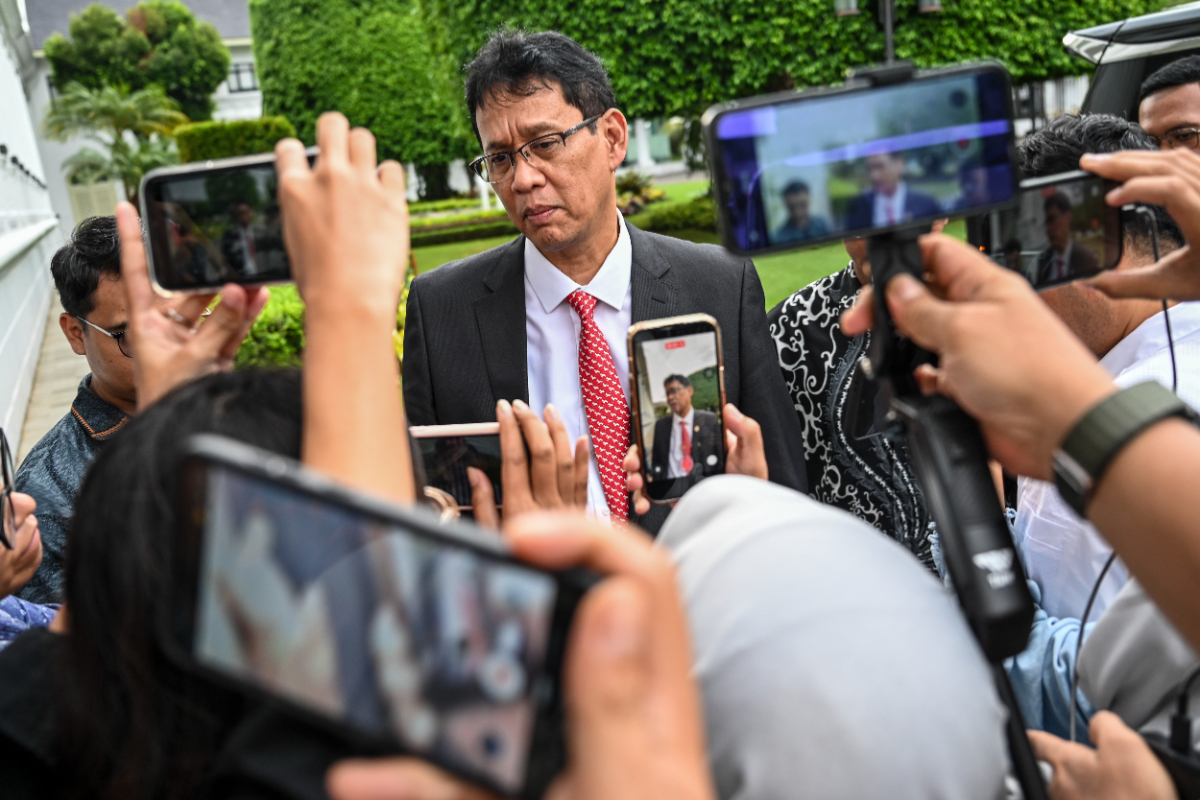
Finance Minister Purbaya Yudhi Sadewa confirmed that the Customs Agency’s role remains unchanged despite the one-stop export policy. As reported, the government has mandated state-owned enterprise PT Danantara Sumberdaya Indonesia (DSI) to handle exports of natural resource commodities such as palm oil, coal, and iron alloys.
“It remains the same. DSI handles the trading, but Customs still checks the imports and exports. So the Customs function isn’t disappearing,” Purbaya said after attending a limited coordination meeting at the Coordinating Ministry for Economic Affairs office in Jakarta on Tuesday (26 May).
The Finance Minister also stated he has not received any instructions from President Prabowo to eliminate Customs’ functions.
“And the President does not seem to have discussed such plans. In fact, he said we should strengthen Customs,” Purbaya added.
“Its role remains the same but will be refined, as per the President’s speech. If they’re not up to the task, he said their heads must roll,” he added.
However, Purbaya declined to comment on whether senior Customs officials would be replaced. “We are waiting for higher political decisions,” he said.
Previously, National Economic Council (DEN) Chairman Luhut Binsar Pandjaitan hinted at possible changes to Customs’ role in relation to the strategic commodity export policy through DSI.
Luhut made the remarks during the ASEAN Regional Economic Outlook and Fiscal Policy event at DEN’s office in Central Jakarta on Monday (25 May).
“We’ll see. If it’s not needed, why use Customs? Or maybe Customs’ duties remain, but everything is AI,” he said.
However, National Economic Council spokesperson Jodi Mahardi clarified the statement. He said the focus of trade regulation improvements is primarily on strengthening institutions through system synergy.
“We stress that Mr Luhut did not mention any plans to takeover, merge, or alter the functions of the Directorate General of Customs and Excise (DJBC),” Jodi said in an official statement on Tuesday (26 May).
He added that the reforms specifically and narrowly target the natural resources sector. As a strategic national asset, Jodi said this sector requires heightened oversight to ensure precise record-keeping and maximum protection of state revenues.
In this context, Mr Luhut emphasised the importance of strengthening Simbara (Mineral and Coal Inter-Ministry/Agency Information System), which is already operational as a clear example of successful system-based governance integration.
Simbara connects data across ministries and agencies in the mineral and coal trade process, from production and sales to national debt payments and exports.
“This system allows for more integrated monitoring, enhances transparency, strengthens oversight, and minimises opportunities for deviation or revenue leakage,” he said.
“Going forward, approaches like Simbara are expected to spearhead strengthened natural resources trade and export governance through more comprehensive and real-time data integration,” he concluded.