
Purbaya Between Sri Mulyani and Anwar Ibrahim
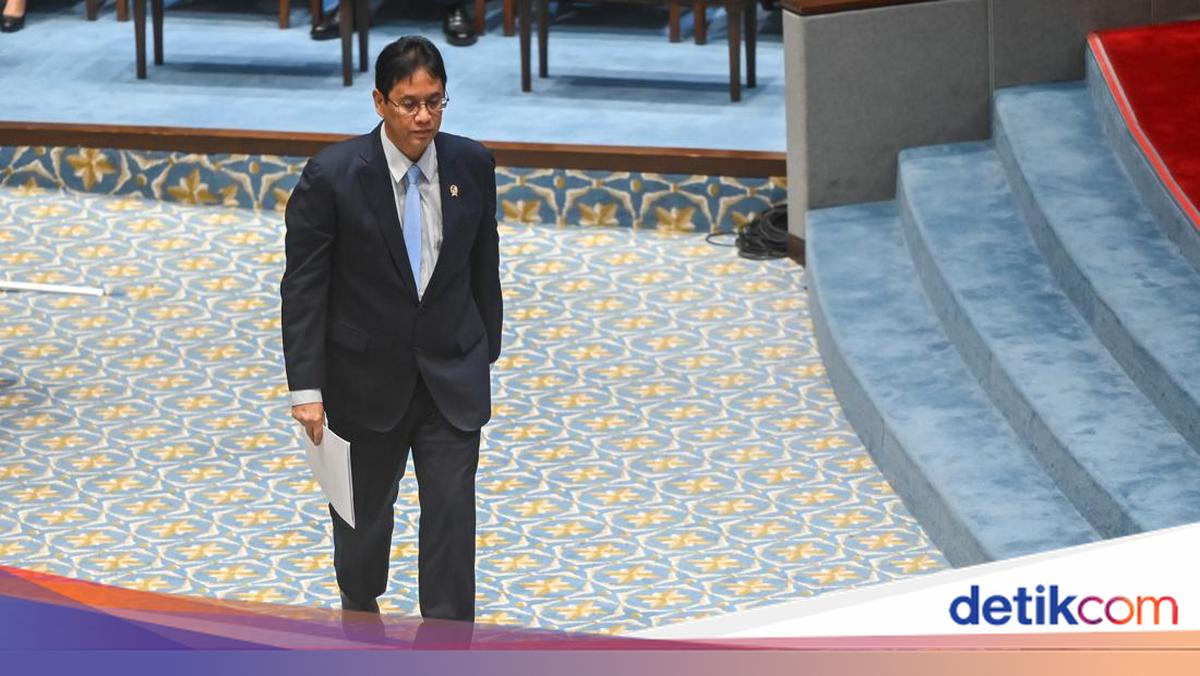
It is the nature of power: to arrive and depart, sometimes without much warning. Such is the case with Purbaya Yudhi Sadewa last week. The question now is: where will the ‘Engineer’ turned economist head next?
On the day he lost his position as Minister of Finance, several new roles were immediately rumoured as potential destinations. There are whispers of him becoming the governor of a new financial institution currently being developed, the Coordinating Minister for Human Development and Culture to replace Prof. Pratikno, or even leading the Directorate General of Customs and Excise. All of this, of course, remains speculation.
Purbaya himself immediately stated that he is no longer interested in holding public office in state institutions. In his characteristic style, he even joked about choosing to fish for tilapia and mud carp in his backyard pond.
Of course, fishing may merely be a diversion. For his next journey, I imagine Purbaya returning to being a researcher, academic, columnist, and speaker in various forums. Furthermore, why not write a book so that the ideas and experiences gained during his time at the centre of power do not simply evaporate?
Purbaya is not a newcomer to economics since becoming Minister of Finance. His professional track record is extensive. He has been part of the Danareksa environment, served as a member of the National Economic Committee, held various positions in government, and led the Indonesia Deposit Insurance Corporation (LPS) before ultimately becoming Minister of Finance.
That experience provides him with something not every academic possesses: the opportunity to see closely how economic policies are formulated, debated, negotiated, and implemented.
As a minister, Purbaya was bound by government decisions. A cabinet member cannot always freely express their entire personal view to the public.
As an economist outside of government, the situation is different. He can once again analyse the State Budget (APBN) as an economist, rather than as the state treasurer. He can dissect fiscal, monetary, banking, investment, industrial, or Danantara policies without the burden of being a cabinet member.
Indeed, the experience of being at the centre of power makes such a perspective valuable. Purbaya knows that an idea that appears simple in a seminar room can become extremely complex when it reaches the bureaucratic desk. He knows that fiscal policy is never solely about numbers; it involves politics, bureaucracy, business interests, market pressures, and societal needs.
Therefore, returning to campus or the world of research is not a demotion. There is a very close example: Sri Mulyani Indrawati (SMI). A year after leaving the post of Minister of Finance, SMI did not disappear from global economic conversation. She teaches at Oxford University. In August 2026, she appeared in the Southeast Asia Update and delivered the Southeast Asia Oration at the University of Melbourne, where she spoke about growth, productivity, institutional quality, and the challenges facing ASEAN in escaping the middle-income trap.
SMI’s trajectory demonstrates how an economist’s career can move in and out of government without losing relevance. After leaving President Susilo Bambang Yudhoyono’s cabinet in 2010, she pursued a career at the World Bank. President Joko Widodo then recalled her in 2016 to return as Minister of Finance. This means that leaving the cabinet does not always mean leaving the stage.
Purbaya can choose such a path. He can become an academic who has experienced the rigours of practical governance. Teaching students not just based on economic theory, but also through the experience of facing the State Budget, markets, bureaucracy, and political pressure. The state needs officials capable of making decisions, but the state also needs those outside of government capable of questioning those decisions. Both are equally important.
However, history also provides a much more winding path. Anwar Ibrahim, for example. Of course, the backgrounds of Anwar and Purbancy are fundamentally different. Anwar was an activist and later a politician from a young age. Purbaya grew as a professional, economist, researcher, and technocrat. But Anwar’s journey shows one thing: losing office is not always the end of a public journey.
Anwar once served as Malaysia’s Finance Minister and later as Deputy Prime Minister. He was very close to Mahathir Mohamad and was long viewed as a key figure in Malaysia’s leadership succession. However, on 2 September 1998, that journey was broken. Anwar was dismissed from the government. Subsequently, he was arrested, imprisoned, underwent a long political struggle, returned to parliament, led the opposition, and experienced political ups and downs for over two decades. On 24 November 2022—24 years after his downfall—Anwar Ibrahim was finally inaugurated as the Prime Minister of Malaysia.
Once again, Purbaya is not Anwar. There is no reason to assume Purbaya will follow the same political path. His track record so far shows the path of a technocrat, not an electoral politician. But Anwar’s story provides perspective on how long one’s public life can endure after a position is lost.
Purbaya does not have to be like Sri Mulyani either. It is entirely possible he finds his own way. He does not need to rush to find a new position just to prove his career is not over. Nor does he have to enter politics simply because the cabinet door has closed.
For the time being, Purbaya indeed needs to go fishing. Not just for tilapia or mud carp in his backyard, but also to fish for ideas about where his next life path will lead him.