
Purbaya Arranges Panda Bond Purchase Scheme, Could Boost Forex Reserves by US$50 Billion
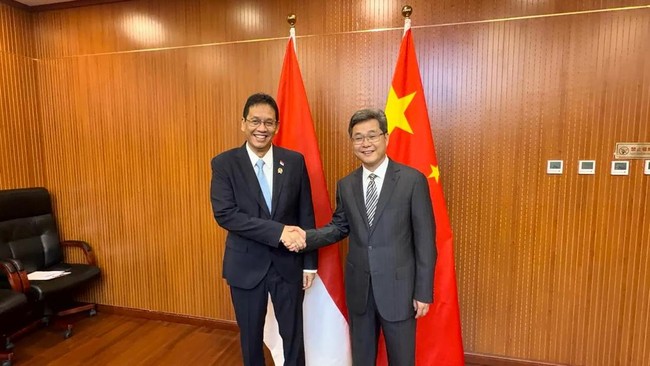
Finance Minister Purbaya Yudhi Sadewa plans to use a Local Currency Transaction (LCT) scheme with Chinese investors for the purchase of renminbi-denominated government bonds, known as Panda Bonds. The plan is intended to further underscore the government’s efforts to reduce dependence on the United States dollar and ease pressure on the rupiah exchange rate. “I have a plan: once the Panda Bond is sold, I will activate or use the Local Currency Transaction (LCT) route, where they pay in renminbi and then, through a certain mechanism between their central bank and our central bank, I will directly receive rupiah,” he stated during a media briefing at the Ministry of Finance office in Jakarta on Friday (26/6/2026). “Thus, our dependence on the dollar will be lessened and it will reduce pressure on the rupiah,” he continued. Purbaya explained that through this transaction scheme, Indonesia’s foreign exchange reserves could effectively increase by up to US$50 billion, due to an agreement between Bank Indonesia and the People’s Bank of China (PBoC) for transactions without needing conversion to US dollars. “Our central bank’s agreement is around US$50 billion. If that is used properly and quickly, it will appear as if our foreign exchange reserves have risen by US$50 billion, although de jure it is not recorded,” Purbaya revealed. With the diminishing reliance on transactions without the US dollar, he confirmed that this would automatically help strengthen the stability of the rupiah exchange rate. “But I can say our foreign exchange reserves have increased like that, because we can access them easily, meaning our dependence on the dollar can be further suppressed, and the rupiah will be more stable,” he asserted. Acting Director General of Financial Sector Stability and Development Herman Saheruddin previously stated that one reason for issuing Panda Bonds is as a form of financing diversification. “The reason for issuing Panda Bonds is to seek alternative sources of financing, or diversification. With this diversification, the hope is that the risk to our state budget from financing sourced from exchange rate risk can be diversified, and we can reduce the impact of dependence on the US dollar,” Herman said when met by reporters at his office on Thursday (26/6/2026). With alternative sources of financing, he noted, the impact of significant dollar fluctuations on the state budget would not be as large as in previous years, such as 1998. “One of these diversification efforts involves entering countries where there is demand, those that have money and appreciate Indonesia’s reputation and fundamentals, one of which is China,” he continued. Herman views China as one of the countries that can assist with financing diversification, as the pricing of these bonds still reflects Indonesia’s fundamentals. “China is one of several countries interested in providing financing to Indonesia by purchasing our bonds at a pricing that makes sense, meaning it is not far from our fundamentals,” Herman said. Furthermore, the reason for issuing these bonds is to enable currency diversification, thereby minimising the impact of a strengthening US dollar. “Now we are diversifying. If we are too dependent on the US dollar, I think it will become less stable, and the state budget will continue to run a deficit if we only rely on the US dollar,” he explained.