
Purbalingga Regency Strengthens Collaboration to Accelerate Poverty Reduction
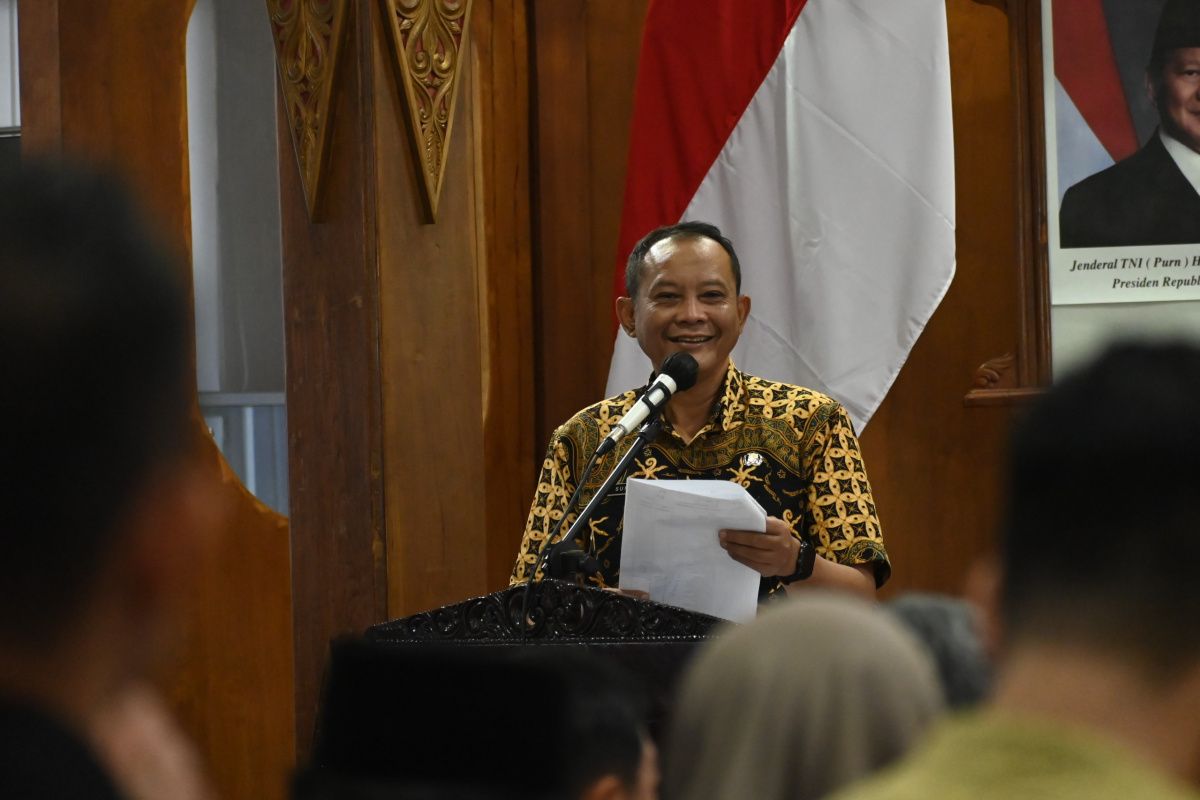
Purbalingga, Central Java — The Purbalingga Regency Government is strengthening multi-party collaboration through the ‘Purbalingga Gotong Royong’ (Purbalingga Mutual Cooperation) movement to accelerate poverty alleviation, ensuring that programmes are integrated, well-targeted, and sustainable.
During the socialisation of the Purbalingga Gotong Royong movement in Purbalingga on Thursday, the Assistant for Government and Public Welfare of the Purbalingga Regional Secretary, Suroto, stated that the movement synergises all stakeholders, ranging from the business sector, the National Zakat Agency (Baznas), and philanthropic institutions to universities, media, and the general public, to accelerate poverty reduction.
“The issue of poverty cannot be resolved by the government alone. The involvement of all stakeholders is required. The business sector plays a very strategic role through targeted Corporate Social and Environmental Responsibility (TJSL) programmes that synergise with regional development programmes,” he said.
He acknowledged that the poverty rate in Purbalingga has decreased from 16.23 per cent in 2021 to 12.55 per cent in 2025; however, the regency government is still focusing interventions on 14 priority villages facing various fundamental issues. Within these 14 priority villages, there are 454 uninhabitable houses, 3,470 houses without access to clean water, 893 houses without latrines, 198 out-of-school children, 6,136 unemployed residents, and 819 persons with disabilities requiring attention.
According to him, the contribution of TJSL from business entities, regional-owned enterprises (BUMD), and Baznas over the last five years has reached more than Rp30.7 billion, but this potential can still be increased as not all companies and philanthropic institutions are yet integrated into a single collaborative system.
“What we are building is to ensure that every rupiah of CSR (Corporate Social Responsibility) distributed is truly well-targeted and provides a sustainable impact for the community,” he said.
He noted that all assistance programmes will refer to the Integrated Poverty Alleviation Information System (Sipinter) as the database for beneficiaries, ensuring that aid is precise and avoids duplication.
The Purbalingga Regency Government is also preparing the Business Entity TJSL Forum (Forum TJSL-BU) as a coordination platform between the government and business actors to ensure TJSL programmes align with regional development priorities.
He added that TJSL serves as a social investment that can be realised through job training, expansion of employment opportunities, MSME assistance, scholarship provision, the construction of uninhabitable houses, the provision of clean water and sanitation, and community economic empowerment.
In addition to the business sector, the Purbalising Gotong Royong movement also involves universities through thematic community service programmes, data-based research, and community mentoring.