
Pupuk Kaltim Turns Coal Waste into Added Value
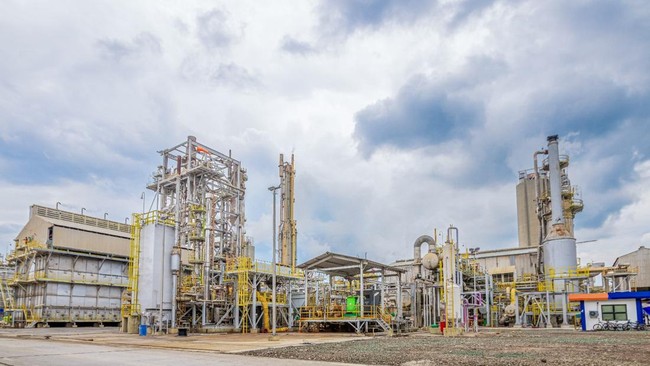
Jakarta, CNBC Indonesia — PT Pupuk Kalimantan Timur (Pupuk Kaltim) has successfully used fly ash and bottom ash (FABA) from its coal-fired boiler operations as a more efficient alternative raw material, adding value to the production process. The innovation has two benefits: reducing FABA waste and saving on clay used as a filler and binder in NPK Fusion production.
As well as serving as a filler, FABA acts as an anti-caking agent, helping to maintain product quality and supporting the binding of nutrients in each fertiliser granule.
Pupuk Kaltim President Director Rafli Yandra said using FABA had improved raw-material efficiency and helped manage waste by making better use of material that had not previously been fully utilised. The initiative is one of the company’s efforts to reduce waste-management costs and improve production efficiency. Reusing FABA can also create added value by putting residual material classified as hazardous waste from combustion to use.
“Through this innovation, Pupuk Kaltim continues to strengthen its commitment to sustainable industrial practices. The use of FABA is part of the company’s efforts to optimise resources, support production efficiency and maintain the sustainability of fertiliser supplies to strengthen national food security,” Rafli said, as quoted on Monday (14 September 2026).
In this initiative, FABA—primarily fly ash—is moved from temporary storage to the NPK Fusion production facility at Plant 7. The fly ash is then mixed with clay using a wheel loader. The mixture is fed into a hopper and processed with NPK raw materials including urea, rock phosphate, DAP, KCl and brucite.
The mixture is then fed into a rotary drum granulator, where steam and water help form fertiliser granules. After granulation, the product is dried at around 55–65°C, then cooled and screened. Undersized and oversized material is recycled before the product is coated, weighed and bagged.
A total of 66,180 tonnes of FABA has been reused. The programme is now targeting a utilisation capacity of 15,000 tonnes a year, or 75,000 tonnes over five years.
Pupuk Kaltim previously processed FABA into concrete blocks, paving blocks and soil-stabilisation materials. In 2021, the company obtained a permit to use FABA as a substitute material in construction and soil stabilisation.
For soil stabilisation, a mixture of FABA and cement is used to improve the load-bearing capacity of soil, particularly soft ground. The innovation significantly increased bearing capacity, as the cementing reaction produced harder granules better able to withstand loads.
In 2022, the company’s coal-fired boiler units, with a capacity of 2 × 220 metric tonnes an hour and electricity output of 96.6 MW, generated around 35,000 tonnes of FABA. Of this, approximately 34,000 tonnes was processed into alternative construction and soil-stabilisation materials.
The use of FABA, particularly bottom ash, can also support biodiversity restoration, including as a manufactured material for artificial coral reefs. These structures can be useful in coral-reef rehabilitation.
Pupuk Kaltim’s use of FABA is part of its Reusing Our Ash to Improve the Sea Ecosystem (RAISE) programme. Before RAISE was introduced, selecting and growing coral seedlings attached to artificial structures took around six months.
After RAISE was implemented, observations showed that coral attachment and seedling growth could take around four months. The observations were subsequently corroborated through monitoring by third party Reef Check Indonesia.
“The innovation in processing FABA waste is a pioneer in turning coal waste into a useful commodity under circular-economy principles. It is hoped that this will help create a better environment for the company and the wider community,” Rafli said.
Thanks to the innovation, Pupuk Kaltim was nominated for an ASEAN GRC Award at the ASEAN Risk Awards 2025. The achievement reflects the company’s commitment to governance, risk and compliance (GRC), as well as sustainable social and environmental responsibility as an integral part of its corporate identity and culture.