
Pupuk Kaltim Steps Up Decarbonisation Programmes in Support of 2060 Net Zero Goal
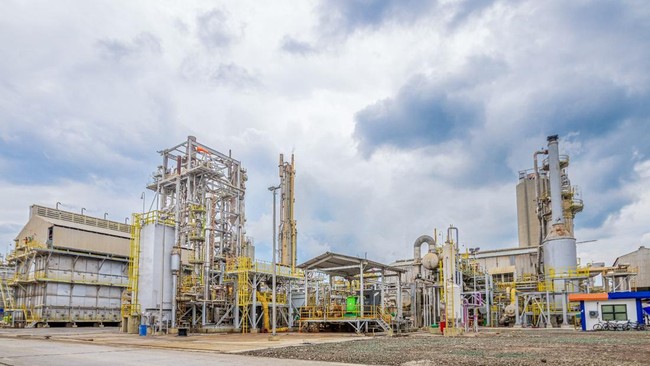
Jakarta, CNBC Indonesia — PT Pupuk Kalimantan Timur, or Pupuk Kaltim, is pursuing a range of decarbonisation programmes as a practical response to the impacts of climate change. Its efforts include improving energy efficiency, using renewable energy and developing low-carbon technologies to enhance the company’s competitiveness.
These measures are also aligned with the government’s targets under Indonesia’s Nationally Determined Contribution (NDC) and its goal of achieving net zero emissions (NZE) by 2060, as well as rising market demand for green products. Pupuk Kaltim has implemented several decarbonisation programmes in recent years.
For example, the company has revamped Ammonia Plant 2 to improve operational excellence by reducing energy consumption. The programme is expected to cut carbon emissions by around 110,000 tonnes of CO₂ equivalent a year.
Performance-test data show that the revamp significantly reduced energy consumption, from 39.28 to 35.25 million British thermal units (MMBTU) per tonne of ammonia. The 4.03 MMBTU saving is projected to lower production costs by about US$14.3 million, or Rp228 billion, a year.
Pupuk Kaltim president director Rafli Yandra said completion of the performance-testing phase marked the facility’s readiness to move into full operation. He said the project demonstrated the company’s commitment to operational excellence, with a focus on efficiency and sustainability.
“We are not only ensuring that Ammonia Plant 2 is operating again, but also delivering more efficient and reliable production-facility performance. The results of the 168-hour performance test showed that all operational parameters were met optimally,” Rafli said in a statement on Monday (21 September 2026).
He added that the successful revamp of Plant 2 would strengthen Pupuk Kaltim’s competitiveness and reaffirm the company’s commitment to supporting national food security.
Pupuk Kaltim is also building Indonesia’s first soda ash plant to support decarbonisation, develop a circular economy and encourage import substitution. The facility is expected to capture around 174,000 tonnes of CO₂ equivalent a year from existing facilities. The plant is intended not only to strengthen domestic industry but also to reduce the carbon footprint of the supply chain.
In renewable energy, Pupuk Kaltim has installed 3.8 megawatts (MW) of rooftop solar capacity to increase the share of clean electricity in its power consumption. The solar panels have enabled the company to reduce emissions by 4,017 tonnes of CO₂ equivalent, demonstrating that renewable energy can be adopted by energy-intensive industries.
Alongside solar power, the company is pursuing a short-term initiative to co-fire coal boilers with biomass. Co-firing involves partially replacing conventional fuel with biomass.
The project is being carried out at Pupuk Kaltim’s coal-fired boilers, which have a capacity of 220 tonnes per hour each across two units. The company estimates that the project could reduce carbon dioxide (CO₂) emissions by 59,000 tonnes a year by 2030.
Pupuk Kaltim views decarbonisation as part of its environmental sustainability agenda and a means of strengthening business performance. Its programmes are designed to deliver energy savings, improve operational efficiency and enhance product competitiveness amid regulations and global markets that increasingly prioritise sustainability.
By combining energy efficiency, renewable energy, the circular economy, biomass co-firing and plans to develop clean ammonia, Pupuk Kaltim is building a more structured decarbonisation roadmap. The initiatives are expected to significantly reduce emissions and strengthen the company’s position as a strategic player in the fertiliser industry’s transition to a lower-carbon future.