
Pupuk Kaltim Develops Agritourism Village in Gowa to Boost Farmer Productivity
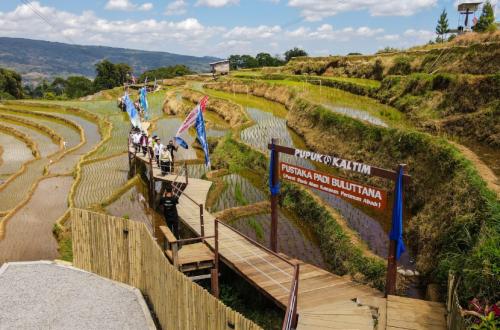
State-owned fertiliser producer PT Pupuk Kalimantan Timur (Pupuk Kaltim) has inaugurated Kampung Sawah Abadi (Eternal Rice Field Village) in Bulutana, Gowa Regency, South Sulawesi, as an area integrating sustainable agriculture with agritourism. The programme is part of the company’s community empowerment efforts while maintaining agricultural land productivity.
Uchin Mahazaki, AVP of Social and Environmental Development for Pupuk Kaltim’s TJSL Department, stated that Kampung Sawah Abadi is part of the Sustainable, Prosperous, and Independent Bulutana Agriculture (PKT Berseri) programme, which has been running since 2023. “This initiative is part of Pupuk Kaltim’s Social and Environmental Responsibility (TJSL) programme, which has been in place since 2023, with a community empowerment approach based on collaboration between the agricultural and tourism sectors,” he said.
According to Uchin, the programme not only targets areas surrounding the company’s operational sites but also fertiliser distribution regions as part of efforts to maintain agricultural land sustainability. “South Sulawesi is one of Pupuk Kaltim’s markets in eastern Indonesia, so maintaining soil fertility here is part of our social responsibility,” he stated.
Through the PKT Berseri roadmap, Pupuk Kaltim has developed various programmes, starting from a decomposer pilot project in 2023 to training in cultivation, pest control, balanced fertilisation, and organic fertiliser production. The company also built a 230-metre eco-trail to facilitate farmers in transporting harvests in the highland area.
In 2025, the programme was expanded through strengthening farmer institutions, post-harvest management, and providing compost production equipment. Meanwhile, in 2026, development will focus on building infrastructure, rice field conservation, institutional strengthening, and agritourism promotion. Pupuk Kaltim aims for the area to become a standardised agriculture-based tourism destination by 2027 through Green Tourism Village certification and a rice field conservation incentive scheme.
Syafruddin, Head of the Kampung Sawah Abadi management, said the construction of the eco-trail has had a direct impact on agricultural productivity. The infrastructure speeds up harvest distribution, allowing farmers to increase their planting intensity. “With the bridge, if we harvest today, the produce can reach home by nightfall. That’s what allows us to carry out three harvests a year,” Syafruddin said. He noted that rice field productivity has increased from an average of four tonnes per hectare to six to seven tonnes per hectare, with the planting index rising from two to three harvests annually.
Beyond the agricultural sector, the community, together with youth groups, is developing an agritourism ecosystem. A portion of tourism revenue is reinvested to help provide seeds, fertiliser, and even pay farmers’ land taxes. The area is also supported by a digital application called Sipadi, which allows tourists to follow the planting process and monitor crop development.
Andi Mirna, Head of the South Sulawesi Provincial Tourism Office, assessed that the Kampung Sawah Abadi development model could serve as an example for village development based on agriculture and tourism. “Young people who have finished school in the city should not be embarrassed to return to their villages and develop the agricultural sector. Programmes like this need to be expanded to other areas in South Sulawesi,” she said.
Source: jawawa.id (https://jawawa.id/newsitem/pupuk-kaltim-develops-agritourism-village-in-gowa-to-boost-farmer-productivity-1786085514)
Originally published by Republika (https://ekonomi.republika.co.id/berita/tjdxzl416/pupuk-kaltim-kembangkan-agrowisata-berbasis-pertanian-di-gowa), translated from Indonesian