
Pupuk Kaltim Boosts Community Economy Through Mushroom Cultivation
PT Pupuk Kalimantan Timur (Pupuk Kaltim) is strengthening its community empowerment programme through the development of a circular economy-based business. One of the programmes being developed is mushroom cultivation, combined with enhancing community capacity to encourage economic independence.
Pupuk Kaltim’s VP of TJSL, Rezha Abdillah, stated that the company strives to create shared value through empowerment programmes that provide both economic and social benefits for the community. ‘This is expected to strengthen inclusive economic and social development,’ Rezha said in a written statement in Jakarta on Wednesday.
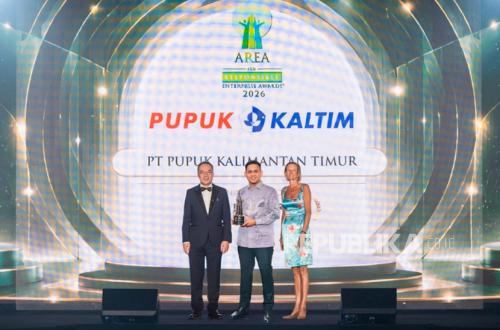
This commitment also led Pupuk Kaltim to win the Asia Responsible Enterprise Awards (AREA) 2026 in the Social Empowerment category in Malaysia. This marks the seventh time the company has received the award since 2019 for its community empowerment programmes.
This year, Pupuk Kaltim introduced the ‘Cendawan Juara’ programme, implemented in Guntung Village, Bontang City. Rezha explained that the programme was developed to build community economic independence through mushroom cultivation combined with human resource capacity building. ‘This initiative aligns with the company’s commitment to supporting the SDGs, particularly in aspects of poverty alleviation, improving community welfare, creating decent work, responsible consumption and production, and strengthening partnerships in development,’ he said.
The Cendawan Juara programme applies a circular economy approach by utilising mushroom baglog waste to make compost and developing processed products based on mushrooms. Mentoring is carried out from 2025 to 2029 so that the assisted groups can develop their businesses independently and sustainably. A total of 29 residents, mostly from the elderly community in Guntung Village, are involved in the programme. They receive mentoring ranging from cultivation techniques, group institutional management, business development, to processing harvests into value-added products. ‘The main activities include mushroom cultivation, utilising baglog waste as compost, and producing various mushroom-based food products,’ Rezha said.
According to him, the entire series of activities is designed to be integrated to optimise resource utilisation while reducing waste. This approach is also expected to expand economic benefits for the surrounding community. One of the innovations developed through the programme is an oyster mushroom drum capable of holding around 30 to 35 mushroom baglogs in a single unit. ‘Through Cendawan Juara, Pupuk Kaltim wants to demonstrate that social innovation built together with the community can be a real solution in improving welfare, strengthening local economic resilience, and delivering sustainable development,’ Rezha said.