
Pupuk Indonesia Targets 96 Per Cent Reduction in Greenhouse Gas Emissions by 2050, Preparing Various Strategies
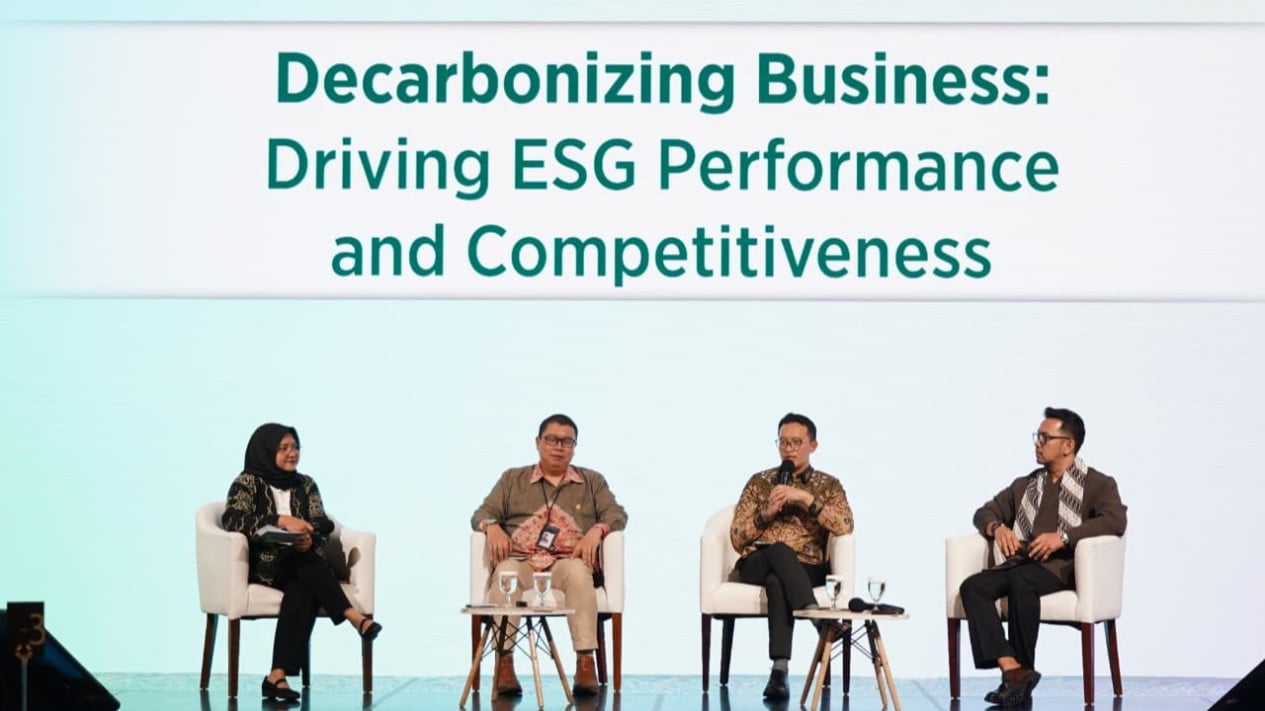
PT Pupuk Indonesia (Persero) is targeting a reduction in greenhouse gas emissions of up to 96 per cent by 2050. This target is being pursued through various decarbonisation initiatives.
Erlangga Rismantojo, Senior Project Manager for Sustainability and Clean Ammonia at PT Pupuk Indonesia, stated that the target is part of the company’s decarbonisation roadmap towards Net Zero Emission 2050. Several strategies are being prepared, ranging from energy efficiency and a circular economy—utilising CO2 to create value-added products—to the use of green energy, nature-based solutions, and the development of clean ammonia.
“Pupuk Indonesia has formulated a decarbonisation map. By 205<0xA0>5, our target is to reduce emissions by up to 96 per cent, or approximately 24.9 million tonnes of CO2 equivalent, through technology-based initiatives, and to achieve a 100 per cent reduction with additional nature-based solutions,” Erlangga said during the ‘Decarbonising Business: Driving ESG Performance and Competitiveness’ session at Katadata SAFE 2026 in Jakarta.
Erlangga explained that energy efficiency is a primary step to reduce natural gas consumption and emissions from production processes. Pupuk Indonesia is also encouraging the modernisation and optimisation of production facilities to remain competitive while lowering carbon footprints. Transformation is also being undertaken by developing technologies that allow carbon emissions to be not merely reduced, but repurposed into value-added products.
One implementation is the development of a soda ash plant in Bontang, East Kalimantan. In this project, CO2 emissions from the production process are utilised as raw material to produce soda ash, which is required by various industries, including glass and detergent.
“This CO2 becomes a raw material that we process into soda ash. This soda ash then serves as a raw material for the glass industry, the detergent industry, and so on,” Erlangga explained.
According to him, the utilisation of CO2 opens opportunities for the formation of new carbon-based industrial chains. For instance, the resulting glass products can be used for solar panels, thereby creating a link to the development of renewable energy.
Several clean ammonia projects are also being continuously studied and developed. The company is currently exploring and assessing the construction of green ammonia facilities at several existing locations by utilising new and renewable energy. One scheme being studied involves the use of renewable energy-based electricity through Renewable Energy Certificates (REC). This step is part of the company’s efforts to reduce emission intensity within the ammonia production process.
Source: jawawa.id (https://jawawa.id/newsitem/pupuk-indonesia-targets-96-per-cent-reduction-in-greenhouse-gas-emissions-by-2050-preparing-various-strategies-1789833173)
Originally published by VIVA.co.id (https://www.viva.co.id/bisnis/1929735-pupuk-indonesia-targetkan-emisi-gas-rumah-kaca-turun-hingga-96-persen-pada-2050-sejumlah-strategi-disiapkan), translated from Indonesian