
Pupuk Indonesia Prepares Rp118 Trillion Investment
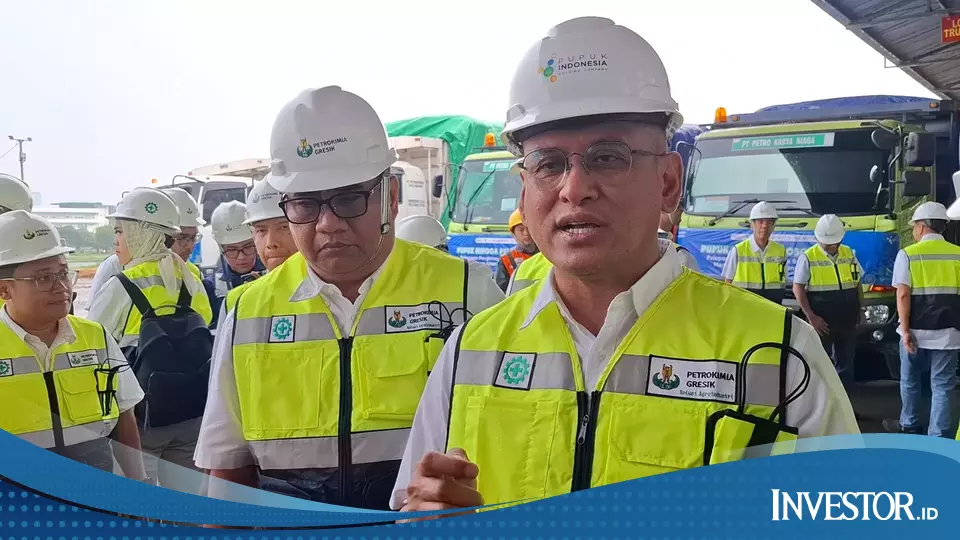
PT Pupuk Indonesia (Persero) is preparing an investment of around Rp118 trillion over the next five years to rejuvenate its plants and improve the efficiency of the national fertiliser industry. The large investment has been made possible by a fundamental change in the fertiliser subsidy management scheme, which is considered to provide greater room for the company to invest independently.
President Director of PT Pupuk Indonesia Rahmad Pribadi reiterated that rejuvenation is an urgent need because most of the company’s production facilities are old. Of the approximately 30 plants it owns, 24 are more than 20 years old.
“More than 70% of nitrogen-based plants are already old. Of the approximately 30 plants we own, 24 are over 20 years old,” said Rahmad during the Suar Forum 2026 discussion themed ‘Navigating Challenges Creating Opportunity Together’ in BSD City, Tangerang, on Friday (21/8/2026).
According to Rahmad, 20 years is an important point in the economics of a fertiliser plant. After that period, maintenance needs and operational problems tend to increase, making efficiency harder to maintain. “Twenty years can be said to be the best performance years. The economic life of a plant is perhaps around 20 years,” he said.
The large need for rejuvenation is inseparable from the history of the development of the national fertiliser industry. Most plants were built in the 1980s when investment used the state budget and operations were handed over to state-owned enterprises through a cost-plus-fee scheme. After the 1998 Reform, state finances and state-owned enterprises were separated, so companies had to rely more on their own ability to invest.
In fact, according to Rahmad, building one new plant requires an investment of around Rp10 trillion. This condition caused the construction of new facilities to proceed slowly. From the Reform era until 2024, he said, only three new plants were built.
Rahmad said the problem has begun to be addressed through a fundamental reform of the fertiliser subsidy scheme. Previously, the company’s return was determined based on cost plus fee. Consequently, the higher the costs incurred, the larger the fee obtained.
The scheme was then changed to use a market-price-based approach. Under the new mechanism, efficiency actually benefits the company, creating an incentive to invest and reduce production costs.
“We are paid based on market prices. Under this scheme, when we invest and achieve efficiency, the company also gains additional profit,” Rahmad explained.
He described the change as a form of structural reform in the fertiliser industry. The aim is not only to improve company performance but to create an industry capable of financing its own investment, becoming more efficient, while reducing the burden on the state budget.
“How can the fertiliser industry invest independently, generate profits, become more efficient, and at the same time make the state budget more economical?” he said.
The reform serves as the foundation for Pupuk Indonesia to carry out the Rp118 trillion investment over the next five years. The funds are mainly directed at rejuvenating production facilities so that the age structure of the company’s plants can change significantly.
“With this change, over the next five years we will invest around Rp118 trillion. Because through this investment, the plants can be rejuvenated and become more efficient,” Rahmad stressed.
The company is targeting the age composition of its plants to reverse within five years. If currently around 70% of plants are over 20 years old, later around 70% of plants are targeted to be under 20 years old.
According to Rahmad, the policy change shows that reform and transformation of the fertiliser industry are beginning to produce tangible results. Pupuk Indonesia has gained a greater ability to finance investment independently, efficiency provides an incentive for increased profits, while plant rejuvenation can be accelerated without returning to old financing patterns.
“Investment can now be carried out independently and company profits are also increasing because we are using a more sensible policy,” Rahmad concluded.
Source: jawawa.id (https://jawawa.id/newsitem/pupuk-indonesia-prepares-rp118-trillion-investment-1787377815)
Originally published by investor.id (https://investor.id/business/451220/pupuk-indonesia-siapkan-investasi-rp118-triliun), translated from Indonesian