
Pupuk Indonesia Plans Ammonia Hub in Batam: Here’s Why
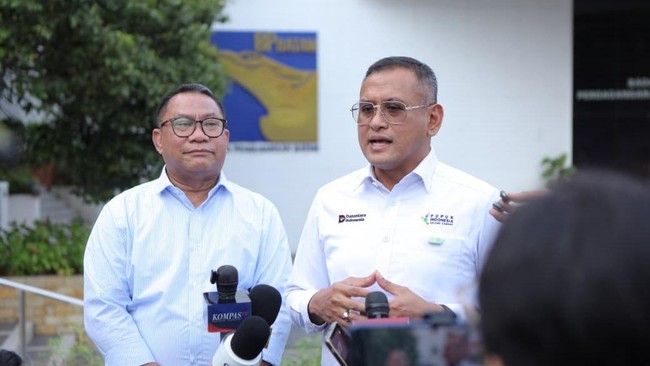
Jakarta — PT Pupuk Indonesia (Persero) is exploring the development of an ammonia hub in Batam to increase the value added from natural gas through the petrochemical industry and downstream processing. The plan would use gas supplies from Natuna and Grissik, particularly if the gas contract between Indonesia and Singapore expires in 2028. The initiative aligns with President Prabowo Subianto’s policy direction to optimise the management of Indonesia’s natural resources for the greatest benefit of the Indonesian people.
The exploration began with a consultation meeting with the Batam Concession Agency (BP Batam) on Monday (2 November) at its office in Batam, Riau Islands. The meeting was attended by Pupuk Indonesia President Director Rahmad Pribadi and his team, as well as BP Batam Head Amsakar Achmad.
Rahmad said the initiative would not only support the Government’s policy direction but also give Pupuk Indonesia an active role in putting it into practice by developing industry capable of absorbing and processing domestic natural resources.
“President Prabowo has also stressed that natural resources are our lifeblood and should be used to develop the national economy. Energy and Mineral Resources Minister Bahlil Lahadalia has also said that natural gas and other resources should be prioritised for domestic use. Pupuk Indonesia uses natural gas as a feedstock to produce, among other things, ammonia on a very large scale,” Rahmad said on Tuesday (3 November 2026).
Rahmad said the initiative also drew lessons from Singapore, which over more than five decades has successfully built up oil processing and maritime services as key strengths of its economy. Singapore has become the world’s largest bunkering hub, supplying fuel to ships travelling along international shipping routes.
As the global shipping industry shifts towards lower-carbon fuels, Indonesia has an opportunity to build similar industrial capacity. The country’s natural gas resources could be developed into an ammonia hub and bunkering services to meet future demand for marine fuel.
The opportunity is also being driven by the International Maritime Organization’s (IMO) Net-Zero Framework, which encourages the development of various low- and zero-emission alternative fuels, including ammonia, as a future energy option for the maritime industry.
For Indonesia, these developments present a strategic opportunity that should be anticipated early. Pupuk Indonesia is considered to have relevant industrial assets to take on this role. The company currently has ammonia production capacity of about 7.1 million tonnes a year, making it one of the large-scale producers in the Middle East and North Africa (MENA) and Asia-Pacific regions.
On this basis, Pupuk Indonesia has initiated plans to build an ammonia hub in Batam, making use of the natural gas potential of the Natuna and Grissik areas. The plan is expected to open up opportunities to use natural gas for downstream industrial development, while building infrastructure to support ammonia production, storage, distribution and trade for domestic and international markets.
Rahmad stressed that the initiative was not merely about control over natural resources, but about Indonesia’s ability to develop industries that generate greater added value for the national economy.
“Once again, what we are doing is a contribution to Indonesia. This is not resource nationalism, but resource industrialisation — in other words, downstream processing. Why is this not resource nationalism? Because we are open to working with anyone. What we want is for the added value to remain in the country. So, once again, this is not resource nationalism; this is resource industrialisation,” Rahmad said.
BP Batam Deputy for Investment Fary Djemy Francis expressed support for Pupuk Indonesia’s initiative. He said BP Batam would provide the necessary assistance with permits for the company to build the ammonia hub. The project also aligns with President Prabowo’s direction to make Batam a model for economic growth by harnessing the region’s potential.
“We will also accelerate the subsequent processes, including permits if an agreement is reached, and the allocation of land once we have discussed it. Most importantly, once the project is ready to invest, BP Batam will form a joint team with our colleagues at Pupuk Indonesia,” Djemy said.
Several countries are preparing infrastructure and ecosystems to support the use of ammonia as a marine fuel. In the Asia-Pacific region, Australia, Singapore and South Korea are among those developing initiatives to prepare the technology and facilities for ammonia bunkering.
Source: jawawa.id (https://jawawa.id/newsitem/pupuk-indonesia-plans-ammonia-hub-in-batam-heres-why-1793688663)
Originally published by CNBC Indonesia (https://www.cnbcindonesia.com/news/20261103122833-4-781852/pupuk-indonesia-siapkan-ammonia-hub-di-batam-ini-tujuannya), translated from Indonesian