
Pupuk Indonesia Explores Investment in Russian Fertilizer Plant to Target Asia-Pacific Market
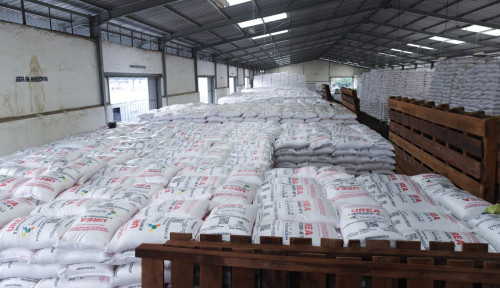
PT Pupuk Indonesia (Persero) is exploring strategic cooperation for the development of global-scale ammonia and urea production facilities, specifically the Nakhodka Fertilizer Plant Phase 2 (NFP-2), located in Primorsky Krai, Russia.
This exploration is part of Pupuk Indonesia’s strategy to diversify supply sources, strengthen the resilience of the national fertiliser supply chain, and expand access to global fertiliser industry assets and supply chains. The initiative was marked by the signing of a Memorandum of Understanding (MoU) to conduct a joint study during the 11th Eastern Economic Forum (EEF) in Vladivostok on 3 September 2026.
President Director of Pupuk Indonesia, Rahmad Pribadi, stated that the study cooperation with Russia serves as a long-term option to expand alternative production and fertiliser supply sources. “This exploration of study cooperation is one of Pupuk Indonesia’s long-term strategic options to secure access to raw materials and global production capacity. This aligns with the directives from Danantara for Pupuk Indonesia to play an increasing role in strengthening national food security, while simultaneously expanding its role in the global fertiliser industry,” said Rahmad.
He added that the cooperation also opens potential access to gas-based ammonia and urea production with a competitive and environmentally friendly raw material cost structure.
The Minister of Investment and Downstreaming, who also serves as the CEO of Danantara, Rosan P. Roeslani, noted that this exploration is a follow-up to the meeting between President Prabowo Subianto and Russian President Vladimir Putin during the 11th EEF. “Pupuk Indonesia’s performance is steadily improving and becoming more efficient, giving it great potential to invest in Vladivostok and with Russian parties. It is hoped that this will be a strategic step to strengthen our raw material sector and our industrial resilience,” said Rosan.
Rahmad mentioned that Pupuk Indonesia’s experience in processing gas for ammonia and urea production serves as a foundation for assessing cooperation opportunities in Russia. This experience is considered highly relevant to the characteristics of the NFP project, which is based on natural gas.
The NFP is a project to develop a methanol, ammonia, and urea industrial complex in Primorsky Krai, Eastern Russia, developed by JSC Ruschem. The facility is planned to have a production capacity of approximately 1.8 million tonnes of methanol, 2 million tonnes of ammonia, and 3.5 million tonnes of urea per year, with a target for commercial operation around 2030.
The project location is also considered strategic due to its position in the Primorsky region, which has access to the Port of Vladivostok and the Pacific Ocean. This condition has the potential to grant Pupuk Indonesia access to the Asia-Pacific market, which has long been a vital region for the company’s trading activities.
“This is interesting because Vladivostok faces the Pacific, a region that has always been a strategic market for Pupuk Indonesia,” said Rahmad.
This potential is one of the considerations for Pupuk Indonesia in assessing the development of NFP-2 as part of its efforts to strengthen the company’s competitiveness and supply chain resilience.
The signing of the MoU marks the initial stage for Pupuk Indonesia and JSC Ruschem to comprehensively study the potential development of NFP-2. Through this cooperation, both parties will conduct a feasibility study and due diligence on the project. The study will cover technical aspects, economics, raw material supply certainty, financing structures, project risks, and compliance with applicable legal and regulatory provisions.
Source: jawawa.id (https://jawawa.id/newsitem/pupuk-indonesia-explores-investment-in-russian-fertilizer-plant-to-target-asia-pacific-market-1788637847)
Originally published by wartaekonomi.co.id (https://wartaekonomi.co.id/read632789/pupuk-indonesia-jajaki-investasi-pabrik-pupuk-di-rusia-bidik-pasar-asia-pasifik), translated from Indonesian