
Pupuk Indonesia Educates East Java Farmers on Balanced Fertilisation
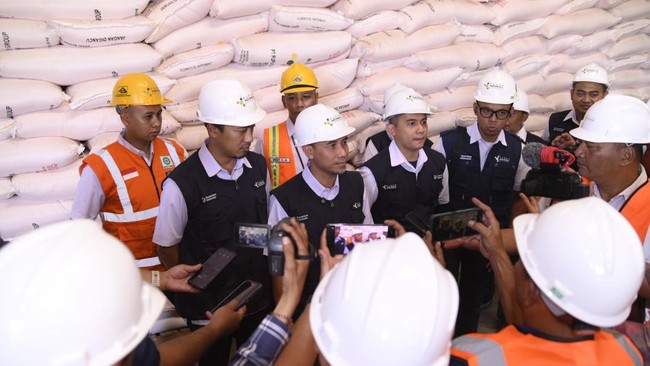
PT Pupuk Indonesia (Persero) has ensured that the stock of subsidised fertiliser in East Java is secure, with availability reaching 142,711 tonnes. Alongside this, Pupuk Indonesia continues to educate farmers on implementing balanced fertilisation in accordance with Government recommendations to increase efficiency and support sustainable agriculture.
Regional CEO 3 of Pupuk Indonesia, Eko Suroso, stated that the allocation of subsidised fertiliser for East Java farmers in 2026 is the largest in Indonesia, totalling 2,038,387 tonnes. However, he emphasised that fertiliser use must follow the doses recommended by the Government to ensure optimal benefits.
“East Java serves as a barometer for agriculture in Indonesia. About ten years ago, there were still farmers in East Java using 1,000 kilograms (kg) of Urea fertiliser per hectare (Ha). This is dangerous, not only because costs swell, but because the soil will also suffer damage,” said Eko in an official statement received on Thursday (2/7/2026).
Based on Government recommendations, balanced fertilisation for paddy crops generally follows a 5:3:2 pattern, consisting of 500 kg of organic fertiliser, 300 kg of NPK fertiliser, and 200 kg of Urea fertiliser for 1 hectare of land.
To support the implementation of precision fertilisation, Pupuk Indonesia has also provided soil testing mobile units, allowing farmers to receive balanced or precision fertilisation recommendations tailored to crop needs. This service serves as both education and assistance from Pupult Indonesia to support the government in achieving national food self-sufficiency.
The hope is that farmers will not simply apply fertiliser based on experience, but according to the specific needs of the crops. This ensures that the subsidised fertiliser allocation set by the Government is absorbed according to actual requirements.
“For example, much of the agricultural land in Lamongan has alkaline soil pH. Therefore, to improve and enhance the quality of the soil in those areas, organic fertiliser needs to be applied,” he explained.
Of the millions of tonnes allocated for subsidised fertiliser in East Java, the breakdown includes 1,005,145 tonnes of Urea, 884,868 tonnes of NPK Phonska, 225 tonnes of NPK Kakao, 114,309 tonnes of organic fertiliser, 10,987 tonnes of ZA, and 22,823 tonnes of SP-36. This allocation has currently reached 56 per cent absorption, or approximately 1,146,561 tonnes.
“This high absorption rate is due to the ease provided by the Government. The management of subsidised fertiliser distribution has undergone a transformation over the last two years, ranging from regulatory simplification to the reduction of the Maximum Retail Price (HET),” Eko explained.
To maintain optimal absorption in East Java, Pupuk Indonesia is providing a stock of 142,711 tonnes of subsidised fertiliser. The latest stock consists of 113,239 tonnes of Urea, 21,026 tonnes of NPK Phonska, 129 tonnes of NPK Kakao, 5,971 tonnes of organic fertiliser, 1,540 tonnes of ZA, and 806 tonnes of SP-36. This stock is above the minimum requirement and is sufficient to meet farmers’ needs for the next three weeks.
In addition to ensuring adequate stock, Pupuk Indonesia is coordinating with the East Java Provincial Agriculture Office to monitor distribution realisation in every region. Areas with high absorption rates will be prioritised for reallocation to ensure that fertiliser distribution remains equitable and farmers’ needs are met.
“Currently, Pupuk Indonesia is coordinating with the East Java Agriculture Office to identify which areas have high absorption and which areas are not maximising it. There are several areas subject to reallocation as an effort to ensure the supply remains secure,” said Eko.
Furthermore, he urged farmers to redeem subsidised fertiliser only through the designated Point of Delivery (PPTS) or official kiosks. This advice is crucial to avoid various fraudulent methods offering subsidised fertiliser via social media.
“There are many offers on social media, displaying photos of subsidised fertiliser warehouses, offering sales at low prices. I assure you that is a scam. Subsidised fertiliser can only be redeemed by registered farmers at the PPTS,” said Eko.
Registered farmers entitled to subsidised fertiliser must be listed in the e-RDKK and manage a maximum of 2 hectares of land. Additionally, subsidised fertiliser is only intended for 10 commodities: paddy, maize, soybean, chilli, shallot, garlic, sugarcane, cocoa, coffee, and cassava.
In 2026, the Government has also allocated subsidised fertiliser for the fisheries sector. Fisheries commodities receiving subsidies include seed production for tiger prawn, vanname shrimp, milkfish, tilapia, carp, gourami, catfish, and pangasius. For grow-out production, the commodities include tiger prawn, vanname shrimp, milkfish, saline tilapia, and catfish.
Like farmers, fish farmers entitled to subsidised fertiliser must be registered in the e-RPSP (Electronic Plan for the Provision and Distribution of Subsidised Fertiliser). For grow-out production, farmers can manage a maximum of 2 hectares, while for seed production, the limit is 0.75 hectares for freshwater and 0.5 hectares for brackish water.