
Pupuk Indonesia Command Center Monitors Stock and Distribution in Real Time
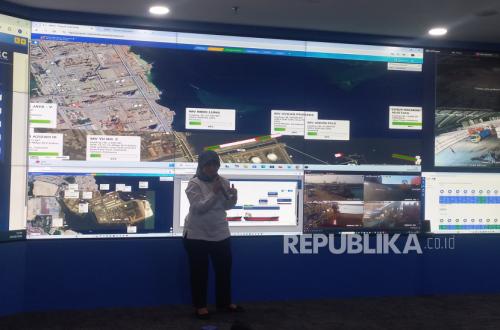
Jakarta - PT Pupuk Indonesia (Persero) operates a Command Center as the national fertiliser distribution control hub to accelerate response to farmers’ fertiliser needs. The system monitors the distribution flow in real time from factory production to fertiliser delivery to farmers on the ground. Company Secretary Yehezkiel Adiperwira said the Command Center strengthens the digitalisation of distribution so fertiliser disbursement is faster and more targeted. ‘Fertiliser distribution is a key part of maintaining agricultural productivity and national food security. Through the Command Center, Pupuk Indonesia is building an integrated distribution system, from production, stock monitoring, to distribution oversight, so that fertiliser is received by farmers faster and more targeted,’ Yehezkiel said at the PI Insight event at the Pupuk Indonesia Command Center, Graha Phonska, Central Jakarta, Wednesday (20/5/2026). Senior Vice President of Distribution at Pupuk Indonesia, Veronika Trisna Sukmawati, said the Command Center integrates various digital distribution systems into a single monitoring dashboard. This integration supports the implementation of Presidential Regulation No. 113 of 2025 which designates Pupuk Indonesia as the chief responsible for distributing fertiliser up to the Recipient of Fertiliser at the Handover Point (PPTS). ‘Through this digital transformation, Pupuk Indonesia is building a more efficient, integrated, and responsive fertiliser supply chain by linking processes from upstream to downstream,’ Veronika said. In operation, the Command Center features monitoring at each distribution stage. In the production stage, the system can monitor productivity levels of all factories in the Pupuk Indonesia Group. In the distribution stage, GPS-based tracking of ships and trucks allows the company to monitor logistics movements while detecting potential obstacles or deviations during transport. Veronika explained the Distribution Planning and Control System (DPCS) is used to monitor fertiliser stock conditions across regions through colour indicators as an early warning system to detect potential supply shortages earlier. ‘When demand increases in a region, we can promptly adjust fertiliser supply so distribution runs smoothly and farmers’ needs are met,’ Veronika said. With integrated monitoring from production to distribution, Pupuk Indonesia maintains national fertiliser stock availability. As of 19 May 2026, national fertiliser stock was recorded at 1.17 million tonnes. Senior Vice President of Digitalisation and Data Science at Pupuk Indonesia, Yetty Endarwati, said the iPubers application is the final stage of subsidy fertiliser distribution to farmers. Through the app, farmers only need to bring their identity card to redeem fertiliser at PPTS, making the process more orderly and targeted. According to Yetty, iPubers is directly integrated with the Command Center and becomes the primary data source for monitoring real-time subsidy fertiliser distribution with an average of 2.5 million redemptions per month. The data recorded includes recipient identity, amount of fertiliser, time of transaction, and redemption location, making distribution more traceable and accountable. ‘iPubers is not merely a redemption tool, but an important instrument for Pupuk Indonesia to maintain an end-to-end subsidised fertiliser distribution ecosystem that is more transparent and targeted,’ Yetty said. PSO VP of Sales Planning and Billing Anggy Fajar Maghfiroh said the distribution of subsidised fertiliser is also supervised through on-the-ground monitoring involving the Fertiliser and Pesticide Supervisory Commission, law enforcement authorities, local governments, and related agencies. ‘Supervision of distribution is not only through digital systems, but is reinforced by coordination and direct field monitoring to ensure subsidised fertiliser distribution remains orderly, targeted, and in line with regulations,’ Anggy said. Anggy added that the integration of digital supervision and field monitoring helps subsidised fertiliser distribution be more responsive to farmers’ needs. The realisation of subsidised fertiliser redemptions up to 19 May 2026 reached 3.7 million tonnes or about 34 percent higher than the same period last year.