
Pupuk Indonesia Becomes the Backbone of National Food Security
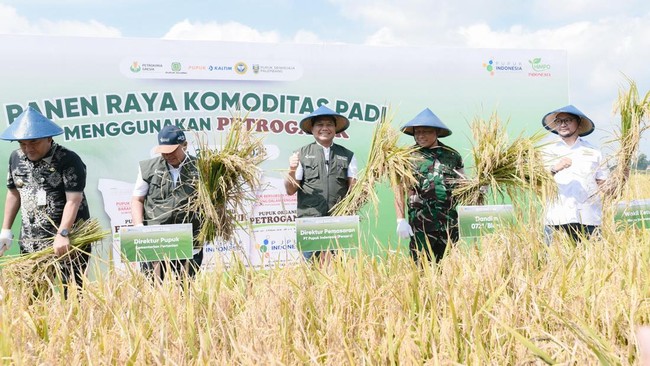
PT Pupuk Indonesia (Persero) has been awarded Indonesia’s Food Security Backbone Award at the Food Summit 2026 organised by CNBC Indonesia on Monday (27/4/2026). This achievement stems from the company’s dedication to serving as the backbone of national food security through the provision of fertilisers, plant nutrients, and support for the agricultural ecosystem that bolsters farmer productivity across various regions. Pupuk Indonesia has played a crucial role in sustaining the domestic agricultural sector, including maintaining high, stable, and economical crop yields. Without adequate fertiliser supplies, achieving national food production targets would be more challenging. In addition, Pupuk Indonesia produces and distributes various types of fertilisers, from urea and NPK to ZA, organic fertilisers, and other plant nutrients. The availability of fertilisers during planting seasons is a key factor enabling farmers to plant on time and maintain land productivity. Ultimately, sufficient supply volumes can reduce the risk of planting delays that affect food production levels. From there, Pupuk Indonesia continues to strive as the frontline supporter of the government’s subsidised fertiliser programme. Subsidised fertilisers are distributed for national strategic commodities such as rice, maize, soybeans, chillies, onions, sugarcane, coffee, and cocoa. Furthermore, this programme directly impacts the agricultural sector by helping to suppress farmers’ production costs, ensuring the continuity of planting seasons, and contributing to food price stability at the consumer level. On the other hand, Pupuk Indonesia is also actively providing education and guidance to farmers. This education focuses on efforts for balanced fertilisation, appropriate dosage usage, cost efficiency, and increased yields per hectare. These steps are important to make fertiliser use more effective and sustainably increase land productivity. Digital transformation is also continuously applied to the fertiliser distribution system. With a more modern system, the fertiliser distribution process becomes more targeted, stock is easier to monitor, the potential for subsidy leakage is reduced, and farmers’ access to fertilisers is faster. Thus, digitalisation becomes an important part in strengthening the governance of the national fertiliser sector.