
Pump Stations and the Water’s Way Home
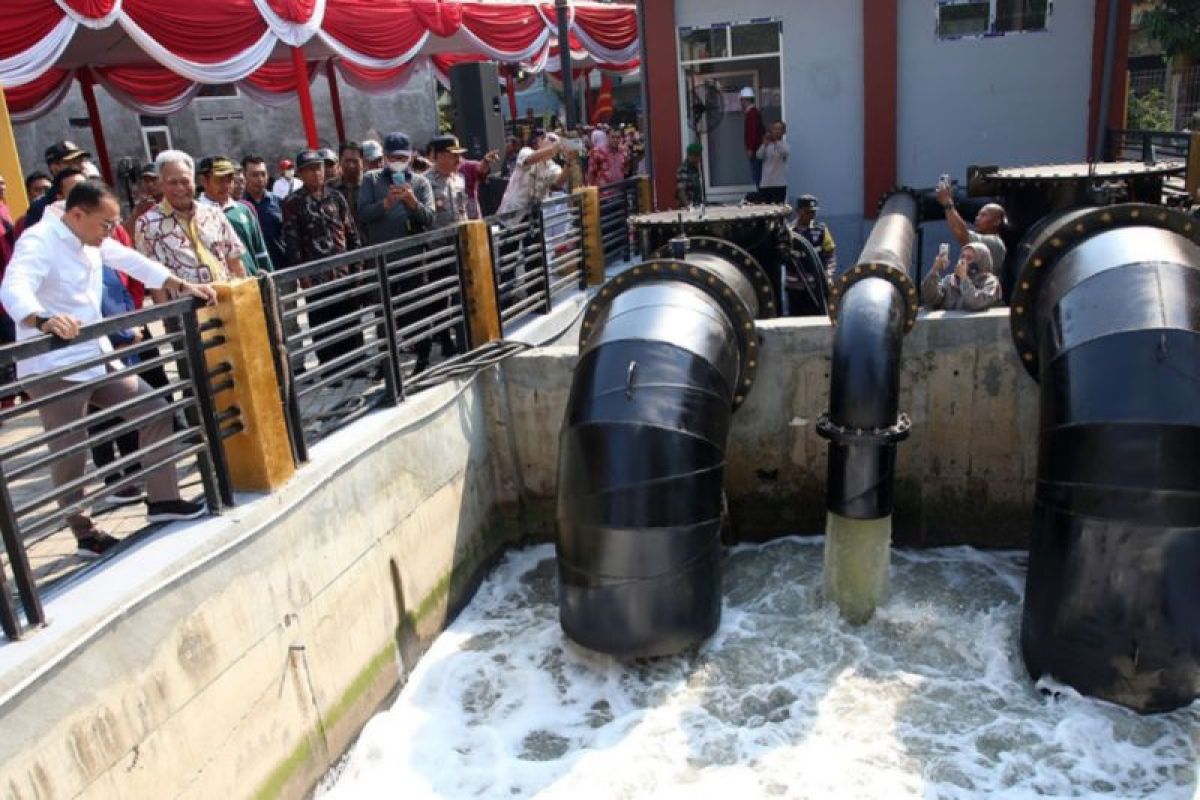
Urban resilience is not built simply by moving water as quickly as possible, but by managing where it flows, how much can be retained, and how services can continue operating when the worst conditions arrive.
Surabaya (ANTARA) — A brief spell of rain can alter a city’s rhythm. Roads that were flowing smoothly become difficult to navigate, home courtyards are inundated, business activities are delayed, and residents have to recalculate how long it will take them to get to work.
For residents of flood-prone areas in Surabaya, East Java, the measure of successful water management is not how imposing a pump station looks, but how quickly the water recedes and how little disruption they experience.
The Surabaya City Government says construction of pump stations and supporting flood-control infrastructure was 90 per cent complete at the end of October 2026. The work is targeted for completion by mid-November, before rainfall increases in December.
Areas of concern include Tanjungsari, Simokalangan, Simorejo, Margorejo, Nginden Jangkungan and Rungkut.
The progress offers hope, particularly for residents who have dealt with flooding for years. However, the 90 per cent figure measures progress on physical construction; it does not guarantee that the system will immediately be able to cope with every rainfall event.
At this final stage, connecting drainage channels, testing pumps, preparing operators and ensuring maintenance will determine whether the public investment actually works.
Infrastructure readiness
Pump stations are an important part of flood control in a city where water must pass through a network of drains, rivers and coastal areas. In 2026, the city government plans to add eight pump stations.
The city is also working on more than 100 drainage projects across its southern, eastern and western areas. The scale of this work shows that flooding cannot be addressed with a single structure or stretch of drainage channel.
A pump station is like a heart that drives water out of low-lying areas. But it will do little if neighbourhood drains are blocked, retention capacity is insufficient or the outlet route is not connected.
Water needs to flow from smaller drains into main channels and storage areas, then be pumped out when river and sea conditions allow. Connectivity is therefore not an add-on, but the core of the system.
Recent reports say that connecting pipes to the river remains among the tasks to be completed. This illustrates the difference between a structure that is nearly finished and a service that is genuinely ready to operate.
Pump stations need to undergo operational tests, including checks to ensure they perform when water volumes rise and river levels change.
The government must also ensure the availability of electricity, spare parts, on-duty staff, emergency procedures and operating budgets after construction is complete. The Surabaya City Government has previously identified electricity costs as one of the obstacles to operating pump stations.
This means policy cannot stop at physical construction. Maintenance budgets, sediment removal, component replacement and staff readiness must all form part of long-term planning.
Infrastructure built at great expense will lose its value if it is not maintained consistently. Conversely, a system designed to meet actual needs, operated properly and maintained regularly can extend the facilities’ lifespan while increasing their benefits to the public.