
Pulau Baai Port and the Economic Pulse of Bengkulu
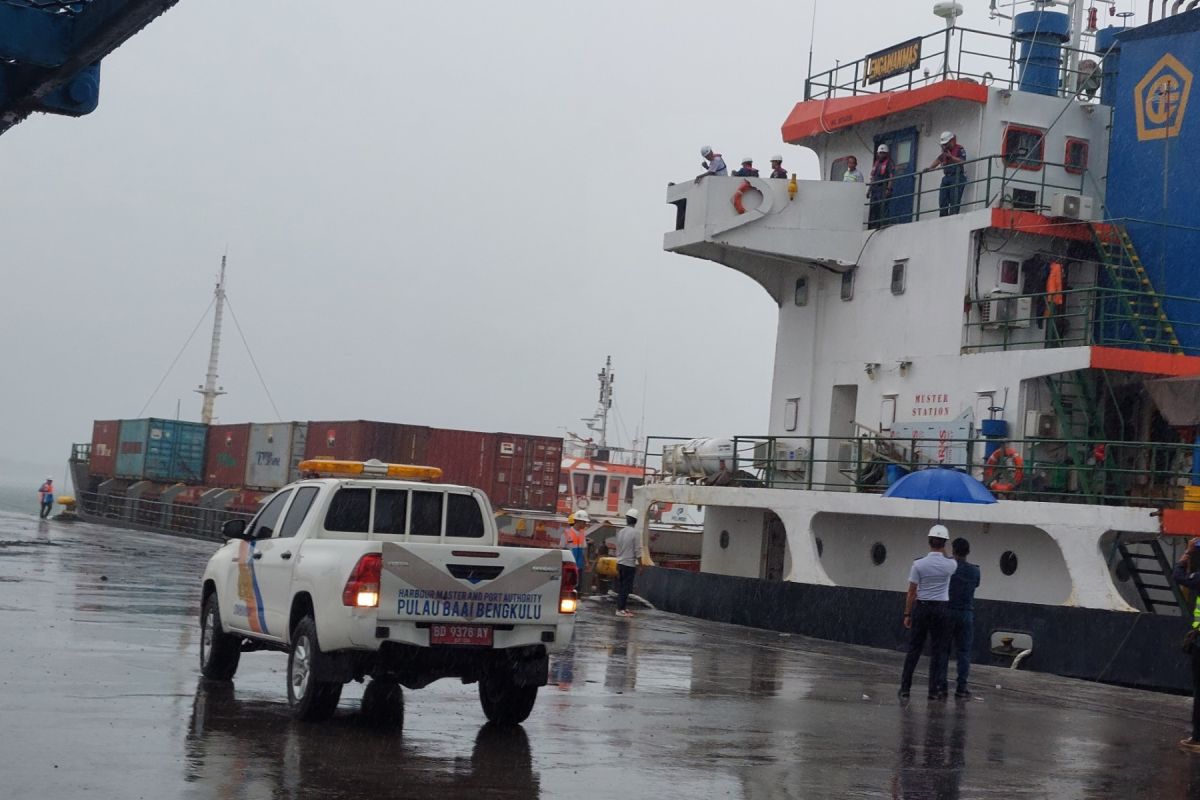
The position of Pulau Baai Port is considered strategic because it lies on the western Sumatra coastal toll sea route and directly faces the Indian Ocean. Bengkulu (ANTARA) - It is still fresh in memory that at the end of March 2025, the Pulau Baai Port channel was completely blocked by piles of sand sedimentation carried by Indian Ocean waves into the shipping lane. The shallowing of the channel is actually not a new issue at that port. The problem has occurred for more than a decade. However, the situation reached its peak at the end of March 2025 when bad weather worsened the conditions. Piles of sand that accumulated in part of the channel collapsed and eventually blocked the entire port service lane. The blockage of the port channel serves as evidence that the port is the “lifeblood” of Bengkulu’s economy. Cargo ships carrying essential goods could not enter the dock, causing supplies of several important commodities in Bengkulu to dwindle. Access to and from the outermost islands was also isolated because pioneer ships could not dock. Energy distribution in the province nicknamed Bumi Raflesia also stalled after Pertamina’s tanker ships could not enter the dock to unload fuel oil (BBM) cargo. Pertamina then had to struggle to distribute BBM via land routes, passing through the winding roads of the Bukit Barisan as an alternative energy supply to Bengkulu. However, distribution via land routes is certainly not cheap because it requires significant costs to maintain energy adequacy for the community. On the other hand, Bengkulu’s export activities were also disrupted. The closure of the port channel prevented export commodity carrier ships from docking or sailing to and from Pulau Baai Port. The Central Statistics Agency recorded that Bengkulu’s export value in April 2025 only reached about $3.9 million, a 74.5 percent drop compared to March 2025. That situation forced Pelindo, as the port operator, to work hard to normalise the channel so that sea connectivity to and from Bengkulu could be restored, even better than before. Dredging efforts could not be carried out in the usual way. The volume of sand sedimentation that had to be removed was very large, plus the high rate of sand continuously entering the channel every day. The total sand to be dredged reached 1.112 million cubic metres along the 2.3 kilometre navigation channel. Seeing that situation, President Prabowo Subianto issued instructions in April 2025 to ensure Bengkulu’s connectivity through the port route was restored. Dredging was then carried out using large-capacity dredger ships CSD Costa Fortuna 3 and AHT Costa Fortuna 5. Now, after a year has passed, efforts to reopen Bengkulu’s sea connectivity are beginning to bear fruit. Pelindo has ensured that the channel depth has reached minus 6.5 metres and is targeted to go to minus 12 metres. Tanker ships, cargo ships, container ships, passenger ships, to other large-bodied ships can now freely dock at the pier. Port activities are back to normal, even considered far better than before Pulau Baai Port was isolated due to being covered in sand sedimentation.