
PUI National Scout Camp Serves as a Space for Character-Building Youth Regeneration
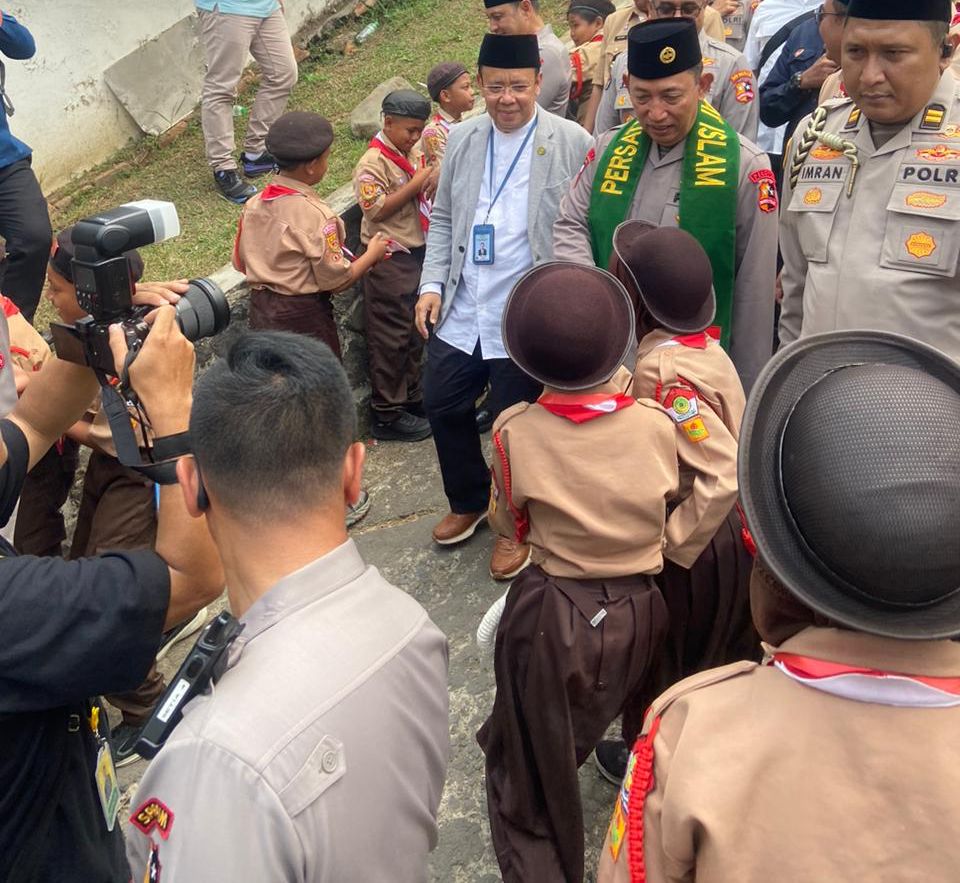
The 2026 National Scout Camp of the Persatuan Ummat Islam (PUI) has become a significant momentum for strengthening the guidance and regeneration of the younger generation, aiming to instil character, leadership, skills, and a spirit of service to the community and the nation.
Held at the Selabintran Camping Ground in Sukabumi Regency, West Java, the event was attended by approximately 5,499 participants, including Scout members, students, university students, PUI youth, teachers, administrators, and PUI figures.
An advisor to the Central Leadership Council of PUI, Prof. KH Achmad Tjachja Nugraha, assessed that the activity holds strategic importance in preparing the younger generation to face future challenges. He noted that the PUI National Scout Camp is not merely a camping activity, but a space for character formation and regeneration.
“This PUI National Scout Camp is not just a camping event, but part of the process of nurturing the younger generation to possess strong character, morality, discipline, independence, and a sense of nationalism,” he stated.
He added that the youth must be prepared comprehensively to achieve a balance between intelligence, skills, character, and social awareness. He expressed the desire for PUI youth to grow into a generation that is not only excellent in science and skills but also possesses social concern and readiness to serve the community, society, nation, and state.
Prof. Achmad Tjachja noted that the Scout Movement plays a vital role in instilling values of leadership, discipline, independence, mutual cooperation, and responsibility. He emphasised that these values are essential for facing increasingly complex modern challenges.
Regarding the demographic bonus, Prof. Achmad stated that this momentum must be met with improvements in the quality of human resources. The younger generation, currently in their productive years, will become Indonesia’s primary strength in the coming years.
“We must respond to the demographic bonus momentum by preparing high-quality human resources. Today’s youth are the future leaders of Indonesia; therefore, character building cannot be separated from education and competency development,” he concluded.
He expressed hope that the participants of the PUI National Scout Camp would be able to bring the values acquired during the activity back to their respective environments, acting as agents of change in their schools, families, organisations, and communities.
The Professor of UIN Syarif Hidayatullah Jakarta added that the spirit of service must continue even after the event concludes, as participants should begin showing real contributions in their local areas.
On the same occasion, the Chief of the Indonesian National Police, General Listyo Sigit Prabowo, invited the younger generation to strengthen their character, skills, and spirit of service to the community, nation, and state. Attending the National Scout Camp’s National Assembly in Sukabumi on Thursday, he expressed appreciation to PUI and the Scout Movement for their consistency in providing a platform for youth development.
According to the Police Chief, Scout education plays a crucial role in forming a generation that is disciplined, independent, skilled, and socially caring. He highlighted that the demographic bonus could become a national strength if accompanied by increased human resource quality through education, skill mastery, and character building.
He also noted that the government continues to expand opportunities for the youth to access quality education through various programmes, such as Sekolah Rakyat, excellence schools, transformation schools, LPDP, and other human resource development initiatives.
Source: jawawa.id (https://jawawa.id/newsitem/pui-national-scout-camp-serves-as-a-space-for-character-building-youth-regeneration-1788440031)
Originally published by Media Indonesia (https://mediaindonesia.com/jabar/berita/929432/kemah-nasional-pramuka-pui-jadi-ruang-kaderisasi-generasi-muda-berkarakter), translated from Indonesian