
PUI Highlights Food Justice Through Eid al-Adha Sacrifice
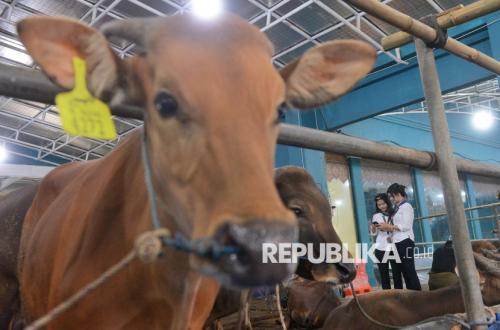
BANDUNG — PUI Central Leadership Council Advisor Prof Achmad Tjachja Nugraha stated that the Eid al-Adha sacrifice is not merely a spiritual act. Amid global crises, it holds significant social value, including protecting vulnerable groups and promoting food justice.
He cited the Quran, Surah Al-Hajj, which states that neither the meat nor blood of sacrificed animals reaches Allah; rather, it is the piety that matters.
“The essence of sacrifice lies not in the physical act but in piety. True piety manifests through compassion and precise distribution,” he said in a statement on Monday, 25 May 2026.
He explained that sacrifice is a practical, community-driven food distribution system operating simultaneously and directly targeting those in need.
“Amid global food crises, sacrifice demonstrates the Muslim community’s mechanism to share with the most vulnerable,” he added.
He noted that millions of sacrificial meat packages are rapidly distributed via mosques, Islamic boarding schools, and local communities. This approach is seen as a social strength not found in formal systems.
“We see this distribution happens quickly, without lengthy bureaucracy, and is relatively targeted. It is an extraordinary social strength of the community,” he said.
Furthermore, he highlighted the sacrifice’s alignment with Islamic social justice principles. The Quran mandates sharing with others, particularly those in need.
As PUI Central Leadership Council Advisor, he stated that Eid al-Adha serves as Ishlah Tsamaniyah, bringing positive impacts by improving the economy and social life.