
Public Works Ministry Uses BIM Technology to Build Phase II of Sekolah Rakyat
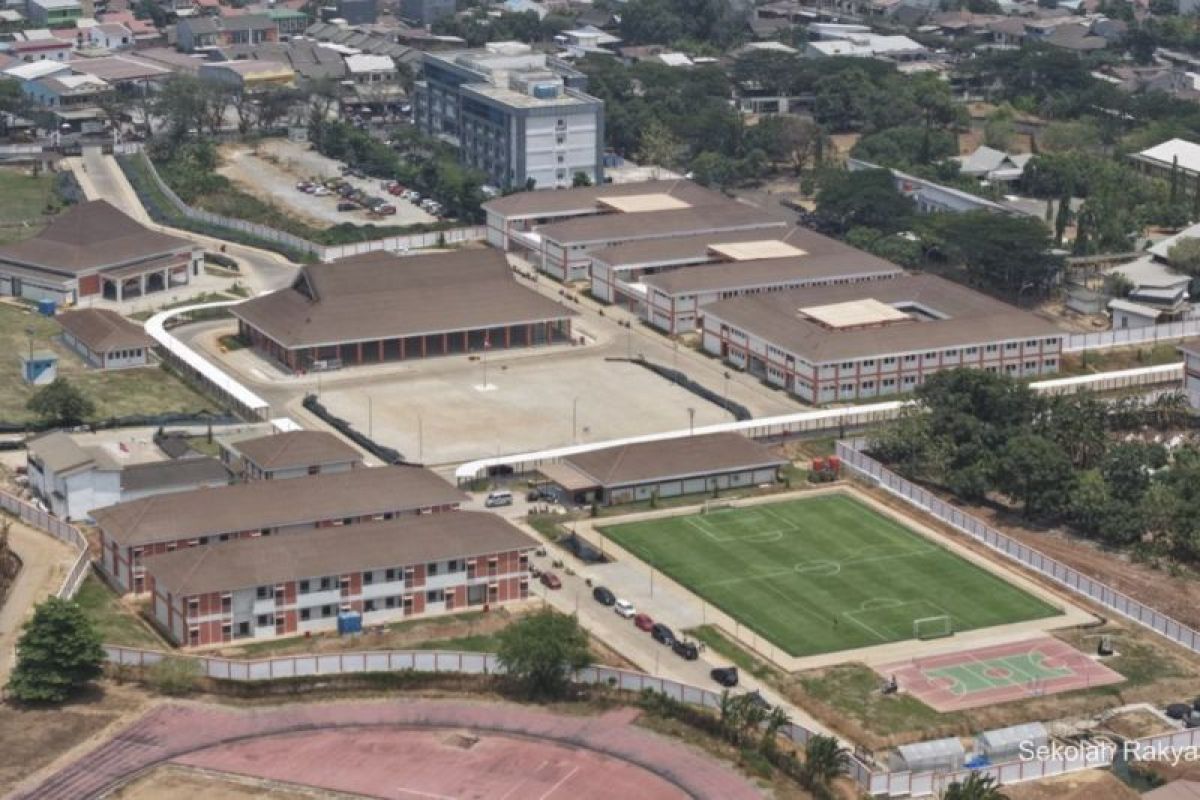
Jakarta (ANTARA) — The Public Works Ministry is applying Building Information Modelling (BIM) technology, integrated with the ministry’s Common Data Environment (CDE), in the construction project for Phase II of Sekolah Rakyat.
Public Works Minister Dody Hanggodo stressed the importance of using technology to improve the efficiency, accuracy and quality of infrastructure work. He said this must be accompanied by a safety-first culture and the ability to communicate and collaborate.
“We are using digital technology to improve transparency and efficiency in managing education infrastructure projects. Basic infrastructure such as school buildings, dormitories, sanitation facilities and other supporting learning facilities must be provided to an adequate standard. This is very important so that children, particularly those from extremely poor families, have access to quality education,” Dody said in a statement in Jakarta on Wednesday.
The digital system is intended to improve planning accuracy, strengthen oversight of construction and ensure that project data is managed more transparently and accountably.
BIM is a digital modelling technology that represents a building’s physical and functional characteristics in a three-dimensional (3D) model, accompanied by technical information. This information supports decision-making from the planning and construction stages through to building maintenance.
The technology enables information needed for construction planning and delivery to be managed in a more structured way, supporting the control of work quality, costs and schedules.
By integrating BIM with the Public Works Ministry’s CDE, data and documents for the Phase II Sekolah Rakyat infrastructure project are managed within a single digital ecosystem. It supports collaboration among the project owner, contractors, construction managers, design consultants and auditors.
The system facilitates document management, approval workflows, reviews and the recording of project issues, enabling coordination between parties to be measured and documented more consistently.
BIM also allows work progress to be monitored by comparing the 3D design model with conditions on site. Monitoring is supported by photographs, videos and an S-curve showing progress.
This information makes it possible to identify potential discrepancies between plans and actual work so they can be addressed promptly.
As well as tracking physical progress, BIM is intended to improve planning accuracy and mitigate construction risks. Digital modelling helps check that building elements are consistent with the design, while the use of BIM 4D and 5D to incorporate scheduling and work quantities can support analysis of timelines and costs.
Its use is expected to strengthen project controls from the planning stage through to the completion of construction.
Digital data management is also an important part of the handover process. Checks cover the completeness of documents, the quality of the 3D model, the consistency of schedule and quantity data, construction records and asset information.
As a result, data from the completed project can support not only construction oversight but also the subsequent management and maintenance of the buildings.
Through the use of BIM and the Public Works Ministry’s CDE for Phase II of Sekolah Rakyat, the ministry is promoting digital transformation in construction that goes beyond producing building models to deliver practical benefits in oversight, coordination and project control.
The initiative is expected to support the delivery of quality education facilities through a construction process that is more measurable and accountable.
Source: jawawa.id (https://jawawa.id/newsitem/public-works-ministry-uses-bim-technology-to-build-phase-ii-of-sekolah-rakyat-1793177704)
Originally published by Antara (Indonesian) (https://www.antaranews.com/berita/5816807/pu-pakai-teknologi-bim-bangun-sekolah-rakyat-tahap-ii), translated from Indonesian