
Public Works Ministry Strengthens Drought Anticipation in West Java Through Integrated Water Management
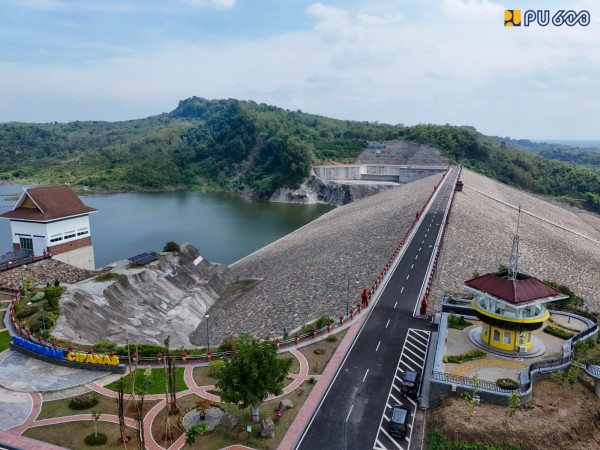
The Ministry of Public Works (PU) is increasing preparedness to address the potential impacts of the El Niño phenomenon in West Java through a series of mitigation measures that have been underway since the beginning of the dry season. These efforts are focused on maintaining water availability, sustaining irrigation services, and supporting the agricultural sector and national food security.
Minister of Public Works Dody Hanggodo explained that the ministry has established an El Niño Anticipation Task Force as a coordination platform across work units. He noted that El Niño could not only disrupt agricultural land but also affect drinking water supply systems and the operation of dams and other water resource infrastructure.
As part of this strategy, the Cimanuk Cisanggarung River Basin Agency (BBWS) is optimising the mitigation system through its Flood and Drought Control Infrastructure Management Unit. The system integrates monitoring of dams and weirs, mapping of drought-prone areas, regulation of water distribution, a complaint service centre, and a Rapid Response Team to ensure swift and effective handling.
A total of 290 personnel have been deployed to ensure all water resource infrastructure operates optimally throughout the dry season. Daily monitoring is conducted on nine dams, 33 reservoirs, 23 small lakes, 25 weirs, and the irrigation networks within the BBWS Cimanuk Cisanggarung working area.
Data as of 30 June 2026 indicates that the nine dams—Jatigede, Cipanas, Darma, Kuningan, Malahayu, Setupatok, Sedong, Bolang, and Rancabeureum—still hold a combined water volume of approximately 1.10 billion cubic metres. This supply is considered sufficient to meet the irrigation needs of around 136,254 hectares of agricultural land throughout the dry season.
Water release from the dams is carried out in a measured manner, taking into account storage capacity and field requirements. This regulation aims to maintain supply for irrigation, raw water provision, and hydroelectric power generation, while preserving reserves until the end of the dry season. All data on elevation, storage volume, and discharge are monitored daily to inform operational decisions.
Beyond securing water availability, the Ministry of Public Works is also improving the quality of irrigation networks. In the 2025 fiscal year, rehabilitation of primary irrigation networks was carried out at 69 locations, while the Accelerated Programme for Improving Irrigation Water Management was implemented at 441 sites. The government is also accelerating irrigation development through a Presidential Instruction at 69 locations and constructing Groundwater Irrigation Networks at 45 sites to strengthen water services for agricultural land.
As a climate adaptation measure, the BBWS Cimanuk Cisanggarung is promoting the adoption of water-saving rice irrigation technology. This system applies intermittent water delivery, making water use more efficient without reducing crop productivity. The technology is expected to improve water use efficiency, increase cropping indexes, and boost farmers’ harvests and incomes.
The Ministry of Public Works has also prepared various contingency measures to address potential drought. A total of 58 units of equipment are on standby, including excavators, dump trucks, trailers, water pump vehicles, water tankers, water pumps, solar-powered pumps, drilling machines, and geoelectrical survey equipment. These assets will support the distribution of clean water via tankers, sprinkler irrigation, groundwater surveys, and the construction of artesian wells in areas experiencing water shortages.
Through these measures, the Ministry of Public Works emphasised that efforts to face the threat of El Niño are being carried out preventively through integrated water resource infrastructure management, strengthened dam and irrigation network operations, and the readiness of personnel and equipment to minimise the impact of the dry season.