
Public Works Ministry Accelerates Check Dam Construction in West Sumatra
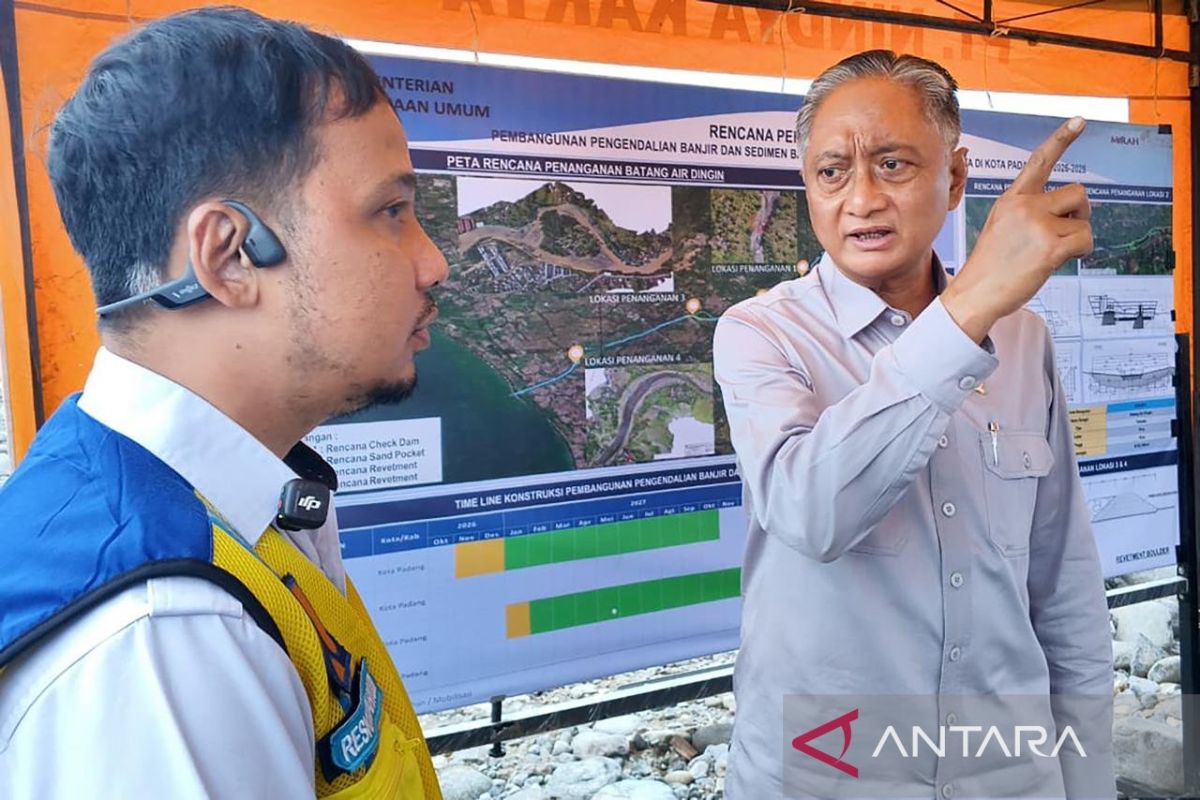
Padang (ANTARA) – Public Works Minister Dody Hanggodo has ordered the accelerated construction of check dams to reduce the risk of further flash floods carrying rocks, timber and other debris into residential areas.
“This is very important and must be expedited so that, if another disaster occurs, its impact can be minimised,” Dody said in Padang, West Sumatra, on Monday. He was visiting the Lumin Park Cluster housing area in Lubuk Minturun, Padang, which was hit by flash floods again on 10 October 2026.
He said an initial assessment by engineering teams in affected areas, including Padang and Pesisir Selatan Regency, found that the greatest flash-flood threat came from timber and rocks carried down from upstream.
The check dams are therefore designed to trap solid material upstream, so that water flowing downstream no longer carries debris that could cause dangerous flooding.
Work on the check dams is under way, with experienced technical teams involved.
As well as ordering the construction to be accelerated, Hanggodo instructed the relevant river basin agency to carry out regular inspections of river headwaters in West Sumatra.
The measures are intended to anticipate further natural disasters, particularly if heavy rain returns to Ranah Minang, as West Sumatra is also known.
“I have instructed our river basin agency colleagues to check the upstream areas first. We must ensure that no natural embankments have formed there as a result of accumulated timber,” he said.
The accelerated work follows President Prabowo Subianto’s direction that post-disaster management should not be temporary, but should instead build more resilient infrastructure and provide communities with long-term security.
Downstream, river channel normalisation is also being stepped up, with tens of thousands of cubic metres of sand and mud sediment being dredged.
Other emergency measures being expedited by the relevant teams include clearing mud from residential areas and places of worship, and restoring the clean-water network operated by the regional water utility, PDAM, which was disrupted by the disaster.