
Public Works Minister: Infrastructure Must Provide Real Benefits for the Public
Jakarta (ANTARA) - The Minister of Public Works (PU), Dody Hanggable, expressed that infrastructure development must provide tangible benefits to the community and serve as a driver for increasing welfare.
“Economic growth is certainly important, but ultimately, what we want to see is more people working, more families having incomes, and more people being able to escape poverty. This includes the labour-intensive programmes that we continue to promote,” Dody stated in a briefing in Jakarta on Friday.
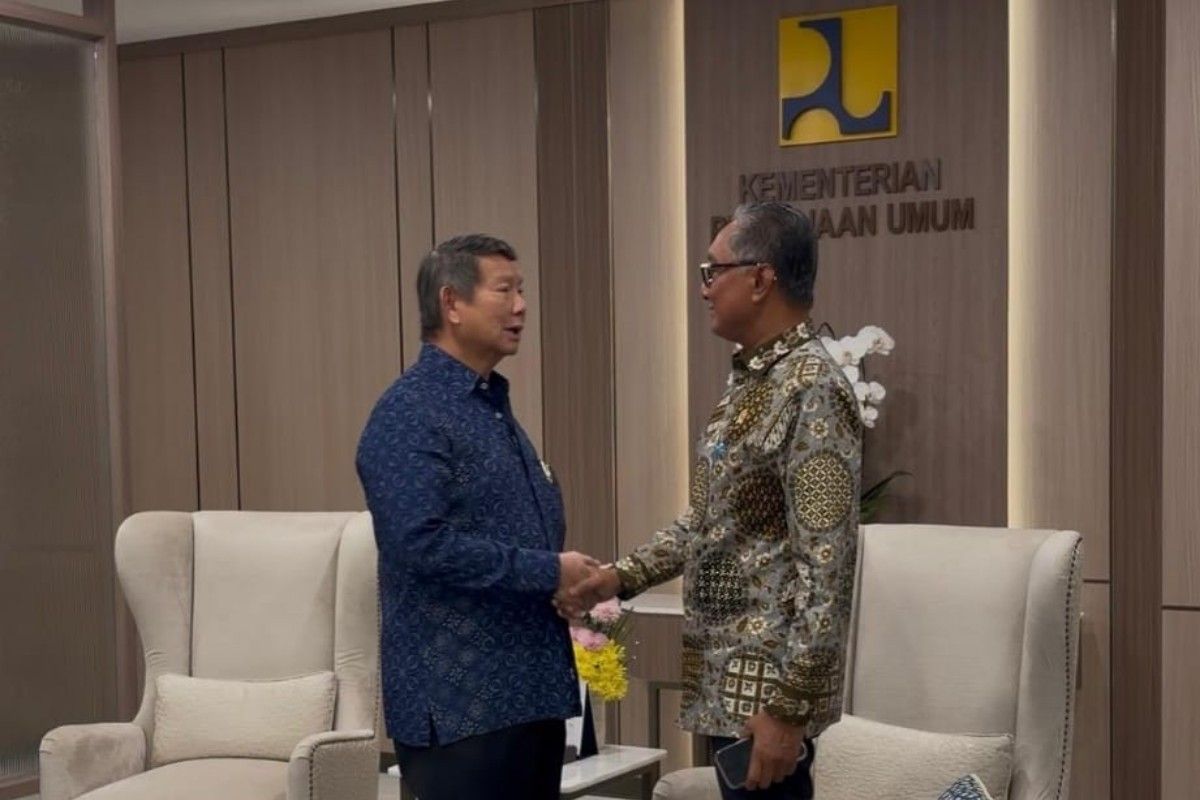
Minister of Public Works Dody Hanggodo received a visit from the Presidential Special Envoy for Energy and Climate, Hashim Djojohadikusumo. The meeting discussed the direction of infrastructure development to become increasingly productive, inclusive, and sustainable.
During the meeting, Hashim shared several views regarding infrastructure development that is not only oriented towards economic growth but is also capable of creating jobs, increasing community income, and accelerating poverty alleviation.
Dody welcomed the input from the Presidential Special Envoy for Energy and Climate, Hashim Djojohadikusumo. In addition to economic and social aspects, Hashim also highlighted the importance of maintaining a balance between development and environmental preservation. This aligns with the Ministry of Public Works’ commitment to increasing the application of green infrastructure principles in construction and management.
“Green infrastructure is an important part of that endeavour, because what we build today will ultimately be a legacy for the generations that follow us,” said Dody.
He stated that the various inputs provided by the Presidential Special Envoy, Hashim Djojohadikusumo, serve as vital material for the Ministry of Public Works in directing development to be more effective and provide a broader impact on society.
According to Dody, the Special Envoy’s input aligns with the direction of the PU608 vision, which positions infrastructure development as an instrument to increase productivity and competitiveness while supporting the achievement of national targets. These include driving the Incremental Capital Output Ratio (ICOR) below 6, moving towards 0 per cent poverty alleviation, and supporting 8 per cent economic growth.
“We at the Ministry of Public Works must continue to navigate every programme so that President Prabowo Subianto’s great ambition to alleviate poverty truly reaches the people in need,” he said.
Dody added that future infrastructure development must continue to ensure a balance between economic benefits, equitable access, and environmental sustainability.
With this approach, infrastructure is expected not only to be a physical asset but also to be capable of opening up employment opportunities and improving the quality of life for the community.
“I have listened a lot today. I have also noted much in my heart. Thank you, Mr Hashim, for your time, attention, and advice. God willing, the rapport and the messages from today will be maintained and implemented to the best of our ability,” said Dody.
The Ministry of Public Works continues to promote productive, inclusive, and sustainable infrastructure development as part of its support for the national development agenda. Every development of roads, water provision, water resource management, and labour-intensive programmes is directed to provide direct and sustainable benefits to the public.