
Public Trust Key to Indonesia's Nuclear Power Plant Readiness
The plan to develop nuclear power plants in Indonesia is considered insufficient if it relies solely on technological readiness. Public trust, the quality of human resources, regulation, and the readiness of national industry are important factors that need to be built from the outset.
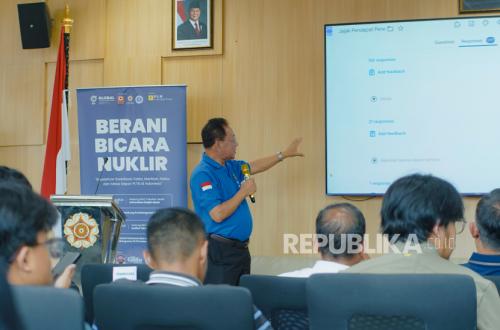
This was one of the focuses of the National Roadshow ‘Dare to Talk Nuclear: Facts, Benefits, Risks, and Sustainability of Indonesia’s Nuclear Power Plant Development Plan’ organised by Global Technology Investment together with the Nuclear Engineering Expertise Body of the Indonesian Engineers Association.
The roadshow, held at Gadjah Mada University in Yogyakarta and the Bandung Institute of Technology, brought together academics, government, regulators, industry, state electricity company PLN, researchers, students, media and the public. The forum was directed at building public understanding of the opportunities and challenges of nuclear energy development in Indonesia.
The need to build this understanding has become more relevant after the government issued Government Regulation Number 40 of 2025 on National Energy Policy. Amid rising electricity demand and carbon emission reduction targets, nuclear energy is beginning to receive attention as one option in the national energy mix.
However, technological readiness alone does not guarantee the success of nuclear power plant development. Public readiness, experts, industry, regulation, and open, science-based public communication are also important parts of the nuclear ecosystem.
Through the theme ‘Dare to Talk Nuclear’, the organisers encouraged a more complete discussion of nuclear energy, including modern reactor technology, nuclear safety and security, regulatory readiness, human resource development, and opportunities for national industry involvement.
The forum also provided a space for direct interaction between the public and speakers, as well as a public perception survey on the nuclear power plant development plan. The input will be used as part of preparing public communication recommendations.
At Gadjah Mada University, the discussion focused on People Readiness. Universities are considered to have an important role in preparing experts while building a safety culture and public literacy on nuclear technology.
Nuclear power plant development is ultimately not only a matter of building generation facilities, but also preparing people capable of operating, supervising and developing the technology safely.
Therefore, national talent development, higher education, public communication and academic collaboration are important parts of building Indonesia’s generation of nuclear experts.
Meanwhile, the roadshow at the Bandung Institute of Technology will focus on Technology and Industrial Readiness. The discussion covers national technological readiness, engineering innovation, strengthening industry and supply chains, increasing the domestic component level, and electricity system readiness.
PLN’s role is also a focus, especially in preparing the integration of nuclear power plants into the national electricity system through network strengthening, smart grids, and reliable and sustainable power system planning.
The series of dialogues will subsequently become part of the preparation of a White Paper on Public Communication Strategy in Supporting the Success of Indonesia’s Nuclear Power Plant Development Plan.
The document is prepared as input for the government and several related institutions, including the National Research and Innovation Agency, the Nuclear Energy Regulatory Agency, and PLN. Its focus is on strengthening public trust, public acceptance, public participation, human resource readiness, and national technological and industrial capability.
The document also designs a public communication roadmap for Indonesia’s nuclear power plants for the 2026-2045 period. The roadmap consists of five stages: Awareness, Understanding, Acceptance, Participation, and National Ownership.
Thus, public communication is positioned not merely as a socialisation activity, but as part of ecosystem preparation before Indonesia makes strategic decisions on the use of nuclear energy.
The organisers hope that collaboration between universities, government, regulators, industry, media and the public can form transparent, science-based public communication. This foundation is considered important so that every decision on nuclear energy can be made safely, sustainably, and provide benefits to society.
Source: jawawa.id (https://jawawa.id/newsitem/public-trust-key-to-indonesias-nuclear-power-plant-readiness-1788011840)
Originally published by Republika (https://esgnow.republika.co.id/berita/tkfj69522/kepercayaan-publik-jadi-kunci-kesiapan-indonesia-kembangkan-pltn), translated from Indonesian