
Public Lecture at Unjani: Luhut Discusses Iran's Shrewd Use of Technology in Conflict
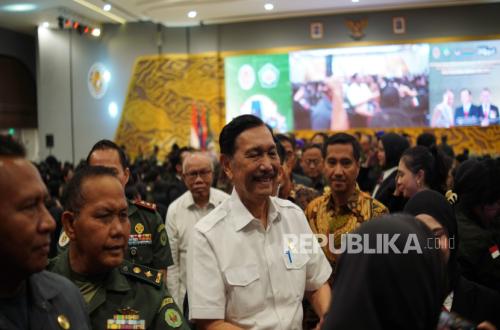
CIMAHI - Luhut Binsar Pandjaitan, Chair of the National Economic Council (DEN), was a speaker at a public lecture held at the Auditorium of Universitas Jenderal Achmad Yani (Unjani) in Cimahi, West Java, on Wednesday, 11 March 2026.
At the public lecture, attended by 25,637 students and 1,090 Unjani Cimahi teaching staff, themed “Optimising the Role and Character of Students in Leveraging Demographic Dividends to Realise Indonesia Emas 2045” (Golden Indonesia 2045), Luhut addressed the escalation of conflict between the United States and its allies against Iran.
Luhut stated that the current global conditions have had a major impact on the world economy, which faces the highest level of uncertainty in history. This situation is driven by a series of geopolitical conflicts, ranging from the Russia-Ukraine war, escalating tensions between the United States and Venezuela following the arrest of Venezuelan President Nicolás Maduro by US special forces, to the outbreak of conflict between the United States-Israel alliance and Iran.
“My point is that this uncertainty remains high. Therefore, we in the country must also be united in facing this because the entire world is dealing with this problem,” Luhut said at Unjani Cimahi on Wednesday, 11 March 2026.
Luhut noted that the outbreak of conflicts in many countries currently primarily involves developed nations. He pointedly cited examples of how the United States and Britain have triggered conflicts in countries through their arbitrary actions.
“But to be honest, if you study history, the ones really behind all these disasters are the developed nations. Look at how Britain colonised and then divided Palestine and Israel. Look at the United States and Western countries after World War II—they divided Saudi Arabia into the UAE, Dubai, and others,” said Luhut.
This was compounded by the displeasure of developed nations when colonised countries declared independence. For example, Indonesia in 1945, which subsequently sparked independence movements from other colonised nations.
“So Indonesia, which united Asia and Africa at that time, was deemed to be wrong by them, for pushing the independence of developing nations. Now they want to colonise or subjugate again, but in a different form,” said Luhut.