
Public Lecture at Police Academy: Riau Police Chief Urges Cadets to Master Ecological Leadership
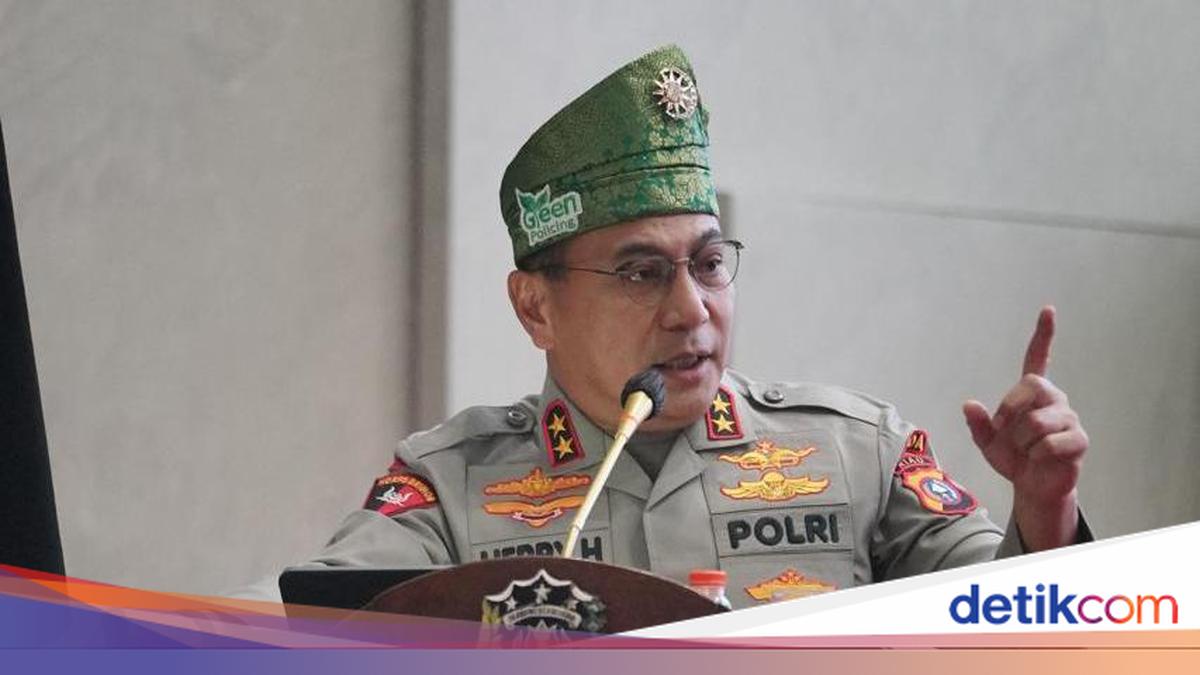
Riau Police Chief, Inspector General Herry Heryawan, has encouraged cadets at the Police Academy (Akpol) to master ecological leadership. According to him, this understanding is essential for future officers to address the challenges of the future.
This was conveyed by Inspector General Herry Heryawan during a public lecture at Akpol Semarang, attended by third-year cadets of the 59th Bhayankara Darma Battalion and second-year cadets of the 60th Manggala Satya Battalion, on Saturday (3/10/2026). In his presentation, Inspector General Herry emphasised three core principles in action: Global Security, Environmental Ethics, and Human Solidarity.
“Security today is increasingly linked to environmental and sustainability issues, while environmental degradation can create risks that impact society and stability,” said Inspector General Herry.
He noted that being a police officer who understands nature does not mean abandoning primary policing duties, but rather expanding the National Police’s perspective on security. He believes prospective officers must possess the ability to build ecological literacy—the fundamental ability of a leader to understand the relationship between the environment, society, and security.
“To that end, we need the ability to understand the environment. This is where I want to introduce one term: ecological literacy. An officer does not need to be an ecology expert, but they must have the basic ability to understand the ecological relationships within their area of duty,” he stated.
This knowledge must subsequently evolve into ecological leadership, where ecological considerations become part of police policy-making and decision-making.
“From ecological literacy, we move towards ecological leadership. This means leaders are able to incorporate ecological considerations into police policies and decisions,” he added.
Inspector General Herry Heryawan also urged Akpol cadets to prepare themselves to become a generation of police leaders capable of reading changes, designing policies, and building collaborations to address increasingly complex societal issues. Herry noted that technological changes, evolving crime patterns, the rapid flow of information, and climate change are causing policing challenges to develop increasingly quickly.
“Therefore, the police must not only be able to respond to problems that have already occurred, but must also have the ability to read changes and risks before they escalate into crises,” he said.
He remarked that while the primary mandate of the police remains the same, the world in which that mandate is executed is constantly changing. This condition demands that police officers grow closer to the community, remain responsive to local issues, be fair in law enforcement, be transparent in service, and be adaptive to developments in technology, data, and criminal methods.
“Do not come only bringing answers. Come with the ability to read, the ability to ask, the ability to learn, and the willingness to work together,” said Herry.
He emphasised that future police officers are not only required to have command capabilities to move an organisation, but also design capabilities—to plan how an organisation can work more effectively. An officer must be able to translate problems into policy, policy into programmes, and programmes into change.
During the lecture, Herry also shared his experiences from the Riau Regional Police as a learning space for facing security issues directly intersecting with the environment. Riau’s landscape, which includes forests, peatlands, rivers, and coastal areas, alongside plantation, industrial, and mining activities, makes ecological issues inseparable from social, economic, and security dimensions.
From January to September 2026, forest and land fires in Riau reached 20,656.81 hectares, with 63 suspects identified. In the 2025-2026 period, 2,901 illegal mining (PETI) rafts were dismantled. The police also handled 13 police reports related to illegal logging with 20 suspects, and six reports regarding mangrove encroachment covering an area of 141 hectares.
These experiences serve as the basis for the Riau Regional Police to develop the ‘Green Policing’ concept. This approach treats environmental damage as a security risk, where prevention requires a blend of data, law enforcement, technology, collaboration, and environmental restoration.
“Green Policing is not a change in the identity of the National Police. It is an expansion of how we understand security,” said Herlo.
Herry subsequently requested that cadets in the future do not merely recognise crime rates and population numbers in their assigned areas. An officer also needs to recognise rivers, forests, water sources, high-risk areas, economic activities, land conflicts, and the changes occurring within their territory.
Such capabilities are necessary so that a leader does not merely exercise authority but is able to build systems to resolve complex issues. He also reminded that innovation must not stop when a leader transfers to a new position. Innovation must move from ideas, experiments, and evaluations into policy, systems, and ultimately into an organisational culture.
Thus, the success of leadership is measured not only by the programmes produced, but by the systems that continue to function after the leader has departed.
Herry concluded his message by reminding them that the primary asset of National Police members is not merely authority, but public trust.
“The main weapon of the Police is not a firearm, nor a baton, nor the authority to enforce the law. Our primary weapon as members of the National Police is the trust of the community,” he asserted.
According to Herry, authority is granted by the state and positions are granted by the organisation, but trust can only be earned from the people.
“Therefore, the upcoming generation of officers must not only be able to adapt to change, but must also be able to prepare the National Police to face those changes,” he concluded.
Source: jawawa.id (https://jawawa.id/newsitem/public-lecture-at-police-academy-riau-police-chief-urges-cadets-to-master-ecological-leadership-1791021311)
Originally published by detikcom (https://news.detik.com/berita/d-8690942/kuliah-umum-di-akpol-kapolda-riau-dorong-taruna-kuasai-ecological-leadership), translated from Indonesian