
Public Affairs Notes on the 81st Anniversary of Indonesian Independence
Indonesia is a great nation that holds a strong aspiration to prosper its people. This awareness must continue to be nurtured. However, it must be acknowledged that today there are three structural problems demanding resolution: political financing, political regeneration, and fiscal decentralisation.
The three need to be unravelled in sequence, because other problems such as corruption, bureaucratic inefficiency, legal injustice, and economic inequality are in fact merely derivatives of these three fundamental issues.
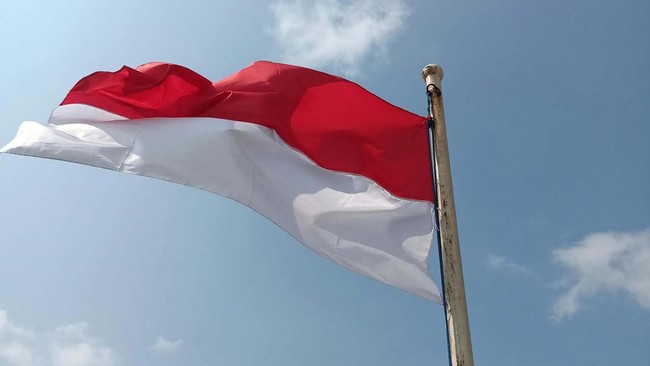
Yesterday, 17 August 2026, Indonesia turned 81 years old. At such a mature age, the relationship between the centre and the regions should be increasingly harmonious: the centre providing guidance, the regions lending support, and the people’s welfare continuing to improve.
Yet the reality of the past two years has shown the opposite direction. The warmth of central-regional relations has dimmed, and signs of tension have become increasingly visible in the run-up to the independence celebrations themselves.
The most obvious source of tension is the reduction in Transfers to the Regions (TKD). Since Presidential Instruction Number 1 of 2025 on budget efficiency, TKD funds—which include the General Allocation Fund (DAU), Revenue Sharing Fund (DBH), Special Allocation Fund (DAK), Special Autonomy Fund, and Village Fund—have continued to be eroded.
In 2026, the cuts were recorded at around Rp226 trillion, and based on the Financial Note of the 2027 Draft State Budget delivered in mid-August, the trend of cuts is continuing, albeit slightly smaller.
Yet for approximately the previous decade, TKD had been relatively stable at around Rp900 trillion. It is hardly surprising that a number of regional heads have flocked to the Ministry of Finance to voice their objections.
The Regional Autonomy Implementation Monitoring Committee together with the Indonesian Forum for Budget Transparency have even filed a judicial review of Law Number 1 of 2022 on Central-Regional Financial Relations with the Constitutional Court (MK).
Ironically, the major theme put forward by the Chair of the Regional Representative Council (DPD) at the Annual Session of the People’s Consultative Assembly (MPR), which was followed by the Joint Session of the DPR and DPD in mid-August, was ‘Strong Regions, Sovereign Indonesia’. A reminder that regional strength should be the foundation of national sovereignty, not a variable sacrificed for the sake of central budget efficiency.
This fiscal imbalance is exacerbated by the fact that the majority of regional governments still rely heavily on central transfers to finance basic affairs such as education and health, so that cuts to TKD directly hit the room for manoeuvre in development at the local level.
The dissatisfaction does not stop in budget meeting rooms. It seeps into the streets. In various regions, unrest has emerged in diverse forms: farmers in North Halmahera blockaded roads demanding certainty over copra prices, masses in Gowa demanded the revocation of a regional regulation deemed problematic, residents of Taliabu Island rejected the unilateral halt of class C mining activities, and clashes marked the commemoration of Aceh Peace Day, which a number of figures read as an expression of dissatisfaction with local leadership.
These various events have different triggers, but they share a common thread: a crisis of trust between the regional public and the authorities—both local and central—who are perceived as increasingly distant from the real needs of the people.
This phenomenon confirms the core argument of this article: when fiscal decentralisation stalls, the state’s capacity to translate good policies into tangible results on the ground is also degraded. However good the policy intentions formulated in Jakarta, they will undergo massive distortion once they come into contact with fiscal and political realities in the regions.
From the Political Sphere to the Business Sphere
The derivative problems of the inability to resolve the three structural issues are also clearly visible in the business world. Large, well-established companies with good governance often find it difficult to adapt within an unstable political and bureaucratic ecosystem. Yet the engine of economic growth must keep moving amid improvements in governance—like a ship that must continue sailing while being repaired.
This situation causes technical policies to change in rapid succession with a speed and logic that are difficult to predict. Today a company draws up a business plan based on one regulation; tomorrow a new policy emerges that changes all those assumptions. Before business operations have finished adapting, public opinion has already moved on social media, pressure from community groups has increased, and the political configuration has shifted again.
The business world now faces market competition as well as the demand to understand policy changes, political dynamics, and the interests of stakeholders all at once. This shows that the sources of corporate risk increasingly originate from outside the market mechanism itself—no longer merely because a competitor’s product is cheaper or new technology is superior, but because of regulatory changes, political dynamics, public pressure, and shifts in power networks that influence decision-making processes.
It is at this point that the role of public affairs finds its strategic position. David Bach and David Bruce Allen, two American business strategy academics, call this space the non-market environment—a situation in which the social, political, legal, and regulatory environment determines organisational success as much as the market itself. This perspective is increasingly relevant as policy changes take place ever faster and involve ever more actors who influence one another.
Throughout the first half of 2026 alone, the national policy space was coloured by various dynamics: a surge in world oil prices, the formation of a strategic investment holding company, changes in digital policy, adjustments to mining governance, and several cabinet reshuffles. All of this shows that the non-market environment has now become a factor as important as economic indicators in determining business direction.
These changes are taking place alongside a decline in public trust. The Edelman Trust Barometer 2026 recorded that 70 per cent of global respondents admitted difficulty in trusting parties with different or changing views. This condition makes the policy-making process increasingly complex, because government, business, media, communities, and civil society organisations all influence one another in the same public space.
Unfortunately, many organisations still manage public affairs in ways inherited from an era when policy changes took place far more slowly. Stakeholder mapping often stops at a list of official names, an organisational chart, or an influence matrix updated once a year.
Such documents do help identify who has an interest in an issue, but they are not sufficient to explain who actually holds influence when decisions are made.
A Paradigm Leap for Public Affairs
For public affairs practitioners, this shift carries major consequences. Their role is no longer merely to maintain good relations with the government or to convey corporate aspirations to regulators. They are required to become strategic environment analysts capable of connecting policy data, media, social networks, communities, and political dynamics into information that management can use in decision-making.
It is here that the importance of the public affairs role lies: grounded in strong conceptual and ideological values, it must be able to serve as a bridge that harmonises the main stakeholders—namely government and political society, civil society and economic society—towards the nation’s aspiration of shared prosperity.