
Puan Supports Government's Move to Implement WFH for Civil Servants Every Friday, Here are the Notes
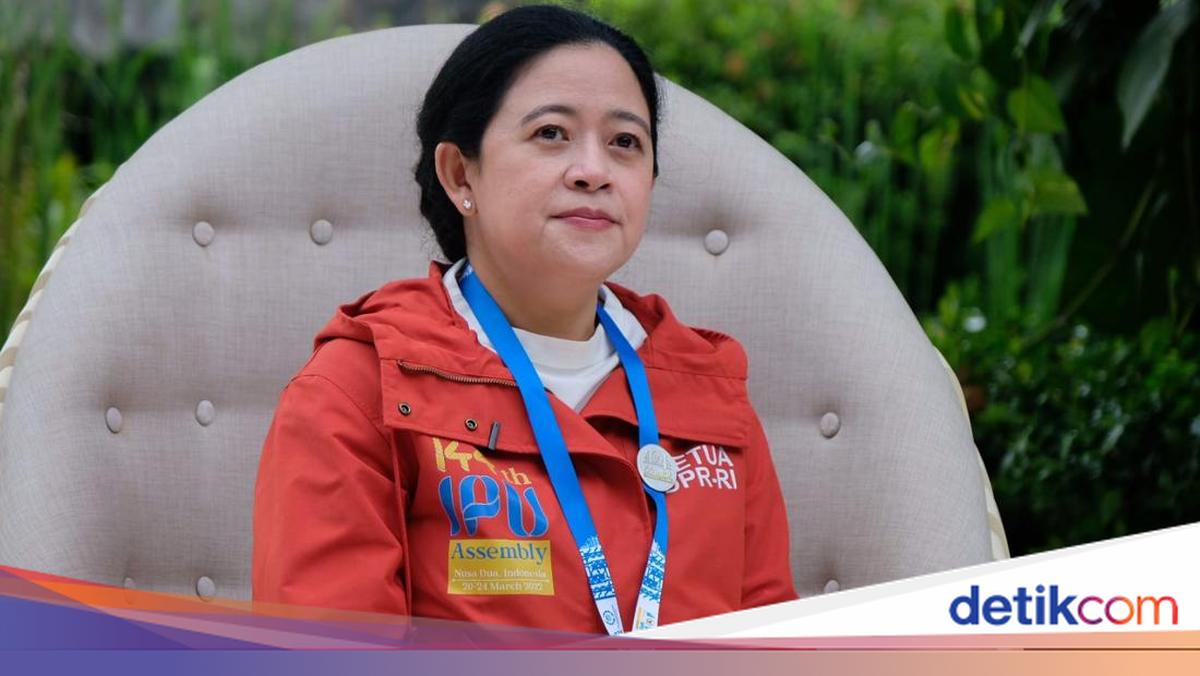
House of Representatives Speaker Puan Maharani supports the work-from-home (WFH) policy for civil servants every Friday to improve efficiency and save energy. Puan reminds that public service productivity must remain intact.
“WFH for civil servants is not just about flexibility, but about whether the state still functions when offices are not full. The flexibility of civil servants’ work will be judged by whether the state continues to serve the people quickly,” Puan said in her statement on Thursday (2/4/2026).
“Whether public services continue to run at the same speed when the bureaucratic work pattern changes,” she added.
Therefore, Puan supports the government’s efforts to establish the WFH policy for civil servants. However, she emphasises that public services must still operate.
“Of course, the House of Representatives supports the government’s efforts towards effectiveness and adaptability. However, what needs to be a joint concern is how to ensure that public services continue to run despite the implementation of WFH for civil servants,” Puan stated.
The PDIP DPP Chair assesses that the WFH policy for civil servants can be part of bureaucratic modernisation if it encourages a shift in orientation from physical presence to measurable performance. Nevertheless, she said that flexibility will only be accepted by the public if it does not create the impression that the state’s workspace is further removed from the needs of society.
“In that context, the success of this policy depends on each agency’s ability to ensure that services directly touching the people do not experience slowdowns, especially in units that deal with citizens’ administration daily,” Puan explained.
Puan said that implementation standards are needed for the WFH policy for civil servants. According to her, effective supervision is necessary to ensure civil servants still carry out their duties.
“Do not let the good intentions of an adaptive bureaucracy instead cause side effects due to the flexibility of the applied work system without responsibility,” Puan said.
“This policy also cannot be allowed to run merely as an administrative policy without clear evaluation indicators. There must be periodic evaluations to ensure whether the WFH model one day a week for civil servants is running effectively,” she continued.
Furthermore, Puan said that the House of Representatives has also undertaken efforts to optimise the use of resources and budgets. Among them, the optimisation of electricity, AC, lifts, escalators, telephones, and water usage. She said that resource use is maximised until 6:00 PM WIB.
“The policies implemented in some of these activities have a direct impact on reducing energy and budget usage. Even so, we ensure that the steps taken do not reduce the effectiveness of the House of Representatives’ performance,” Puan clarified.
“Including lights, TVs, and ACs that are not needed to be turned on, so they should not be switched on. We also ask for fuel and other equipment usage to be regulated more efficiently,” she added.
Meanwhile, regarding private sector WFH, Puan believes it should be left to each company’s policy. Puan asks companies implementing WFH to pay attention to the provisions stipulated in the Minister of Manpower’s circular.
“We learned from the COVID-19 pandemic where WFH for private employees in certain sectors actually increased productivity. However, companies must be disciplined in still providing employees’ rights, without exception,” she explained.