
Puan Hopes Domestic Workers Protection Law Can End Violence and Discrimination Against Domestic Workers
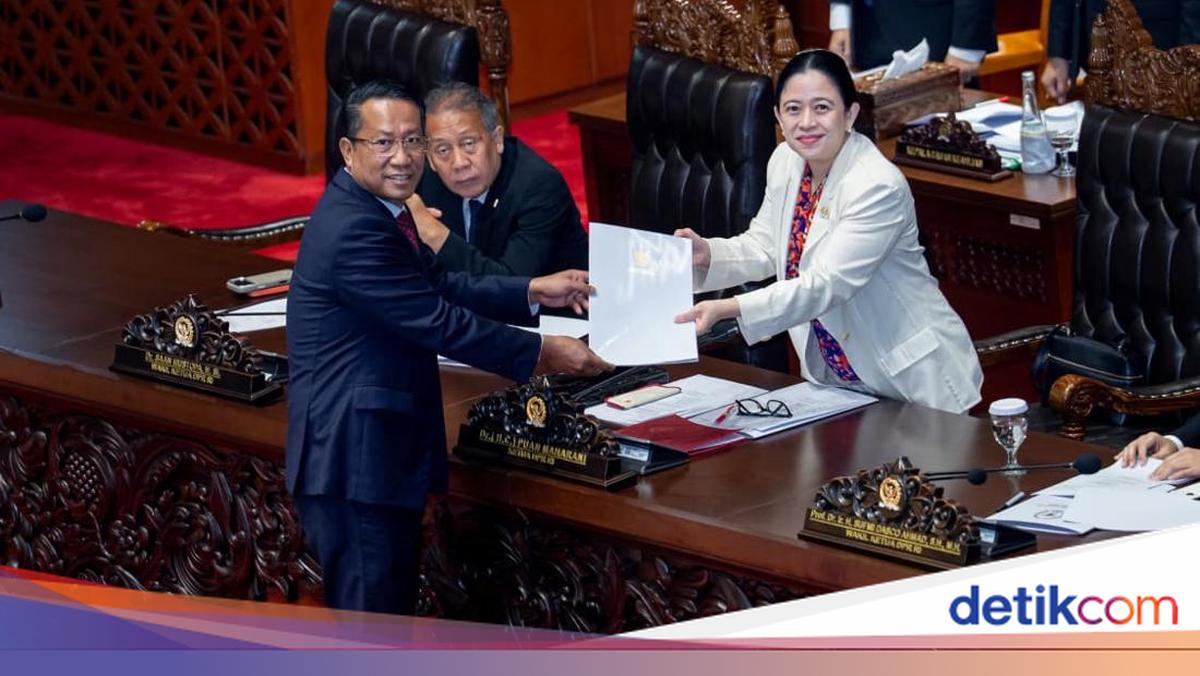
The Indonesian House of Representatives (DPR RI) today approved the Domestic Workers Protection Law (UU PPRT). House Speaker Puan Maharani expressed hope that the UU PPRT would halt all forms of violence, exploitation, and discrimination commonly experienced by domestic workers (PRT) to date.
“Alhamdulillah, after 22 years of struggle, today the UU PPRT has been enacted. This marks a historic milestone for colleagues working in the domestic sector,” said Puan in a written statement on Tuesday (21/4/2026).
The UU PPRT was approved during a plenary session chaired by Puan on Tuesday (21/4) at the DPR. Puan also referenced the mandate of Article 27 paragraph (2) of the 1945 Constitution, which states that “every citizen has the right to work and a livelihood worthy of humanity.”
“Therefore, the state is obliged to provide legal certainty and protection for all workers, including Domestic Workers (PRT) who have hitherto been in the informal sector,” stated the first woman to serve as DPR Speaker.
In addition to protecting PRT, the UU PPRT aims to restructure the informal working relationships in the PRT profession towards formal working relationships with legal certainty.
“The UU PPRT provides legal recognition of the PRT occupation,” Puan explained.
With this law, said Puan, the relationship between employers and PRT can still be based on a familial spirit (socio-cultural), but within the framework of a professional working relationship that is recognised and protected by law.
“And more than that, the UU PPRT is expected to be a step for the State to end all forms of discrimination, exploitation, and violence against PRT, as well as to ensure the realisation of social justice for all Indonesian people,” Puan clarified.
According to Puan, the UU PPRT can serve as a guarantee to stop the practice of unlimited working hours (borderless work). Therefore, Puan stated that the implementation of this law must ensure that PRT receive reasonable working hours, daily and weekly rest time, as well as rights to leave (sick, maternity, family matters).
“The state must not tolerate extreme fatigue practices that threaten the safety and health of PRT,” Puan emphasised.
Furthermore, Puan said the UU PPRT aims to create a sense of security and peace for PRT in carrying out household work and to improve the welfare of PRT.
“To that end, the Government is obliged to ensure that PRT have Health and Employment Social Security covered by the Employer based on the Work Agreement or Contract,” explained the former Coordinating Minister for Human Development and Culture.
“The Government must also adjust DTKS, Regsosek, and P3KE data so that the formalisation of the PRT profession does not immediately nullify their family’s rights to social assistance (bansos) from the state,” she added.
On the other hand, Puan noted that the UU PPRT also provides certainty and comfort to employers, as well as enhances the dignity and honour of PRT.
The UU PPRT also provides certainty regarding the responsibilities that must be carried out by the Government in regulation, supervision, development, and training to improve the knowledge, abilities, and skills of PRT.
Puan also reminded the Government and Domestic Worker Placement Companies (P3RT) of their obligation to conduct vocational training for work competency provision (skilling), competency transfer (reskilling), and/or competency enhancement (upskilling) in the scope of Household Work without burdening costs on prospective PRT and PRT.
“Competency enhancement must be viewed as a state investment to improve the dignity, honour, and productivity of PRT,” said Puan.
“PRT are dignified professional workers, therefore it is important to build collective awareness to stop negative stigma against PRT work,” she continued.
Through the implementation of the UU PPRT, Puan encouraged a tiered mechanism for resolving issues between PRT and employers that must be carried out through consensus deliberation and mediation at the local level (RT/RW or related agencies).
“This is necessary to ensure quick, fair dispute resolution that does not burden the parties with costs,” said Puan.
Puan then reminded the government to immediately prepare derivative technical regulations from the UU PPRT. Thus, the protection guarantee for PRT provided by the UU PPRT can be implemented more clearly.
“After enactment, the government must ensure that implementing regulations are not delayed for the certainty of protection for PRT and proportional working relationships in the household work scope,” she concluded.
Source: jawawa.id (https://jawawa.id/newsitem/puan-hopes-domestic-workers-protection-law-can-end-violence-and-discrimination-against-domestic-workers-1776768732)
Originally published by detikcom (https://news.detik.com/berita/d-8454602/puan-harap-uu-pprt-dapat-akhiri-kekerasan-dan-diskriminasi-terhadap-prt), translated from Indonesian