
Puan Highlights Digital-Era Challenges to Democracy, Including Algorithmic Influence
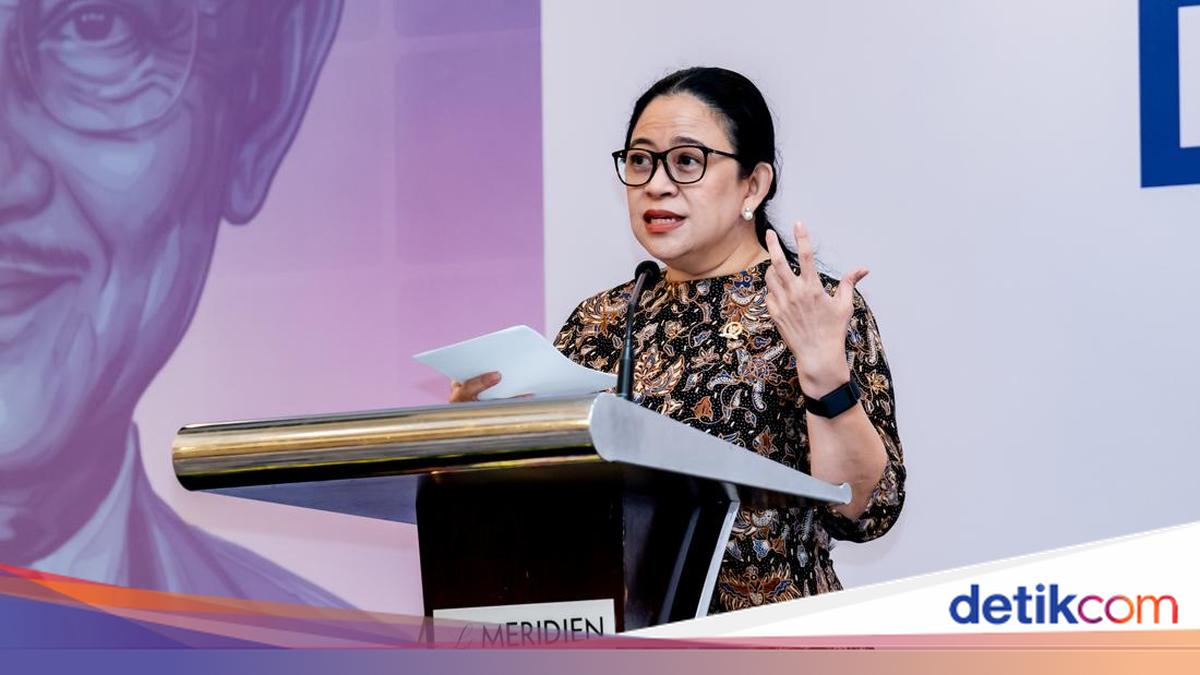
DPR Speaker Puan Maharani spoke about democracy at the 2026 Habibie Democracy Forum, saying digital transformation could pose a challenge, including through algorithms that can now influence public perceptions.
Puan delivered the national address at the forum, held today at the Le Meridien Hotel in Jakarta. The event is organised by The Habibie Center, an independent, non-profit institution founded by Indonesia’s third president, Professor B.J. Habibie, and his family.
The 2026 forum marked the 27th anniversary of The Habibie Center. It is one of the organisation’s flagship programmes, providing an inclusive space for dialogue to promote, sustain and strengthen democratic values in Indonesia.
The forum brought together political parties, government institutions, civil society organisations, practitioners, academics, the media, businesses, and youth and women’s groups.
At the event, themed ‘Leadership Challenges for the Future of Indonesian Democracy’, Puan said Indonesia was facing increasingly complex leadership challenges.
‘Economic power can turn into political power, and that political power can then be used to serve the interests of certain groups,’ Puan said in a written statement on Tuesday (3 November 2026).
‘Therefore, political democracy will never be fully substantive if economic power is concentrated and becomes more influential than the voices of the people,’ she added.
Puan said technological advances, particularly digital transformation and information technology, could give the public wider access. However, she argued, this did not automatically make democracy function democratically.
‘We must ask: who controls the data, algorithms, platforms, artificial intelligence and digital infrastructure that increasingly shape public perceptions and the direction of people’s lives?’ Puan said.
‘Who benefits economically? Who can scrutinise algorithmic decisions? Who can determine what is considered good or bad?’ she added.
Puan said the issue was not merely how to maintain political stability, increase economic growth or implement development programmes.
‘It is about how to turn national strength and potential into real progress for all Indonesians,’ she said.
Puan said Indonesia’s leadership challenges could be viewed on three levels: the country’s structural challenges, challenges in the governance of power, and the challenge of building the nation’s future.
‘In facing these challenges, we cannot rely solely on the leadership of one person or one group. This must instead become a shared agenda and responsibility for all elements of the nation to bring about meaningful change, or transformation,’ Puan said.
She said meaningful change, or transformation, was not simply a matter of changing policies or replacing people, but of changing ways of thinking and working to produce tangible results.
‘We need to work together to carry out the transformation agenda, with transformative leadership taking root across all state institutions. The main objective is to strengthen and sharpen our thinking and working practices, increasingly orienting state governance towards the interests of the nation and state,’ she said.
Puan also stressed the importance of governing authority and public services in ways that provide people with comfort, prosperity and security.
‘We already know and understand what changes in our thinking and working practices are needed, and what should and could be done in institutional governance,’ she said.
‘What kind of authority and services should be provided to the people? We understand the importance of transparent governance, accountable authority and the best possible public services,’ she added.
Puan urged the forum to consider why not everything could be carried out effectively, even when leaders understood these principles.
‘Change cannot remain merely something we know and understand; it must be realised in the social, political, economic and cultural order,’ she said.
She added that transformation required more than understanding what needed to change. It also demanded a willingness to improve, the courage to face risks and the example of people beginning with their own responsibilities.
‘We do not need to wait until all conditions are ideal to make changes. Nor do we need to wait for others to act,’ she said.
‘What is needed is the willingness to take steps, one by one, to fulfil our respective responsibilities, improve what falls within our authority, and ensure that each step delivers real benefits for change,’ Puan added.
Puan said transformative leadership could open the way to change, but national progress could not result from the leadership of one figure alone.
‘Collective strength is needed to act together. The people, civil society, businesses, intellectuals, all elements of the nation and state institutions must take responsibility according to their respective roles,’ she said.
Puan said the DPR was also continuing to transform how it carried out its constitutional functions. She said the House was working to improve its response to public aspirations, strengthen and sharpen the substance of legislation, oversee public money in the state budget (APBN), and ensure that the government provided services to the public.
‘We recognise that the DPR’s transformation is not complete and has not always been easy. Institutional limitations, differing political interests, political culture, and the gap between public expectations and what our work can deliver remain,’ Puan said.
‘All of this must be a basis for introspection and improvement, not a reason to stop making changes,’ she added.
Puan said the DPR recognised that its constitutional functions must benefit people’s lives in keeping with the spirit of democracy. Democracy, she said, was not merely a system of government but a way of living together, built through participation, communication and shared experience.
‘Democracy, as a means of realising popular sovereignty, must take tangible form in social justice and public welfare,’ Puan said.
She said this was where transformative leadership assumed its responsibility: turning authority into service, aspirations into policy, and collective strength into national progress.
‘This is our shared historic task: to exercise transformative leadership in realising the aspirations of the Indonesian nation and state,’ she said.
‘Leadership always ends with a term of office. It lives on through the legacy it leaves behind,’ Puan added.
At the event, Puan was welcomed by The Habibie Center’s Board of Trustees chairman Ilham Akbar Habibie, its Board of Management chair Dewi Fortuna Anwar, executive director Nadia Habibie and other representatives of the centre. Puan was accompanied by DPR Commission IX deputy chair Charles Honoris and DPR Commission XII deputy chair Dony Maryadi Oekon.
The 2026 Habibie Democracy Forum was also attended by figures from Indonesia and abroad, including Selangor Chief Minister Dato’ Seri Amirudin bin Shari; Konrad-Adenauer-Stiftung’s head of the Indonesia and East Timor office, Jan Senkyr; former education and culture minister Wardiman Djojonegoro, who served from 1993 to 1998; Lemhannas governor TB Ace Hasan Syadzily; and Elections Supervisory Agency (Bawaslu) chair Rahmat Bagja.
In his remarks, The Habibie Center’s Board of Trustees chairman Ilham Akbar Habibie referred to Puan and the Soekarno family’s role in Indonesian democratic life.
‘Ms Puan and her family are guarantors, guardians of our democracy. That is why we invited her to hear her views,’ Ilham Habibie said.
The forum featured speakers and panellists from government, business, international organisations, women’s groups and journalism. They included Coordinating Minister for Law, Human Rights, Immigration and Correctional Affairs Yusril Ihza Mahendra and Meta Indonesia country director Pieter Lydian.