
Puan Hammers the Gavel: Domestic Workers Protection Bill Officially Becomes Law
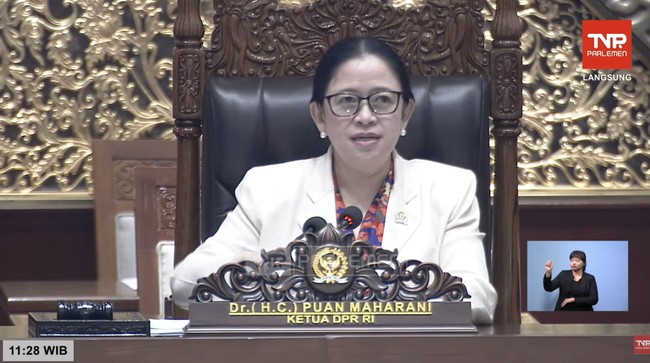
Jakarta, CNBC Indonesia - The Domestic Workers Protection Bill (RUU PPRT) has been officially enacted as law during a plenary session of the Indonesian House of Representatives (DPR RI). The approval was marked by the unanimous consent of all session participants, presided over by DPR Speaker Puan Maharani.
In the forum, the session chair first sought the approval of the house members before hammering the gavel to approve the bill.
“We will ask again to all honourable session participants: can the Domestic Workers Protection Bill be approved to be enacted as law?” Puan asked.
“Agreed!” the session participants responded in unison.
“Thank you,” Puan said, followed by the gavel strike and applause in the chamber.
Following the approval, the DPR expressed appreciation to the government officials involved in discussing the policy, from technical ministries to coordinating ministries. This law serves as an important milestone in providing legal certainty for domestic workers while regulating employment relationships in the domestic sector.
Puan emphasised that this regulation does not eliminate the familial values that have long been inherent in domestic employment relationships but rather strengthens them with a clearer legal framework.
“This law aims to reorganise domestic workers’ employment relationships from being previously informal to having legal certainty. Those values (familial) are still maintained but supplemented with a professional framework that is recognised and protected by law,” she explained.
From the government’s side, Minister of Law Supratman Andi Agtas affirmed that the state is present to ensure comprehensive protection in this sector, while encouraging fairer employment relationships.
“The state, in this case the government, has the obligation to provide protection and supervision over the implementation of domestic workers’ arrangements,” Supratman said.
This law is designed to close gaps in practices of discrimination to exploitation, and to strengthen the positions of workers and employers in equal relationships.
“The establishment of the Domestic Workers Protection Law aims to provide legal certainty to domestic workers as well as to employers, preventing all forms of discrimination, exploitation, and harassment,” he stated.
In addition, this regulation also covers various important aspects from recruitment, employment agreements, rights and obligations of the parties, to training and supervision. The government also emphasised the importance of improving workers’ skills as part of efforts to promote welfare.
“The government states its agreement for the Domestic Workers Protection Bill to be enacted as law,” he asserted firmly.
With this approval, domestic workers who have previously been in the informal sector now have a stronger legal umbrella, while opening the way for more professional employment relationships without leaving behind humanitarian values.