
Puan Emphasises Legislation Must Prioritise the People's Interests
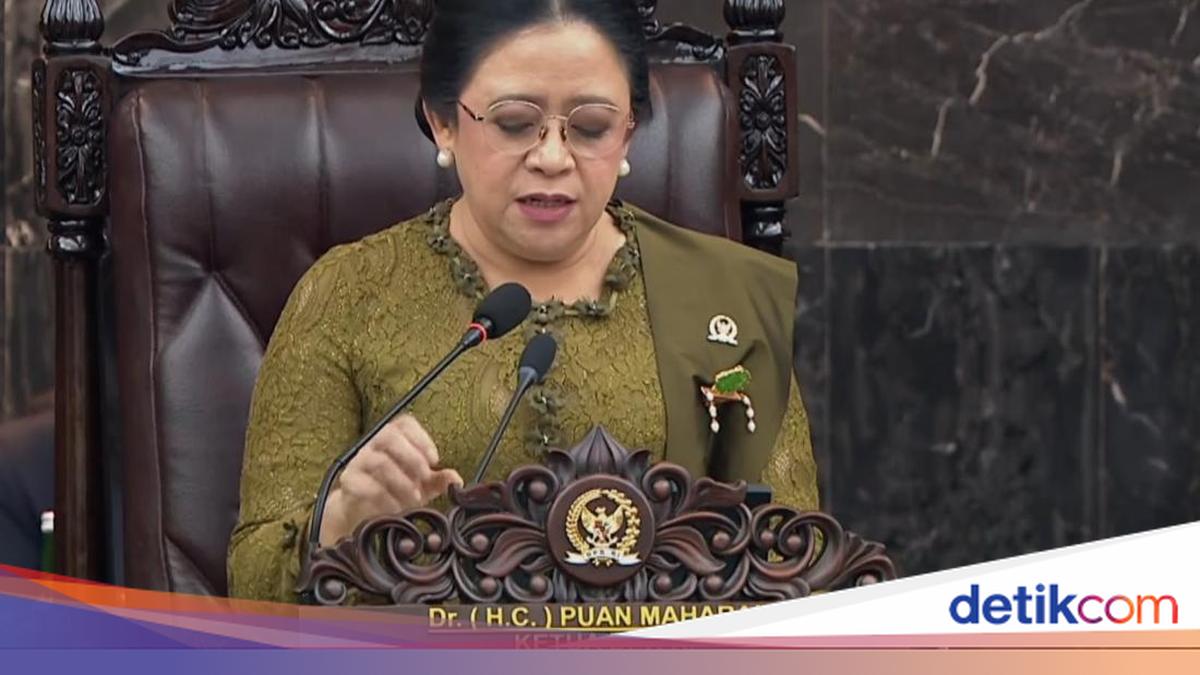
Speaker of the House of Representatives (DPR RI), Puan Maharani, opened the First Session Period of the 2026-2027 Sitting Year, marking the beginning of the third year of the DPR RI’s 2024-2029 term. In the session, Puan affirmed that every piece of legislation or law drafted by the DPR together with the government continues to prioritise the interests of the people.
This was conveyed at the Plenary Meeting for the Opening of the First Session Period of the 2026-2027 DPR Sitting Year at the Parliamentary Complex, Senayan, Jakarta. The plenary meeting was also part of the series of the MPR RI Annual Session and the Joint Session of the DPR and DPD RI.
President Prabowo Subianto was also present to deliver the introduction to the Draft Law on the State Revenue and Expenditure Budget (RUU APBN) for the 2027 Fiscal Year, along with the financial note and other supporting documents to the DPR, to serve as the basis for discussions on the 2027 State Budget Draft between the DPR and the Government.
“The opening of this session period marks the beginning of the third year of the DPR RI’s 2024-2029 term,” said Puan Maharani at the start of her speech, in a written statement on Friday (14/8/2026).
“By saying bismillahirrahmanirrahim, on behalf of the DPR RI leadership, I hereby announce to all the people of Indonesia that the First Session Period of the 2026-2027 Sitting Year begins on Friday, 14 August 2026 and runs until Monday, 9 November 2026,” said Puan.
Entering the third year of the term, the people’s hopes of enjoying the results of development and various policies will be felt in daily life.
“Therefore, this session period will be an important opportunity for the DPR RI to continue strengthening its performance, absorbing the people’s aspirations, and delivering policies that provide real benefits for the people,” she said.
She stated that the DPR RI together with the Government had completed 28 bills into laws from the first session period of 2024 to the most recent session period. Three laws were passed by Commission I of the DPR, 10 laws by Commission II, 3 laws by Commission III, 2 laws by Commission VI, 1 law each by Commission VII and Commission VIII, and 2 laws each by Commission XI and Commission XIII.
“The Legislation Body passed 3 laws, and the Special Committee passed 1 law,” she added.
The DPR together with the government will focus discussions on 14 bills at the First Reading stage during this session period.
In addition, the DPR RI will also continue 43 bills in the drafting stage, including the drafting of the Bill on Asset Forfeiture, which is currently in the stage of gathering public aspirations.
“The Bill on Asset Forfeiture is still in the stage of receiving meaningful public input or meaningful participation so that it can strengthen the substance of the law and have strong legitimacy,” she explained.
She emphasised that the quality of law-making is not only measured by the number of laws produced, but also by how much benefit the people can feel from the presence of those laws.
Furthermore, she noted that every law-making process always involves political dynamics, both between factions, between the DPR RI and the Government, and in finding common ground for the people’s interests.
“A common ground that affirms the presence of the state, the prioritisation of the people, and the usefulness of the law,” she asserted.
The DPR RI and the government strive to carry out law-making in accordance with the constitutional mandate, open space for meaningful public participation, and be grounded in national legal needs and social, political and economic legitimacy.
“And there is no overlap between laws and/or the authority of state apparatus,” continued the first woman to serve as Speaker of the DPR RI.
From the oversight perspective, she stated that the DPR continues to ensure that the government’s performance will have a positive impact on people’s lives. She will also follow up on several issues of public concern.
“Among others, the resolution of various legal cases, relaxation of regional civil servant spending policies, expansion of employment opportunities as well as protection for migrant workers and online transport workers, anticipation of forest and land fires and the impact of prolonged drought on water availability and the sustainability of the agricultural sector,” she explained.
“Then, evaluation of budget governance and the implementation of national education, and the creation of a more conducive investment climate to encourage growth in the real sector, layoffs, and access to BPJS Kesehatan services,” she continued.
From the parliamentary diplomacy function, she said it is directed at strengthening Indonesia’s foreign policy.
“On 22 July 2026, the DPR RI successfully hosted the 17th AIPA Caucus in a hybrid format, coinciding with the 50th anniversary of the Treaty of Amity and Cooperation in Southeast Asia,” she explained.
“The DPR RI, on every occasion in international forums, always encourages the creation of inclusive peace and inter-parliamentary collaboration between countries to voice a better geopolitical and geo-economic order for all,” added the former Coordinating Minister for Human Development and Culture.
To all members of the council, she wished them well in their work to fight for the people’s welfare.
“Let us, the DPR RI, in this first session period, produce state policies that can protect the people, prosper the people, educate the people, and participate in building a better world order,” she concluded.