
PU ready to collaborate with Ministry of Transportation on flyovers for level crossings
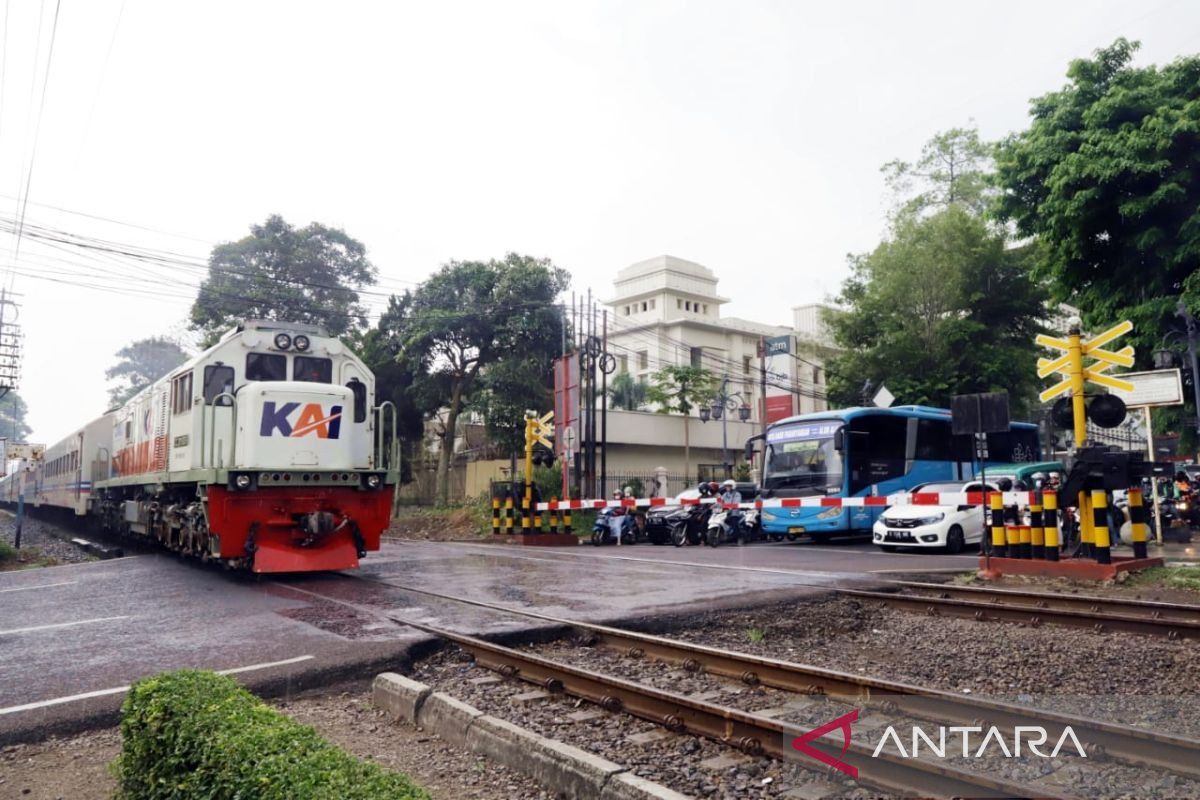
Jakarta (ANTARA) - The Minister of Public Works (PU), Dody Hanggodo, is prepared to collaborate with the Ministry of Transportation (Kemenhub), local governments, and relevant stakeholders to build flyovers or underpasses to improve safety at level railway crossings.
Dody stated in Jakarta on Wednesday that level crossings across Indonesia are divided into regency, provincial, and national jurisdictions. For national jurisdiction, there are still around 136 level crossing points that have not been addressed.
“There are 136 points left that we have not handled. We will discuss with Kemenhub and relevant stakeholders which points are super priorities to be worked on quickly. But one thing again, the land must come from the regional government because the land at level crossings is very expensive,” Dody said.
He added that providing land for the construction of flyovers or underpasses is the obligation of regional governments, given that level crossing locations are typically prime areas, so it must be discussed with the regional governments.
“So it’s not certain that all will be flyovers, depending on local conditions and land readiness,” he said.
For information, Coordinating Minister for the Economy Airlangga Hartarto stated that the Rp4 trillion budget to be used to repair 1,800 railway crossing points comes from the State Revenue and Expenditure Budget (APBN).
Meanwhile, the Head of the State-Owned Enterprises Regulatory Agency (BP BUMN), Dony Oskaria, said that the railway crossing improvement programme is indeed part of the government’s work programme for 2026. This considers the importance of the safety aspect of the programme.
President of the Republic of Indonesia Prabowo Subianto previously said he is preparing a budget of around Rp4 trillion to repair 1,800 railway crossing points on Java Island to improve public transportation safety.
The President explained that thousands of these crossing points are inherited infrastructure from the Dutch era that has not received comprehensive handling for decades.
According to Prabowo, the step is taken because the government realises that many railway crossings to date do not have guards, making them prone to accidents.