
PU Ministry's Solar-Powered Water Pumps Save 250 Hectares of Rice Fields in Majalengka
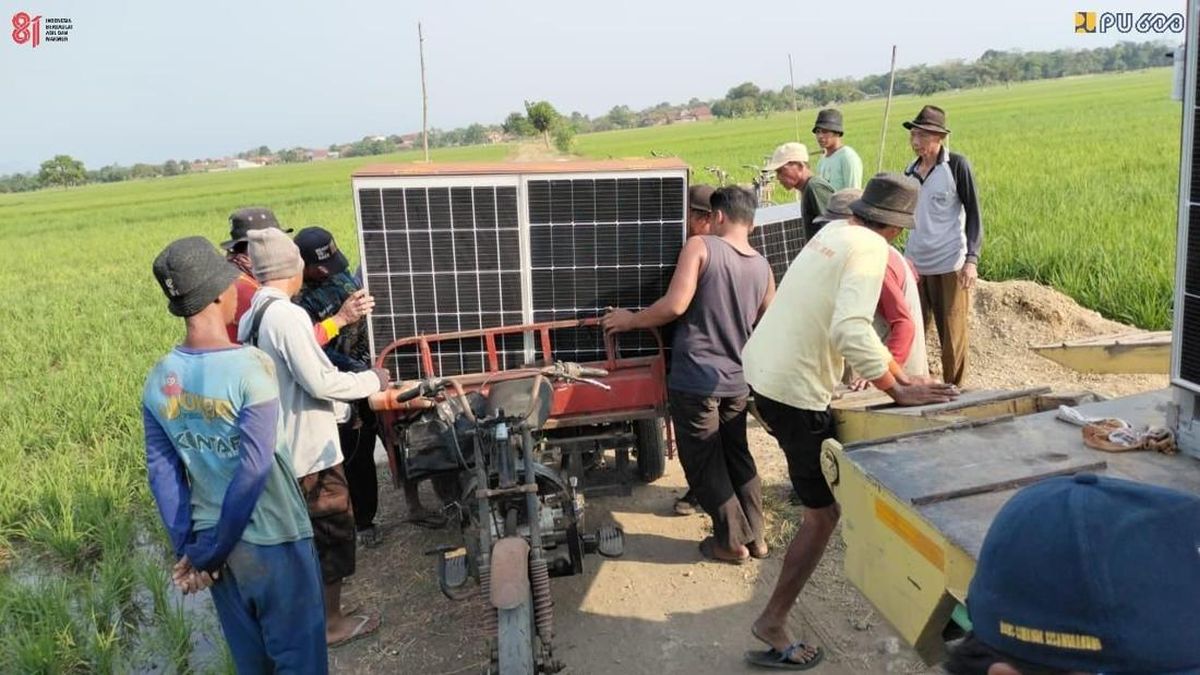
The Ministry of Public Works (PU) has begun operating a solar-powered water pump in Leuweunghapit village, Ligung sub-district, Majalengka regency, West Java, as a step to strengthen irrigation water supplies amid the threat of a long dry season and the El Niño phenomenon.
The facility, which has been operational since 29 July 2026, uses solar energy to power a modified centrifugal alkon pump. The use of this technology is a rapid measure to maintain irrigation water supplies.
The programme is part of Public Works Minister Dody Hanggodo’s strategy to anticipate the impact of drought whilst supporting the national food self-sufficiency target.
According to Dody, irrigation infrastructure is an important factor in providing certainty of water supply for farmers, increasing land productivity, and maintaining farm efficiency.
“The presence of this infrastructure is vital to support the availability of agricultural irrigation water, maintain land productivity, and ensure food supplies remain secure even when facing the challenges of the dry season or climate change,” Dody said in a statement on Monday (3/8).
The pump’s operation followed a request for assistance from the Majalengka regency government to the Ministry of Public Works through the Cimanuk Cisanggarung River Basin Centre (BBWS), after the impact of drought on agricultural land in the region began to spread.
The pump system, with a capacity of 150-400 litres per minute, was installed at points where water remains available, then channelled it into irrigation networks that could no longer function by gravity due to falling water levels during the dry season.
The water supplied by the pump system serves around 250 hectares of rice fields. The increased flow in the irrigation network allows paddy plots that had begun to dry out to receive water again, so that crops’ needs during the growth phase are met and the risk of harvest failure can be reduced.
The use of solar energy is one alternative for emergency pumping operations, particularly in areas with high sunlight intensity during the dry season.
As well as supporting the pump’s continued operation, the use of this energy source also helps reduce operational costs compared with pumps that rely entirely on fuel.
Meanwhile, the Regent of Majalengka, Eman Suherman, expressed appreciation to the Cimanuk Cisanggarung BBWS for the measures taken in Leuweunghapit village. The restored availability of irrigation water is expected to support the planting season and maintain agricultural land productivity during the dry period.
“I asked the BBWS to prepare short-term solutions whilst also considering long-term measures. We came to the site to ensure action was taken immediately. I appreciate the BBWS’s rapid response,” he said.
Through the use of solar-powered pump technology, the Ministry of Public Works hopes that drought response will not only serve as an emergency solution, but also become a model for more efficient, environmentally friendly, and sustainable irrigation management in support of national food security.
Source: jawawa.id (https://jawawa.id/newsitem/pu-ministrys-solar-powered-water-pumps-save-250-hectares-of-rice-fields-in-majalengka-1785754495)
Originally published by CNN Indonesia (https://www.cnnindonesia.com/nasional/20260803164837-25-1388089/pompa-air-kementerian-pu-selamatkan-250-hektare-sawah-di-majalengka), translated from Indonesian