
PU: Construction of People's Schools Absorbs Tens of Thousands of Workers
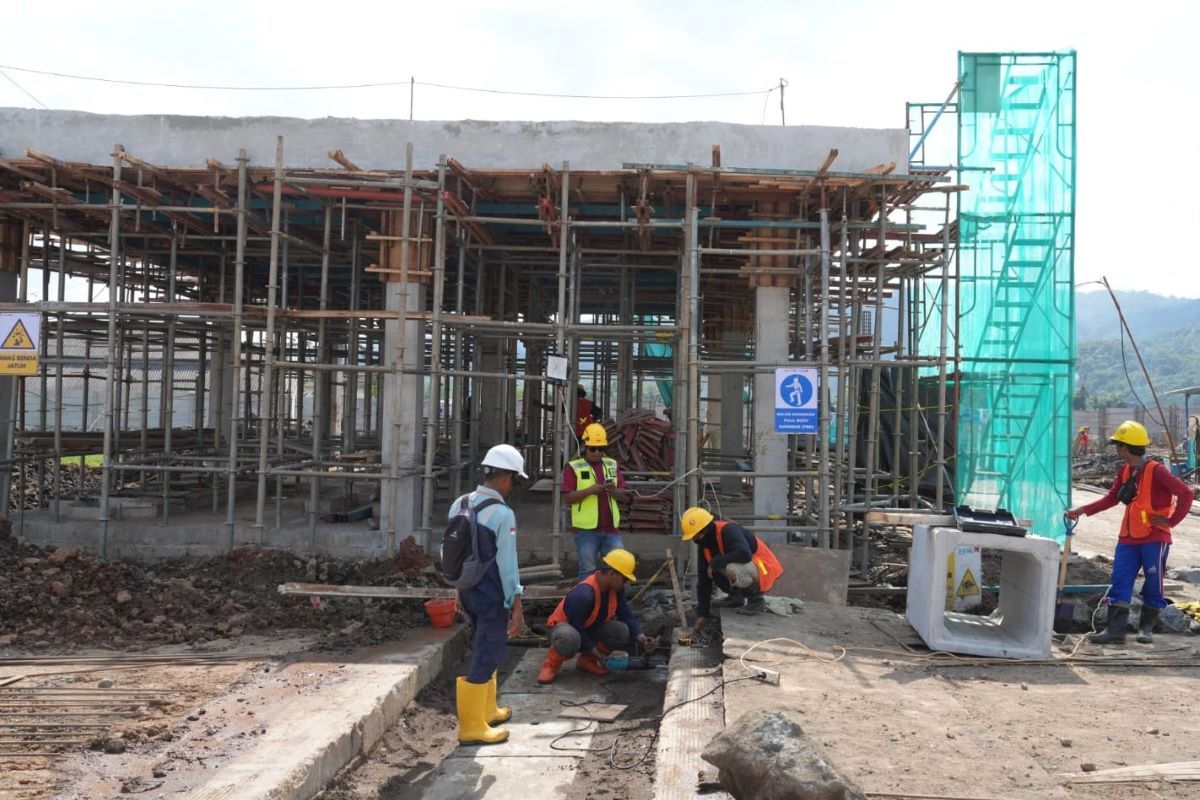
In addition to supporting equitable access to education, the construction also delivers direct economic impacts through the absorption of tens of thousands of construction and support workers in local areas.
Jakarta (ANTARA) - The Ministry of Public Works (PU) assesses that educational infrastructure development not only provides long-term benefits in the education sector but also stimulates the local economy through the absorption of tens of thousands of workers.
Public Works Minister Dody Hanggodo stated that based on construction implementation data as of 7 May 2026, the total workforce involved in the People’s Schools Phase II development reached 59,541 people, spread across various provinces in Indonesia.
“Besides supporting equitable access to education, the construction also provides direct economic impacts through the absorption of tens of thousands of construction and support workers in local areas,” Dody said in his statement in Jakarta on Wednesday.
People’s Schools Phase II are built permanently on land measuring 5–10 hectares prepared by local governments. Each cluster is designed as an integrated education centre at primary, junior high, and senior high school levels, equipped with technology-based classrooms.
People’s Schools are also equipped with skills laboratories, libraries, digital learning centres, student and teacher dormitories, as well as various supporting facilities such as healthy canteens, clinics, sports fields, extracurricular rooms, and green open spaces.
The People’s Schools buildings are designed not only to create a safe and conducive learning environment but also to consider disaster risk mitigation.
The Ministry of Public Works (PU) continues to accelerate the construction of People’s Schools Phase II in various regions in Indonesia, with a completion target of 20 June 2026.
Nationally, People’s Schools Phase II are being built in 104 locations spread across 32 provinces and 102 regencies/cities throughout Indonesia.
This programme is targeted to accommodate around 112,320 students with a total of 3,744 study groups (rombel), consisting of 1,872 primary school rombel, 936 junior high school rombel, and 936 senior high school rombel.